

In this guide13 sections
- Key Points
- How Should You Sleep After a Facelift?
- Why Is Sleep Important After a Facelift?
- When Can I Sleep on My Side After a Facelift?
- How to Sleep Comfortably After Facelift Surgery
- Why Is It So Hard to Sleep After a Facelift?
- How Do You Sleep After a Mini Facelift or Neck Lift?
- Can You Damage a Facelift by Sleeping in the Wrong Position?
- How Long Does Facelift Swelling Take to Go Down?
- How Long Do Facelift Results Last?
- Frequently Asked Questions: Sleeping After a Facelift
- Facelift Recovery Support in London
- References
Key Points
- How should you sleep after a facelift? On your back with your head and upper body raised, usually for the first two to four weeks, or for as long as your surgeon advises.
- Can I sleep on my side after a facelift? Not at first. Most surgeons ask you to avoid side and front sleeping for around four weeks, but the exact date is your surgeon’s decision.
- Why is sleep hard after a facelift? Tightness, swelling, a fixed sleeping position, medicines and worry about the result all get in the way, and about six in ten surgical patients already have disturbed sleep before their operation[1].
- Does sleep affect healing? In a small experimental study, even a few nights of very short sleep slowed skin barrier recovery[2], so protecting your sleep is part of recovery.
- What practical steps help? A wedge or stacked pillows, cold compresses in the first days, no caffeine late in the day, a calm bedtime routine and a helper nearby.
- When should I call my surgeon? If swelling is sudden, painful or much worse on one side, if bleeding does not stop with gentle pressure, or if pain is getting worse rather than better.
Sleeping well after a facelift is harder than it sounds. You are asked to lie on your back, with your head raised, for several weeks, often when your face feels tight and you are anxious about how the result will look. This guide explains how to sleep after facelift surgery, how long you need to keep to your sleeping position, what helps you drop off, and what to do about the nights that go badly.
It is written for people having a full facelift as well as a mini facelift, and it sits alongside our wider guides to facelift recovery, what to expect from a facelift and how to prepare for facelift surgery. It does not replace your own surgeon’s instructions, which always come first.
How Should You Sleep After a Facelift?
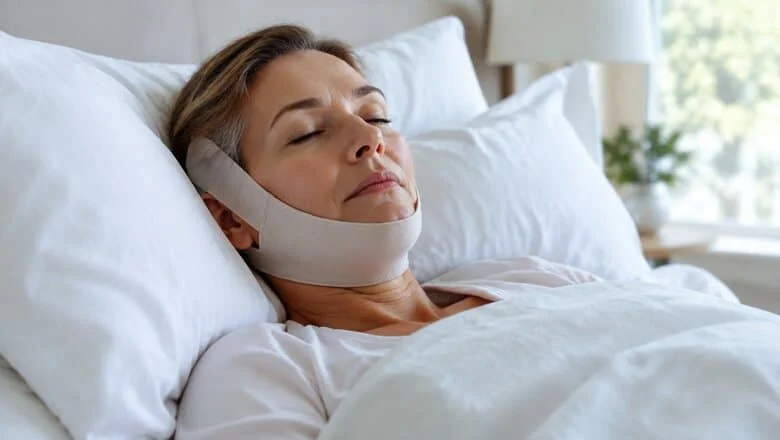
For facelift patients, the usual advice is to sleep on your back with your head and upper body raised. You can do this with a firm foam wedge, two or three pillows stacked so the angle is gentle and supportive, or a reclining chair or adjustable bed. The aim is a comfortable incline rather than a sharp bend at the neck, and your chin should stay slightly lifted, not pushed onto your chest.
Raising the head makes sense because gravity helps fluid drain away from the face. Direct evidence for a specific angle after a facelift is limited. A 2025 literature review of rhinoplasty aftercare in Facial Plastic Surgery ↗ reported that keeping the head elevated after surgery was associated with less swelling and bruising[3]. That is a different operation, so it supports the principle rather than proving the exact angle for a facelift.
A few practical points help the position hold through the night:
- Stop yourself rolling. Place a pillow under each arm, and one beside each hip, or use a U-shaped travel pillow behind the neck.
- Keep the pressure off your ears and incisions. Do not let the edge of a pillow press against the area behind or in front of the ear.
- Support your knees. A pillow under the knees takes strain off the lower back, which otherwise aches after a night propped up.
- Try it before surgery. If you normally sleep on your side or front, spend a few nights sleeping on your back with your head raised in the two weeks before your operation, so the position is not new to you on the night you come home.
Many people are surprised by how much easier a recliner can be in the first few nights. It holds the incline for you, and it makes getting up to use the bathroom simpler. Our guide to preparing for facelift surgery covers setting up your bedroom and home before the day.
Why Is Sleep Important After a Facelift?
Sleep is not a luxury during recovery. It is when the body does much of its routine repair work, and disturbed sleep can also make pain and worry feel worse. A 2023 systematic review and meta-analysis in Sleep Medicine Reviews ↗ found that around 60% of surgical patients already had disturbed sleep before their operation, and that existing poor sleep and anxiety were the main risk factors for sleeping badly afterwards[1]. Poor sleep before surgery is therefore a useful warning sign, and worth mentioning at your consultation.
There is also some evidence that sleep affects the skin’s ability to heal. In a small experimental study of healthy adults, three days of severe sleep restriction delayed recovery of the skin barrier after a standardised minor wound from about 4.2 to 5.0 days[2]. This was not a surgical study and the effect was modest, so it should not be over-read. It is a reasonable reason to take sleep seriously, not a reason to lie awake worrying about it.
Tiredness also lowers your tolerance of discomfort and makes the swelling and tightness of the first week feel harder to bear. Sensible planning, covered below, gives you a good chance of resting well.
When Can I Sleep on My Side After a Facelift?
Most surgeons ask patients to avoid sleeping on their side or front for around four weeks after a facelift, and some ask for longer after a deeper lift. Side sleeping presses on the cheek, ear and jawline, where the incisions and the lifted tissues are still healing, and it can increase swelling on the side you lie on.
How you return to your usual position matters as much as when:
- Wait for your surgeon’s go-ahead. Your six-week review is the usual point to confirm that normal sleeping positions are safe, though some surgeons say sooner.
- Start with short periods. Try lying slightly on one side with a pillow behind you, and see how the face feels in the morning.
- Stop if it hurts or swells. More puffiness on the side you slept on is a sign to go back to your back for a few more days.
Timings vary with the type of operation. Our guides to facelift vs mini facelift and the types of facelift explain why a lighter lift usually recovers faster than a deeper one.
How to Sleep Comfortably After Facelift Surgery
Resting well after a facelift is easier with a plan. These seven tips cover the common problems.
- PLAN AHEAD – Before your surgery, tidy your home, prepare meals and wrap up any work matters. Set up the bed with extra pillows or a wedge, and keep medications, a phone charger, headphones and water within reach.
- KEEP CALM – Early bruising and swelling are expected and are not the final result. Worrying about your appearance keeps you awake, and anxiety before surgery is one of the strongest predictors of poor sleep afterwards[1]. A 2024 meta-analysis in the Journal of Clinical Nursing ↗ of 18 trials in cardiac surgery patients found that relaxation, music, and eye masks and earplugs were among the approaches linked to better sleep and less pain[4]. That research was in a different group of patients, but those simple tools are low-risk and easy to try at home.
- CONTROL SWELLING – Cold compresses wrapped in a cloth can ease tightness in the first few days. Use them gently for about 15 minutes at a time, with breaks, and never place ice directly on the skin. Skin that is numb after surgery cannot warn you when it is getting too cold, so check it often and follow your surgeon’s guidance on whether and where to use them.
- STAY MOVING – Strenuous activity is off the table, but short, slow walks around the house improve circulation and mood, and they make it easier to settle at night. Do not lift, bend or strain, and follow our advice on exercising after cosmetic surgery.
- AVOID CAFFEINE LATE IN THE DAY – In a 2025 randomised crossover trial in the journal Sleep ↗, a large 400 mg dose of caffeine taken within 12 hours of bedtime delayed sleep and disturbed its structure, while a 100 mg dose had no significant effect even 4 hours before bed[5]. The trial involved healthy young men, so your own sensitivity may differ, but a sensible approach is to keep coffee, energy drinks and strong tea to the morning, and switch to herbal tea in the evening. Avoid alcohol too: it disturbs sleep and should not be mixed with painkillers.
- KEEP CLEAN AND COMFORTABLE – Dried blood or fluid on the skin can itch and irritate. Clean only as your surgeon has told you to, and ask before using any cream, oil or cleanser near the incisions. Use a clean, soft pillowcase, and change it daily at first.
- SEEK SUPPORT – Arrange for someone to stay with you, drive you to appointments, manage chores and help with medication, especially for the first night. Knowing a person is nearby lets many people relax enough to sleep.
Do not take sleeping tablets, antihistamines or other sleep aids unless your surgeon or anaesthetist has said they are safe alongside your painkillers and the rest of your medication.
Why Is It So Hard to Sleep After a Facelift?
Almost everyone sleeps badly for the first few nights. The usual reasons are:
- A fixed position. Being unable to roll over is uncomfortable if you are used to moving around in your sleep.
- Tightness and swelling. The face and neck feel stiff, and the bandage or garment can feel warm and restrictive.
- Numbness and tingling. As sensation returns, itching, tingling and odd sensations around the cheeks and ears can wake you.
- Medication effects. Some painkillers cause drowsiness by day and restlessness at night.
- Worry. Looking in the mirror and seeing bruising and swelling can be unsettling, even when you have been told to expect it.
The first nights are often the hardest. Swelling and tightness commonly build over the first two or three days before easing, which is one reason the second and third nights can feel worse than the first. It is not unusual, and it improves for most people as the week goes on. If the pain is not controlled by the medicines you have been given, or is getting worse rather than better, call your surgeon rather than waiting it out.
How Do You Sleep After a Mini Facelift or Neck Lift?
The basic advice is the same after a mini facelift: sleep on your back with your head raised. The difference is usually how long you need to keep to it, as smaller lifts often settle sooner, so your surgeon may allow a return to normal sleeping positions earlier.
Neck lift recovery adds some extra points. Tightness and swelling under the chin and along the jawline can make it difficult to find a comfortable angle, and turning your head in your sleep can feel odd for the first weeks. Our dedicated guide to sleeping better after a neck lift covers it in detail, and our neck lift recovery guide explains the wider timeline. If your facelift is combined with a neck lift, expect a little more tightness under the chin in the early nights.
Can You Damage a Facelift by Sleeping in the Wrong Position?
Occasional shifting in your sleep is unlikely to undo a facelift, because the deeper tissues are held by internal sutures. Sustained pressure on the face, or an incision being rubbed or pulled, can still irritate healing tissue and may make swelling worse, so the sleeping position advice is worth following.
The more important concern after any facelift is bleeding under the skin, called a haematoma. It is the most common serious complication, and it usually shows itself early. A 2016 study of 11,300 facelifts in Aesthetic Surgery Journal ↗ found that major complications needing an emergency visit, admission or return to theatre within 30 days occurred in 1.8% of patients, with haematoma the most frequent at 1.1%[6]. Surgeons try to reduce this risk by controlling blood pressure, pain and anxiety, and a 2025 experience-based protocol in Aesthetic Plastic Surgery ↗ lists exactly those as the focus of postoperative care[7]. A 2026 narrative review notes that high blood pressure and surges of stress hormones are the main changes that can be modified[8].
For you, that means resting properly, taking painkillers as prescribed, and not letting pain or anxiety build up overnight. Contact your surgical team straight away if you notice:
- swelling that is sudden, tense or painful, or much worse on one side of the face or neck
- bleeding that does not stop with gentle pressure, or a dressing that suddenly feels very tight
- pain that is getting worse instead of better
- a temperature above 38°C, or spreading redness, heat or discharge
Our guide to facelift complications explains how each is managed. In an emergency, call 999.
How Long Does Facelift Swelling Take to Go Down?
Swelling is the main reason sleep and position matter, so it helps to know what to expect. Most visible swelling settles over the first few weeks, but mild puffiness, especially in the morning or along the jawline, can last a few months. Morning swelling is common because fluid collects while you lie down. That is another reason to keep your head raised at night.
Surgeons sometimes use tranexamic acid, a medicine that reduces bleeding, during facelift surgery. A 2024 meta-analysis in Aesthetic Surgery Journal ↗ found it was associated with less drain output and fewer minor haematomas, without more complications[9]. Our facelift recovery guide gives the week-by-week timeline, and the recovery after cosmetic surgery hub has general advice that applies to every operation.
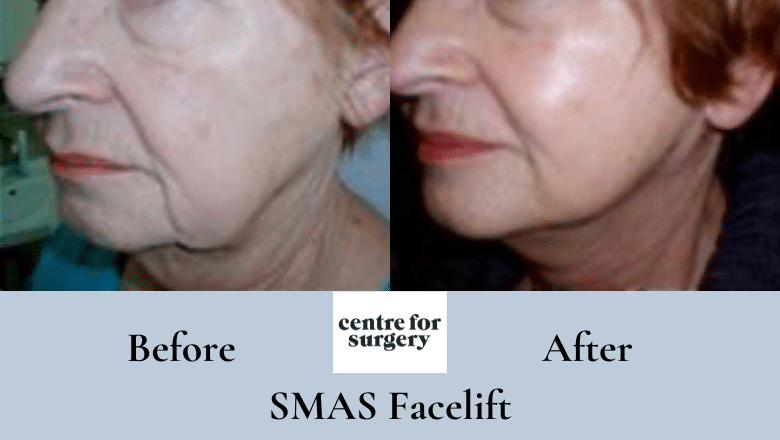
See more in our facelift before and after photos.
How Long Do Facelift Results Last?
No one can promise a fixed number of years. A facelift does not stop ageing; it moves the face back to an earlier starting point, and the face then continues to age. How long the result lasts depends on the technique, your skin and bone structure, and lifestyle factors such as smoking and sun exposure. A 2016 observational review in Plastic and Reconstructive Surgery ↗ of one team’s 25 years of experience, which included 1,089 facial surgery patients, found that patient selection and technique both influenced durability, and that follow-up beyond three years was difficult to maintain[10].
Sleeping on your back during recovery protects the early healing, but it is not a long-term guarantee. Our guides to how long a facelift lasts and how to maintain your facelift results explain what makes a difference over the years.
Frequently Asked Questions: Sleeping After a Facelift
How should you sleep after a facelift?
On your back with your head and shoulders raised, using a wedge, stacked pillows or a recliner. Keep pillows beside you to stop you rolling over. Your surgeon will tell you how long to keep to this, usually the first few weeks.
How long do I have to sleep on my back after a facelift?
Usually for the first two to four weeks, and sometimes longer after a deeper lift. Your surgeon will confirm when you can move to a side-lying position, often at a review appointment. Follow their advice rather than a general rule.
Can I sleep on my side after a facelift?
Not in the early weeks. Side sleeping presses on the incisions and swollen tissues. Most people can start again from around four weeks, with their surgeon’s agreement, beginning with short spells.
How do you sleep after a mini facelift?
In the same way as after a full facelift: on your back with your head raised. Recovery from a mini facelift is usually quicker, so you may be allowed to return to normal positions sooner, but ask your surgeon before you do.
How long does facelift swelling take to go down?
Most visible swelling settles over a few weeks, though mild puffiness can last for several months, especially in the morning. Keeping your head raised at night helps.
Can I damage my facelift by sleeping wrongly?
A small shift in your sleep is unlikely to undo the lift, but pressure or friction on healing incisions can irritate the tissues and worsen swelling. Sudden, painful, one-sided swelling needs urgent attention.
Why is day 3 the hardest after surgery?
Swelling and tightness commonly build over the first two or three days, so the second and third nights can feel the worst. Worry about appearance can peak around the same time. It usually improves from there, but call your surgeon if pain is severe or worsening.
How painful is a facelift?
Most people describe tightness, stiffness and aching more than sharp pain, and it is controlled with the medicines prescribed to you. Pain that is severe, one-sided or getting worse is not expected and should be checked.
Does sleep help you recover after surgery?
Rest is an important part of recovery, and sleep matters, but so does gentle movement, good nutrition and keeping to your surgeon’s instructions. Short walks around the house help circulation and often help sleep.
How do I care for my face after a facelift?
Sleep on your back with your head raised, wear any garment as advised, use cold compresses only if your surgeon recommends them, keep the incisions clean and out of the sun, and avoid make-up or products on the surgical area until you are told it is safe.
Facelift Recovery Support in London
If you are considering a facelift, your consultation is the right time to ask about sleeping arrangements, how long you will need to keep your head raised, and what support you will have at home. Our facelift page explains the operation, and you can contact us or call 020 7993 4849 to arrange a consultation at our Baker Street hospital.
References
- Butris N, Tang E, Pivetta B, et al. The prevalence and risk factors of sleep disturbances in surgical patients: a systematic review and meta-analysis. Sleep Medicine Reviews 2023;69:101786. doi:10.1016/j.smrv.2023.101786 ↗
- Smith TJ, Wilson MA, Karl JP, et al. Impact of sleep restriction on local immune response and skin barrier restoration with and without “multinutrient” nutrition intervention. Journal of Applied Physiology 2018;124(1):190-200. doi:10.1152/japplphysiol.00547.2017 ↗
- Villarroel PP, Langdon C, Arancibia-Tagle D. Improving postsurgical management of rhinoplasty: a comprehensive review of existing literature. Facial Plastic Surgery 2025;41(6):850-855. doi:10.1055/a-2533-2651 ↗
- Soh PQP, Wong WHT, Roy T, Tam WWS. Effectiveness of non-pharmacological interventions in improving sleep quality after cardiac surgery: a systematic review and meta-analysis. Journal of Clinical Nursing 2024;33(6):2084-2098. doi:10.1111/jocn.17115 ↗
- Gardiner CL, Weakley J, Burke LM, et al. Dose and timing effects of caffeine on subsequent sleep: a randomized clinical crossover trial. Sleep 2025;48(4). doi:10.1093/sleep/zsae230 ↗
- Gupta V, Winocour J, Shi H, et al. Preoperative risk factors and complication rates in facelift: analysis of 11,300 patients. Aesthetic Surgery Journal 2016;36(1):1-13. doi:10.1093/asj/sjv162 ↗
- Lazzeri Domar N, Botti G, Botti C. Step-by-step guide to hematoma prevention after rhytidectomy: lessons learned from 40 years of experience. Aesthetic Plastic Surgery 2025;50(4):1501-1509. doi:10.1007/s00266-025-05235-7 ↗
- Mobasser DC, Kerendi AN, Nahai F. All about clonidine and its role in preventing hematoma following aesthetic facial surgery: a narrative review with practical guidance. Aesthetic Surgery Journal Open Forum 2026;8:ojag130. doi:10.1093/asjof/ojag130 ↗
- Alenazi AS, Obeid AA, Alderaywsh A, et al. Impact of tranexamic acid on bleeding outcomes and complication rates in facelift: a systematic review and meta-analysis. Aesthetic Surgery Journal 2024;44(11):NP749-NP761. doi:10.1093/asj/sjae156 ↗
- Rohrich RJ, Narasimhan K. Long-term results in face lifting: observational results and evolution of technique. Plastic and Reconstructive Surgery 2016;138(1):97-108. doi:10.1097/PRS.0000000000002318 ↗