


In this guide17 sections
- Key Points
- How Long Is BodyTite Recovery?
- What Happens on the Day of BodyTite
- BodyTite Recovery Timeline: Day by Day and Week by Week
- Compression Garments After BodyTite
- BodyTite Swelling, Bruising, Firmness and Numbness
- When Can I Exercise After BodyTite?
- Sleeping After BodyTite
- Driving, Work and Daily Life After BodyTite
- Does the Treated Area Affect BodyTite Recovery?
- BodyTite vs Liposuction Recovery
- BodyTite Aftercare: Dos and Don’ts
- BodyTite Results: When Will I See the Final Result?
- When to Contact Your Surgeon After BodyTite
- BodyTite Recovery FAQs
- BodyTite in London
- References
Key Points
- How long is BodyTite recovery? Most people return to desk work in two to five days and feel largely back to normal within about two weeks. Full exercise usually waits until about six weeks, and the final result takes three to six months.
- How long does swelling last after BodyTite? Bruising and most of the swelling settle over one to two weeks, but some swelling and firmness can take several weeks to go.
- How long do I wear a compression garment? Usually day and night for about six weeks, taken off briefly to shower.
- When can I exercise after BodyTite? Walking from day one, no strenuous exercise or heavy lifting for four weeks, and full exercise from about six weeks after your surgeon’s review.
- When will I see BodyTite results? Some change is visible once swelling eases, but skin tightening builds gradually as collagen remodels, with the final result at three to six months.
- Is BodyTite painful? Most people describe soreness and tightness like a deep bruise, which is usually well controlled with the painkillers they are prescribed.
BodyTite recovery is short for the visible part and slow for the result. BodyTite is radiofrequency-assisted liposuction: a probe under the skin heats the fat and the underside of the skin at the same time, and the loosened fat is then removed with liposuction. Most people are back at desk work within two to five days and feel largely recovered by about two weeks. The skin, though, keeps tightening for three to six months as new collagen forms, so the final result takes much longer to show than the bruising does to fade.
This guide covers the BodyTite recovery timeline day by day and week by week, compression garments, swelling, firmness and numbness, exercise, sleeping and driving, and the warning signs to look out for. For advice that applies to every operation, see our recovery after cosmetic surgery hub, and if you are not sure whether your concern is loose skin, fat or both, our guide to loose skin vs fat explains how to tell.
How Long Is BodyTite Recovery?
It depends on what you mean by recovered. BodyTite recovery has three milestones: back to desk work at two to five days, back to full exercise at about six weeks, and the final skin-tightening result at three to six months. How long each stage takes depends on how many areas were treated, how large they were and whether BodyTite was combined with other liposuction.
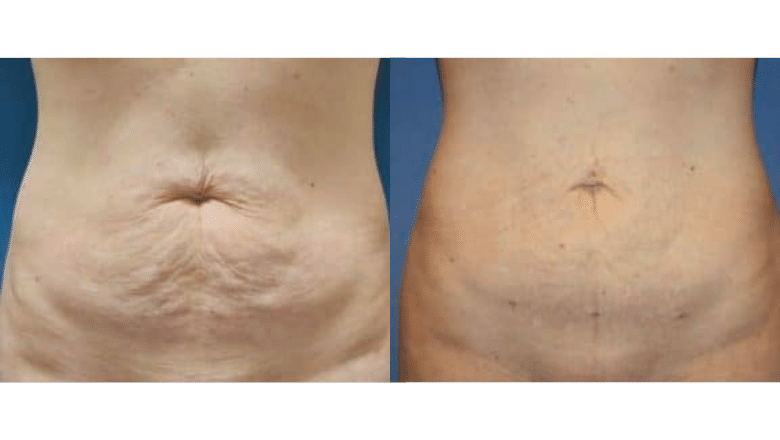
The long final stage is down to how the skin responds to heat. In a 2013 randomised split-abdomen trial in Aesthetic Surgery Journal ↗, one side of each patient’s abdomen had liposuction alone and the other had liposuction with radiofrequency. The skin surface area shrank by about 26% on the radiofrequency side, compared with about 8% after liposuction alone, and the difference was still there at one year[1]. That tightening happens beneath the surface over months, which is why it pays to be patient.
What Happens on the Day of BodyTite
BodyTite at Centre for Surgery is a day case. Smaller, single areas are usually treated under local anaesthetic with sedation, and larger or multiple areas under TIVA (total intravenous anaesthesia); the anaesthetic for your treatment is decided by your surgeon and anaesthetist, and our guide to anaesthesia for cosmetic surgery explains the options. The treatment usually takes one to three hours, depending on the number of areas.
The probe goes in through small incisions of 3–5 mm, placed in skin folds or near existing scars where possible, and these are closed with dissolvable stitches. The device monitors skin temperature throughout to reduce the risk of a burn; in a 2020 series of 300 operations under local anaesthetic, there were no major complications and only three minor ones[2]. Your compression garment goes on before you leave. A responsible adult must take you home and stay with you for 24 hours after sedation or TIVA; the Royal College of Anaesthetists’ advice for the person looking after you ↗ explains what that involves. You are given your surgeon’s direct number for the first 24 hours on your discharge summary.
Your BodyTite recovery dates
Add your operation date to see the milestones in this guide as dates, then save them to your phone's calendar.
BodyTite Recovery Timeline: Day by Day and Week by Week

Timings vary with the size and number of areas treated and with your own healing, so always follow your surgeon’s instructions.
Days 1–2
Expect soreness, swelling and tightness in the treated area, a little like a deep bruise. Some fluid may leak from the small incisions for the first day or so, which is normal; the dressings and garment absorb it. Take your prescribed painkillers as directed and rest, but get up and walk around the house regularly to keep your circulation moving. Avoid lifting and anything strenuous.
Days 3–7
Bruising and swelling are usually at their most visible early in the week and then start to fade. Many people with desk-based jobs return to work between days two and five. Keep the small incisions clean and dry and wear your garment day and night. Drains are rarely needed after BodyTite; if one is placed, it is usually removed within the first few days.
Weeks 2–4
At around seven to ten days you have a nurse-led wound check. The stitches dissolve on their own, so nothing needs removing. Most of the bruising has gone by the end of the second week and most people feel largely back to normal, although the treated area can still feel firm, lumpy or numb in places. Keep walking and doing light activity, but avoid strenuous exercise and heavy lifting until four weeks.
Weeks 4–6
Swelling continues to settle and the contour becomes clearer. Light exercise can usually build up from four weeks. At around six weeks you have your surgeon’s review, and most people are cleared for full exercise and can stop wearing the garment.
Months 3–6
The skin continues to tighten as collagen remodels beneath the surface, and the last of the swelling and firmness settles. The final result is usually visible at three to six months, and you have a formal assessment at around three months.
Compression Garments After BodyTite
Your compression garment is one of the most important parts of BodyTite aftercare. It limits swelling, supports the skin while it contracts onto the new contour and helps the treated area heal evenly. Our guide to wearing a compression garment after surgery explains how it works and how to care for it.
The garment is usually worn day and night for about six weeks, taken off only briefly to shower, although your surgeon will confirm the right length of time for the area and extent of your treatment. Compression garments are bought separately and confirmed with you in advance. Having two makes washing easier.
BodyTite Swelling, Bruising, Firmness and Numbness
These are expected parts of healing, not complications. How much you notice depends on the area and how much fat was removed.
Swelling and bruising
Bruising and most of the swelling usually settle over one to two weeks, but some swelling can take several weeks to go completely, particularly on the abdomen and thighs and at the end of the day. Your garment, gentle walking, plenty of water and keeping salty, processed food to a minimum all help. The NHS guidance on liposuction recovery ↗ notes that some swelling can take months to settle fully, and that the result is not clear until it has.
Firmness and lumps
As the heated tissue heals, it is common for the area to feel firm or slightly lumpy for several weeks. In a study of radiofrequency-assisted liposuction of the neck and lower face, about one in eleven people developed areas of firm tissue, and all of these settled with massage[3]. Ask your team before starting any massage, and tell them if a firm area is getting larger, hot or more painful.
Numbness and tingling
Numbness, tingling or extra sensitivity of the skin over the treated area is common. It settles gradually as the small nerves recover, but it can take several months.
When Can I Exercise After BodyTite?
Moving gently from day one helps your circulation and reduces swelling, but hard exercise too soon raises your blood pressure, increases swelling and can affect how evenly the area heals.
- Days 1–14: walking, several times a day, building up gradually.
- Weeks 2–4: longer walks and light daily activity. No strenuous exercise, running or heavy lifting.
- Weeks 4–6: light exercise can usually restart, avoiding anything that puts strain on the treated area.
- Week 6 onwards: after your surgeon’s review, build back towards your full routine, including weights and high-intensity training.
Our guide to exercising after cosmetic surgery explains how to build back up safely.
Sleeping After BodyTite
The best position depends on the area treated. The aim is to keep pressure off the treated area and, where you can, to keep it slightly raised. After abdomen or thigh treatment, most people are most comfortable on their back with a pillow under the knees for the first week or two. After arm treatment, a pillow under each arm helps. After neck or jawline treatment, sleep with your head raised on two or three pillows. Your surgeon will confirm the best position for your treatment.
Driving, Work and Daily Life After BodyTite
Going back to work
Most people with desk-based jobs return within two to five days. Jobs that involve lifting or a lot of movement usually need longer, often up to two weeks, and more if several areas were treated.
Driving
Do not drive for at least 24 hours after sedation or an anaesthetic. Most people drive again within the first week, once they no longer need painkillers that cause drowsiness and can move, turn and brake without discomfort. Check your insurance policy, as some insurers require a longer gap after surgery.
Showering
You can usually shower within a day or two, taking the garment off briefly and putting it straight back on, or as your surgical team advises. Avoid baths, swimming and hot tubs until the incisions have fully healed.
Travel
Short journeys are fine once you are comfortable. Longer trips, especially flights, are best delayed until the early healing phase has passed; talk to your team if you need to travel.
Does the Treated Area Affect BodyTite Recovery?
Yes. BodyTite can treat the abdomen, flanks, arms, thighs, knees, back and bra roll, and the neck and chin, and several areas can be treated in one session. Smaller areas such as the neck, arms or knees usually mean less swelling and a quicker return to normal than a large area such as the abdomen or thighs. Treating several areas at once adds to the recovery.
Arm treatment has its own considerations, covered in our guide to the BodyTite arm lift. For the face and jawline, the smaller handpiece is called FaceTite, which follows a similar but usually shorter recovery.
BodyTite vs Liposuction Recovery

BodyTite is itself a form of liposuction, so the early recovery is similar in kind: bruising, swelling, a garment and a gradual return to exercise. BodyTite is usually used for smaller volumes of fat in areas with some loose skin, so the early recovery is often shorter than after larger-volume liposuction. When BodyTite is combined with more extensive liposuction, your recovery follows the longer liposuction timeline, which our liposuction recovery guide sets out. Our guide to BodyTite vs liposuction explains which suits which concern, and our comparison of Argo Plasma vs BodyTite covers another way of tightening skin after liposuction.
BodyTite Aftercare: Dos and Don’ts
Following your surgeon’s instructions closely is the single biggest factor in a smooth recovery after BodyTite.
Do
- Wear your garment day and night for as long as your surgeon recommends.
- Walk little and often from day one.
- Keep the incisions clean and dry and follow your wound care instructions.
- Eat well and stay hydrated, with enough protein for repair and not too much salt, which encourages fluid retention.
- Protect the area from the sun, using clothing or sunscreen over healed incisions, so the small scars fade well.
- Be patient. Judging the result at a few weeks, while the area is still swollen and firm, causes unnecessary worry.
Don’t
- Smoke or use nicotine. Nicotine reduces blood flow and slows healing. Stop for at least four weeks before and four weeks after treatment.
- Drink alcohol in the first week or two, because it can increase swelling and should not be mixed with some painkillers.
- Lift heavy objects or do strenuous exercise for the first four weeks.
- Apply heat packs or use saunas on the treated area while it is numb, because you may not feel a burn.
- Ignore symptoms that get worse rather than better.
BodyTite Results: When Will I See the Final Result?
Some change in contour is visible once the first swelling goes down, but the skin tightening builds gradually over three to six months as collagen remodels. Results last as long as your weight stays stable, because the fat cells removed do not come back, although new weight gain and normal ageing still affect the skin.
It is worth being realistic about how much tightening to expect. A recent systematic review in Aesthetic Plastic Surgery ↗ of 19 studies found that radiofrequency-assisted liposuction was associated with the highest average skin retraction of the devices studied, about 31%, but the studies varied widely and many were at risk of bias, so the authors could not say firmly that any one device was better[4]. BodyTite works best for mild to moderate looseness. Where there is a lot of loose skin, surgery that removes skin, such as a tummy tuck or excess skin removal surgery, gives a more reliable result; our comparison of BodyTite vs a tummy tuck explains the difference.
When to Contact Your Surgeon After BodyTite
Serious problems after BodyTite are uncommon. In a series of 40 people treated on the arms under local anaesthetic, there was one small burn near the elbow, treated with wound care, and one fluid collection (seroma) that was drained[5]. Our guide to cosmetic surgery risks explains how complications are reduced and managed. Contact your surgical team straight away if you have:
- pain that is getting worse rather than better after the first few days
- a temperature, or increasing redness, heat or discharge around an incision
- a blister, a darkened or broken patch of skin, or an area that looks like a burn
- a swelling that is growing, tense or feels like it contains fluid
- heavy bleeding through the dressings
- a painful, swollen calf or breathlessness (call 999 for chest pain or difficulty breathing)
For the first 24 hours, call your surgeon on the direct number on your discharge summary. After that, call the clinic on 020 7993 4849, 9am–6pm Monday to Saturday, and NHS 111 out of hours, or 999 in an emergency.
BodyTite Recovery FAQs
How long does it take to recover from BodyTite?
Most people return to desk work in two to five days and feel largely back to normal within about two weeks. Full exercise usually restarts at about six weeks, and the final result takes three to six months.
How long does swelling last after BodyTite?
Most of the swelling and bruising settles over one to two weeks. Some mild swelling and firmness can last several weeks, and occasionally longer after larger areas.
Is BodyTite painful?
The treatment itself is done under local anaesthetic with sedation or under TIVA, so you should not feel pain during it. Afterwards most people describe soreness and tightness for a few days, which is usually well controlled with prescribed painkillers.
Is BodyTite permanent?
The fat cells removed do not grow back, so the change in contour is long-lasting if your weight stays stable. The skin tightening is lasting too, but your skin will continue to age naturally, and weight gain can stretch it again.
Is it normal to feel lumps after BodyTite?
Yes. Firm or lumpy areas under the skin are common for several weeks while the heated tissue heals, and they usually soften gradually[3]. Tell your team about any lump that is growing, hot or painful.
Will BodyTite leave scars?
The incisions are only 3–5 mm long and are placed in skin folds where possible. They usually fade to small marks over the following months, helped by protecting them from the sun.
Can BodyTite be combined with other procedures?
Yes. BodyTite is often combined with other liposuction, for example 360 liposuction of the midsection, and sometimes with skin treatments in the same session. Combining procedures usually lengthens the recovery, and your surgeon will explain what to expect.
When can I go back to the gym after BodyTite?
Walking is encouraged from day one and light exercise can usually restart at about four weeks. Full exercise, including weights, usually waits until about six weeks, after your surgeon has reviewed you.
When can I fly after BodyTite?
Short flights are usually possible after the first week if you are comfortable, but long-haul flights are best left for longer because sitting still for hours increases swelling and the risk of a blood clot. Agree timing with your surgeon before you book.
BodyTite in London
BodyTite at Centre for Surgery is performed by GMC-registered surgeons at our CQC-regulated Baker Street hospital, rated Good overall by the CQC. The consultant who assesses you at consultation is the consultant who performs your treatment, and you have follow-up reviews as you heal, including a nurse wound check at seven to ten days, a surgeon review at six weeks and an assessment at three months. Your initial consultation is £100, redeemable against the cost of treatment if you go ahead; our BodyTite cost guide explains what the price includes, and finance options are available, subject to status. Our BodyTite page explains the treatment and who it suits.
Phone: 020 7993 4849 | Address: 95–97 Baker Street, Marylebone, London W1U 6RN
Contact us to schedule a consultation
References
- Duncan DI. Nonexcisional tissue tightening: creating skin surface area reduction during abdominal liposuction by adding radiofrequency heating. Aesthetic Surgery Journal 2013;33(8):1154–1166. doi:10.1177/1090820X13505862
- Chia CT, Marte JA, Ulvila DD, et al. Second generation radiofrequency body contouring device: safety and efficacy in 300 local anesthesia liposuction cases. Plastic and Reconstructive Surgery Global Open 2020;8(9):e3113. doi:10.1097/GOX.0000000000003113
- Keramidas E, Rodopoulou S. Radiofrequency-assisted liposuction for neck and lower face adipodermal remodeling and contouring. Plastic and Reconstructive Surgery Global Open 2016;4(8):e850. doi:10.1097/GOX.0000000000000809
- Faustino LD, Cruciol FS, Motoki THC, et al. Comparative efficacy of adjuvant technologies for skin tightening in liposuction: a systematic review and quantitative analysis. Aesthetic Plastic Surgery 2026;50(4):1556–1570. doi:10.1007/s00266-025-05334-5
- Theodorou S, Chia C. Radiofrequency-assisted liposuction for arm contouring: technique under local anesthesia. Plastic and Reconstructive Surgery Global Open 2013;1(5):e37. doi:10.1097/GOX.0b013e3182a58c80







