

In this guide8 sections
- What is the minimum age for breast reduction in the UK?
- Why 18? The two reasons that actually matter
- Breast reduction under 18: is it ever possible?
- Breast reduction on the NHS: do the criteria change with age?
- Is there an upper breast reduction age limit?
- What is the best age for breast reduction?
- Breast reduction age: frequently asked questions
- Breast reduction at Centre for Surgery
“How old do I have to be?” is one of the most common questions we are asked about breast reduction surgery — usually by women in their late teens and early twenties who have spent years dealing with back and shoulder pain, and often by parents asking on behalf of a daughter who is struggling.
The short answer on breast reduction age is 18 for cosmetic surgery in the UK. But that number hides a more interesting set of questions: why 18 specifically, what happens to girls whose breasts are causing genuine physical harm before that age, whether the NHS applies the same rule, and — for adults — whether there is a point at which you are too old, or a stage of life when the timing is simply better. This guide answers all of them honestly.
What is the minimum age for breast reduction in the UK?

In practice, the minimum age for breast reduction in the UK is 18 where the surgery is cosmetic. If you are asking what age you can have a breast reduction, that is the short answer — but the breast reduction age limit works differently from how it is usually described, and it is worth understanding why.
It is worth being precise about where that comes from, because it is often described as “the legal age” and that is not quite accurate. There is no single piece of UK legislation that sets 18 as the minimum age for cosmetic surgery. The effective minimum comes from two places working together: professional standards — the General Medical Council’s guidance for doctors who offer cosmetic interventions, which requires medical professionals to consider the psychological needs of their patients, and the Royal College of Surgeons’ Professional Standards for Cosmetic Surgery, which address consent and the assessment of the psychologically vulnerable patient — and the law on consent, which governs whether a young person can agree to a procedure at all.
The contrast with injectables is instructive. The Botulinum Toxin and Cosmetic Fillers (Children) Act 2021 did create a specific criminal offence of administering botulinum toxin or dermal fillers to under-18s in England for cosmetic purposes. Parliament legislated directly there. For surgery, it left the matter to professional regulation — which is no less binding on a reputable surgeon, but works differently.
The practical effect is the same. At Centre for Surgery we do not perform cosmetic breast reduction on anyone under 18, and no responsible UK provider should. If you are under 18 and your breasts are causing you real physical problems, the right route is your GP and the NHS, not a private cosmetic clinic — we explain that pathway below.
Why 18? The two reasons that actually matter
The age threshold is not arbitrary bureaucracy. There are two genuine clinical reasons behind it, and they are worth understanding because they explain why waiting is usually in your interest rather than against it.
1. Breast development needs to finish
Breasts do not finish developing when periods start. Development runs through five recognised stages (the Tanner stages) that typically begin somewhere between ages 8 and 13 and complete in the late teens to early twenties — usually around 17 or 18, but not uncommonly into the early twenties. Our guide on when breasts stop growing sets out those stages in detail.
This matters enormously for breast reduction specifically, and here is why: if you remove breast tissue before development is complete, the remaining tissue can continue to grow. A reduction performed at 15 may look right at 16 and be substantially undone by 19. That means a second operation, more scars, and more risk — for a result you could have achieved once, properly, by waiting. We cover this in more depth in our guide on whether breasts can grow back after breast reduction.
Weight is the other moving part. Breast tissue is partly fat, so significant weight change after surgery alters the result. Most surgeons want to see a stable weight for at least six months before operating — and the late teens are rarely a period of stable weight.
2. Consent has to be meaningful
At 18 you are an adult in UK law and can consent to surgery in your own right. Below that, consent is more complicated — it involves parental responsibility, an assessment of whether the young person has the maturity to understand what they are agreeing to, and in some circumstances the courts.
There is a deeper point here than the paperwork. Breast reduction is permanent and irreversible. It leaves permanent scars. It can affect nipple sensation and the ability to breastfeed. Those are significant lifelong trade-offs, and the standard for being confident that someone genuinely understands them — rather than simply wanting relief from something distressing right now — is deliberately high.
Breast reduction under 18: is it ever possible?

Breast reduction under 18 is possible — but through the NHS, on medical grounds, and rarely. Teenage breast reduction is not something a private cosmetic clinic should offer. This is the distinction that most articles blur, so it is worth stating plainly: the 18 threshold applies to cosmetic breast reduction. Where breasts are causing genuine physical harm, surgery stops being cosmetic and becomes reconstructive or therapeutic, and the calculation changes.
The conditions that trigger this are uncommon but real.
Juvenile (virginal) breast hypertrophy
This is the condition most people have never heard of and the one that matters most here. Juvenile breast hypertrophy — also called virginal breast hypertrophy — is a rare condition in which the breasts grow rapidly and excessively during puberty, sometimes over a matter of months, far beyond normal development. It is thought to involve an abnormal tissue response to normal hormone levels rather than abnormal hormones themselves.
The consequences are not subtle: severe back, neck and shoulder pain in a teenager, deep bra-strap grooving, posture changes, skin breakdown beneath the breasts, inability to take part in school sport, and considerable psychological distress at an age when that is particularly hard to carry. In these cases, waiting until 18 can mean years of avoidable harm, and surgery before 18 may genuinely be in the young person’s best interests.
The honest complication is that juvenile hypertrophy carries a real risk of regrowth after surgery, precisely because the underlying process is still active. Some patients need more than one operation. Some are managed with hormonal treatment alongside surgery. This is specialist territory and it belongs in an NHS multidisciplinary setting, not a private cosmetic clinic.
Gigantomastia
Gigantomastia is the broader term for excessive breast size, usually defined as more than roughly 3% of total body weight, or around 2.2kg (5lbs) of excess tissue per breast. It can occur in adolescence, during pregnancy, or in association with certain medications and conditions. The symptoms overlap with juvenile hypertrophy, and so does the treatment logic.
Severe, documented physical symptoms
Chronic pain that has not responded to physiotherapy, permanent grooving from bra straps, recurrent skin irritation and infection beneath the breast fold, and restricted mobility can all support a case for earlier intervention where they are well documented and conservative measures have genuinely been tried.
The safeguards that apply
Where surgery on someone under 18 is contemplated, the bar is deliberately high:
- A second consultant opinion — one surgeon’s view is not enough.
- GP involvement and referral, with the symptom history documented over time.
- Written consent from someone with parental responsibility, alongside the young person’s own agreement.
- Psychological assessment, including screening for body dysmorphic disorder, which the Royal College of Surgeons’ standards require consideration of in all cosmetic surgery patients and which matters especially in adolescents.
- A demonstrable case that the benefits outweigh both the risks of operating and the risks of not operating — including the risk of needing revision surgery if growth continues.
You can usually have a consultation before 18 even where surgery would wait, and that is often worth doing: it gives you a plan, a timeline, and something concrete rather than an indefinite wait.
Breast reduction on the NHS: do the criteria change with age?

This is the question most private clinics skip entirely, and it is the one that matters most for younger patients — because if you are 16 and in pain, the NHS is your route, not a private clinic.
Breast reduction is one of the few cosmetic-adjacent procedures the NHS will fund, but only where it is judged medically necessary. It is classed as a procedure of limited clinical value, which means each Integrated Care Board sets its own threshold, and those thresholds vary considerably by area. Breast reduction NHS criteria vary by area, but broadly you can expect them to look for:
- Documented physical symptoms — neck, back or shoulder pain, bra-strap grooving, recurrent intertrigo or infection beneath the breasts.
- Symptoms that have persisted, typically for a year or more, and have not responded to conservative measures — properly fitted support bras, physiotherapy, weight management.
- A BMI threshold — commonly under 25 to 27, though this varies by area and is often the criterion patients fall down on.
- A minimum amount of tissue to be removed — frequently expressed as a specific weight per breast.
- Non-smoking status, usually for a period before surgery.
Age is not usually a stated criterion in itself. What matters is whether the case is medically justified — which is precisely why a 16-year-old with juvenile hypertrophy can be treated on the NHS while an 18-year-old wanting a purely cosmetic reduction cannot.
Waiting lists are long and refusals are common, which is why many people end up considering the private route once they turn 18. Both paths are legitimate. What is not legitimate is a private clinic implying it can offer a teenager something the NHS is unreasonably withholding.
Is there an upper breast reduction age limit?
No. There is no upper age limit for breast reduction, and this surprises people.
What matters at the other end of life is health, not birthdays. A fit and well 65-year-old is often a better surgical candidate than an unwell 40-year-old. What your surgeon assesses is your general health, whether any long-term conditions are well controlled, your medications (particularly blood thinners), your anaesthetic fitness, and your smoking status.
Two practical points for older patients. Skin elasticity declines with age, which can subtly affect how the result settles — an experienced surgeon plans for this rather than being caught out by it. And breast screening matters: if you are of screening age, you should be up to date with mammograms before surgery, and you should know that breast reduction can change the appearance of breast tissue on future mammograms, so tell the screening service you have had surgery.
Relief from decades of back and shoulder pain is worth having at 60 just as much as at 30. We see plenty of women who wish they had done it sooner.
What is the best age for breast reduction?

For adults, there is no single best age for breast reduction — but there are factors that make the timing better or worse. These are worth thinking through honestly rather than rushing.
Have your breasts finished developing?
The first and firmest requirement. Development complete, and ideally a period of stability afterwards, so what the surgeon plans around is what you will keep.
Is your weight stable?
Six months of stable weight is the usual benchmark. Breast tissue contains fat, so losing or gaining a significant amount afterwards will change your result. If you are actively losing weight — or using weight-loss medication — it is better to reach your settled weight first.
Are you planning a family?
This is the big one, and it deserves honesty rather than reassurance.
Pregnancy and breastfeeding change the breasts substantially — they enlarge, then often lose volume and sit lower afterwards. A reduction performed before children can be meaningfully altered by a pregnancy, and some women need revision — which is why a mummy makeover after your family is complete is sometimes the better plan.
Breast reduction can also affect the ability to breastfeed. It does not always — modern techniques preserve the nipple’s blood supply and much of its duct connection, and many women breastfeed successfully afterwards — but the risk is real and depends on the technique used and how much tissue is removed. It cannot be guaranteed either way. Our guide on breastfeeding after breast surgery covers this in detail.
None of that means you must wait. Many women with severe symptoms decide, entirely reasonably, that a decade of pain is too high a price to pay for a possibility that may never arise, and accept that they might want revision later. That is a legitimate choice made with full information — which is exactly what a consultation should give you.
Are your symptoms affecting your life now?
The counterweight to all of the above. If large, heavy breasts are causing daily pain, stopping you exercising, and shaping decisions you make every day, that has a cost too — and it compounds over years.
Breast reduction age: frequently asked questions
Can a 16 year old get a breast reduction?
Not privately, and not for cosmetic reasons. Through the NHS it is possible where there is a genuine medical need — juvenile breast hypertrophy or gigantomastia with severe documented symptoms — but it requires GP referral, a second consultant opinion, parental consent, and psychological assessment. Speak to your GP.
Can I get a breast reduction at 17?
The same answer applies. Seventeen is not 18, and the professional standards do not bend for a few months. You can, however, have a consultation and be ready to proceed when you turn 18.
What age can you have a breast reduction?
In the UK the answer is 18 for cosmetic breast reduction. Under-18s may qualify through the NHS where there is genuine medical need, such as juvenile breast hypertrophy or gigantomastia with severe documented symptoms. There is no upper age limit.
Why do I have to be 18?
Two reasons: your breasts may still be developing, and removing tissue too early risks regrowth and a second operation; and consent to permanent, irreversible surgery with lifelong trade-offs needs to be given by an adult in their own right.
Is 18 too young for a breast reduction?
Not in itself. If development is complete, weight is stable, and symptoms are genuine, 18 can be an excellent time — you avoid years of unnecessary pain. Your surgeon will want to be satisfied on all three points, and to talk through family planning honestly.
Is there a maximum age for breast reduction?
No. Health matters, not age. Fit patients in their sixties and seventies have breast reductions successfully. Your surgeon assesses anaesthetic fitness, general health, and medication rather than your date of birth.
Does the NHS have an age limit for breast reduction?
Not usually as a stated criterion. NHS funding depends on medical need against your local Integrated Care Board’s threshold — typically documented symptoms, failed conservative treatment, a BMI limit, and a minimum tissue weight. A teenager with genuine medical need may qualify; an adult wanting cosmetic reduction will not.
Should I wait until after having children?
It depends on your symptoms. Pregnancy can change the result and reduction can affect breastfeeding, so waiting has real advantages if children are close. If severe symptoms are affecting your life now and children are years away or uncertain, many women reasonably proceed and accept they might want revision later.
Will my breasts grow back if I have surgery too young?
They can. This is the central clinical argument for waiting — if tissue is removed before development completes, the remaining tissue can continue to grow, undoing the result. It is a particular risk in juvenile breast hypertrophy.
Can I have a consultation before I turn 18?
Yes, in most cases, with a parent or guardian present. It will not lead to surgery before 18 for cosmetic reasons, but it gives you accurate information, a plan, and a realistic timeline.
Breast reduction at Centre for Surgery
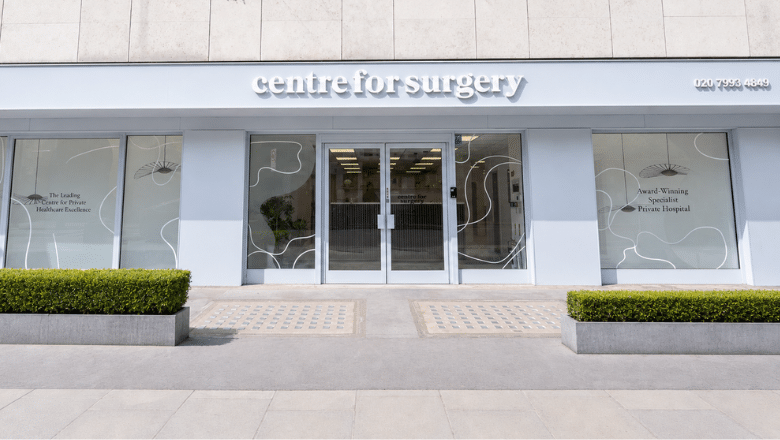
Centre for Surgery is an independent clinic at 95–97 Baker Street in London, rated “Good” overall by the Care Quality Commission. Our medical content is reviewed by Specialist Plastic Surgeon Dr Spyridon Vlachos (GMC 7522950).
We perform breast reduction on patients aged 18 and over. If you are under 18, we will not operate — but your GP can refer you into the NHS pathway, and that is the right route for a genuine medical case at that age.
For adults, a few things shape how we approach it:
- Consultation with your surgeon — the person assessing you is the person who operates.
- Honest case selection — if your breasts are still developing, your weight is unsettled, or the timing is wrong for other reasons, we will say so rather than book you in.
- Day-case surgery under TIVA — total intravenous anaesthesia, which avoids the inhalational agents of a traditional general anaesthetic and allows a quicker, clearer recovery.
- A recommended two-week cooling-off period between consultation and surgery — you are never pressured to decide quickly.
- Aftercare included — follow-up and support are part of your treatment, not an added extra.
We will also talk you through the parts people find hardest to ask about: what cup size you can realistically expect, how much tissue can safely be removed, nipple sensation, scarring, and the risks and how we minimise them. If a breast uplift rather than a reduction would suit you better, we will tell you that too — our guide on breast lift vs breast reduction compares the two.
To discuss breast reduction with a specialist, book a consultation, call 020 7993 4849, or email contact@centreforsurgery.com to arrange an in-person appointment at our Baker Street clinic.
For procedures over £1,500, finance is available through Chrysalis Finance, subject to status. See our finance options for details.
Related Articles
- When Do Breasts Stop Growing? Age, Stages and Options
- Gigantomastia — Breast Reduction for Very Big Breasts
- When Is the Best Age to Have a Breast Lift?