


In this guide16 sections
- Summary
- Why Do You Get Loose Skin After Weight Loss?
- What Is Skin Removal Surgery?
- Can You Get Excess Skin Removal on the NHS?
- How to Apply for Loose Skin Removal on the NHS
- What Are the NHS Criteria for Excess Skin Removal?
- If Your Application Is Declined
- How Long Is the Wait for Skin Removal on the NHS?
- Why Many Patients Choose Private Skin Removal Surgery
- How Much Does Excess Skin Removal Cost in the UK?
- Excess Skin Removal After Bariatric Surgery on the NHS
- What to Expect from Private Skin Removal Surgery
- Does Excess Skin Removal Improve Quality of Life?
- What the Published Evidence Shows
- FAQs
- Why Choose Centre for Surgery
Summary
Skin removal surgery is available on the NHS, but it is a restricted procedure in most areas and funding is uncommon. Approval generally requires documented clinical problems caused by the skin fold — most often recurrent intertrigo that has needed repeated treatment over at least a year — together with a sustained period of weight stability and, in many policies, specific BMI thresholds. Where funding is granted it is usually for an apronectomy or panniculectomy rather than a full tummy tuck. Psychological distress alone rarely meets the criteria. Patients who fall outside their ICB’s policy can apply through an Individual Funding Request, though approval rates are low. The cost of private excess skin removal at Centre for Surgery depends on the areas treated.
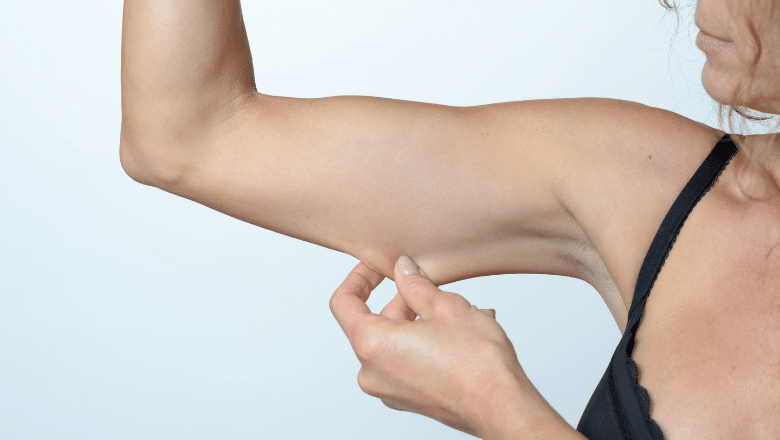
Losing a large amount of weight is a major achievement, whether it’s through bariatric surgery or lifestyle changes. However, many people are left with a frustrating problem that diet and exercise alone can’t fix — excess, sagging skin. This loose skin often forms around the stomach, arms, thighs, and chest, creating both physical discomfort and emotional distress.
The next step for many people after massive weight loss is to consider skin removal surgery, also known as body contouring surgery. It’s a procedure that can remove redundant folds of skin and help reveal the slimmer body shape achieved beneath. Skin removal surgery NHS funding is one of the most common questions people ask at this stage, and the honest answer is: it depends.
At Centre for Surgery, our Baker Street clinic specialises in excess skin removal after weight loss. This guide covers exactly how NHS eligibility works, what the referral process involves, and what private surgery looks like as an alternative.
Why Do You Get Loose Skin After Weight Loss?

When the body gains weight, skin stretches to accommodate the increased fat volume beneath it. Over time, the collagen and elastin fibres in the skin weaken, losing their ability to bounce back. After weight loss — particularly rapid or massive weight loss — the skin can’t always retract, leaving folds of loose or hanging skin.
This excess skin can cause a range of problems. Many patients experience rashes, irritation and infections in skin folds, especially in warm or moist areas. Clothing may not fit comfortably, and it can be difficult to find garments that suit a newly slimmed frame. Beyond physical issues, loose skin can also affect mental well-being. Some people find it difficult to fully enjoy their weight loss success because of lingering insecurities about their appearance.
While creams and exercise can slightly improve tone, they cannot eliminate redundant skin. That’s why surgical removal remains the most effective and long-term solution.
What Is Skin Removal Surgery?
Skin removal surgery is a broad term that covers a range of procedures aimed at tightening and reshaping the body after weight loss. These surgeries remove stretched, redundant skin and sometimes reposition underlying tissues to create smoother, firmer contours.
The most common types of excess skin removal surgery include:
-
Abdominoplasty (Tummy Tuck) – removes excess skin and fat from the abdomen and tightens abdominal muscles.
-
Apronectomy (Panniculectomy) – removes the overhanging apron of skin and fat above the pubic area, without muscle repair. This is often the specific procedure NHS boards fund where full abdominoplasty is considered cosmetic.
-
Arm Lift (Brachioplasty) – targets hanging skin on the upper arms.
-
Thigh Lift – smooths and tightens skin on the thighs and buttocks.
-
Breast Lift (Mastopexy) – raises and reshapes sagging breasts.
-
Lower Body Lift – treats multiple areas at once, often including the abdomen, flanks, buttocks and thighs.
Each surgery is tailored to the patient’s unique anatomy, goals and health status.
Can You Get Excess Skin Removal on the NHS?
This is a very common question, and the answer depends on medical necessity rather than cosmetic preference. The NHS considers skin removal surgery a non-essential procedure unless there is clear evidence that excess skin is causing medical or functional problems.
In other words, NHS funding is generally reserved for cases where loose skin is leading to persistent health issues, such as:
-
Recurrent skin infections, ulcers or rashes that don’t respond to medical treatment.
-
Significant difficulties with mobility or hygiene.
-
Psychological distress or depression linked to the excess skin, supported by medical documentation.
Even if these symptoms exist, NHS approval is not automatic. The process is assessed by local Integrated Care Boards (ICBs), which each have their own excess skin removal NHS criteria for deciding whether surgery is clinically justified.
Typically, you’ll need to prove that your weight has been stable for a sustained period — commonly 12 months, though some ICBs require two years, that you’ve reached a healthy BMI, and that you’ve attempted non-surgical solutions without success. In practice, panniculectomy NHS approval is more commonly granted than approval for full abdominoplasty — since panniculectomy addresses the specific functional problem (the overhanging skin apron) without the additional cosmetic muscle-tightening component that pushes abdominoplasty into elective territory.
How to Apply for Loose Skin Removal on the NHS

If you believe you may qualify for NHS funding, your first step is to book an appointment with your GP. They can evaluate your symptoms and refer you to a consultant or specialist for assessment.
During the NHS evaluation process, your condition will be reviewed based on both physical and psychological impact. Photographs may be taken as part of your assessment to document the severity of skin laxity and its effects on your health.
If your case meets the clinical thresholds set by your local NHS board, funding approval may be granted for a specific procedure, such as panniculectomy or abdominoplasty for functional excess skin. However, this process can take several months and is not guaranteed.
Many patients find that despite their challenges, the NHS deems their condition “cosmetic” and therefore ineligible for surgery. This outcome often leads people to explore loose skin surgery NHS alternatives — namely, private treatment, where care can be personalised and scheduled without long waiting times.
What Are the NHS Criteria for Excess Skin Removal?

Most ICB policies do not accept discomfort or appearance as grounds for funding. They ask for documented clinical pathology, and the condition they name most often is recurrent intertrigo — inflammation and infection in the skin fold that keeps returning. Several policies require evidence that it has led to ulceration and needed repeated courses of treatment over a minimum of one year before an application will be considered. Some also set BMI thresholds at both ends: a starting BMI before weight loss of at least 45, and a current BMI under 30.
This is why record-keeping matters more than most patients expect. Every GP visit for a skin-fold infection, every course of antifungal or antibiotic treatment, every dermatology or tissue viability referral and any clinical photographs all become the evidence base for an application. Patients who have managed the problem themselves for years, without their GP recording it, often have the weakest paperwork despite having the worst symptoms.
It is also worth being clear about what the NHS funds when it does approve. Funding is generally for apronectomy or panniculectomy — removal of the overhanging apron for functional reasons. A full abdominoplasty with muscle repair and repositioning of the umbilicus is not usually commissioned, which is a meaningful difference in the result. We cover that distinction in detail in our guide to abdominoplasty versus apronectomy.
If Your Application Is Declined
Patients who do not meet their ICB’s published criteria are not automatically at the end of the road. Most policies allow an Individual Funding Request, in which your GP or consultant argues that your circumstances are exceptional and justify departing from the standard policy. An IFR is not an appeal against the criteria themselves — it has to show that you are clinically different from the typical patient the policy was written for, which is a demanding test and one reason approval rates are low in many regions.
One point is worth setting out honestly, because it affects a great many people. Psychological distress alone rarely meets commissioning criteria. Where it contributes, it usually needs to be of clinical severity and supported by specialist assessment rather than self-reported. That does not make the distress less real, and it is often the reason people pursue excess skin removal privately — but it is not, on its own, a reliable route to NHS funding.
How Long Is the Wait for Skin Removal on the NHS?
The delay most patients encounter is not the surgical waiting list. Body contouring is a restricted procedure in most areas, so the funding decision comes first, and that gate is where applications stall or fail. Building the evidence alone can take a year or more, since policies commonly require a documented treatment history over that period, followed by the ICB’s own assessment before any referral to a surgeon is made.
Criteria and timescales differ meaningfully between ICBs — some require weight stability for 12 months, others for two years, and some ask that you have lost at least half your original excess weight. Your GP can tell you which policy applies where you live, and it is worth asking early rather than after months of preparation. Understanding why loose skin persists after weight loss can also help you judge whether waiting is realistic in your case.
Why Many Patients Choose Private Skin Removal Surgery
For those who don’t meet NHS criteria or prefer not to wait for assessment, private skin removal surgery offers a clear and reliable alternative.
At Centre for Surgery, patients benefit from full control over their treatment journey — from consultation and procedure planning to post-operative care. You choose the hospital, discuss the result you want in depth with your surgeon, and can plan surgery for a time that suits you.
Private surgery also provides access to a wider range of surgical techniques and combination treatments than are typically available through the NHS, along with more predictable scheduling and continuity of care from the same consultant throughout.
How Much Does Excess Skin Removal Cost in the UK?
The cost of excess skin removal surgery varies depending on the number of areas treated, the extent of surgery and the complexity of the case.
As a general guide:
-
Abdominoplasty (tummy tuck) – see our tummy tuck cost guide
-
Apronectomy (panniculectomy) – quoted at consultation
-
Arm lift – see our arm lift cost guide
-
Thigh lift – see our thigh lift cost guide
-
Lower body lift – quoted at consultation
At Centre for Surgery, your consultation includes a thorough examination and a detailed, transparent quote based on your unique surgical plan. We also offer finance through Chrysalis Finance, allowing you to spread the cost over monthly instalments. Finance is available through Chrysalis Finance, subject to status; see our finance options page.
Excess Skin Removal After Bariatric Surgery on the NHS
If you’ve had a gastric bypass, gastric sleeve, or gastric band surgery through the NHS, you may notice loose skin forming around your abdomen, thighs, arms, or chest once your weight stabilises. This is a very common experience for patients who lose a large amount of weight quickly.
While the NHS recognises these physical and emotional challenges, the focus remains on procedures that address medical problems rather than aesthetic concerns. If your excess skin is causing repeated infections, sores, or mobility issues, your GP can refer you for further evaluation.
However, it’s important to note that most patients who undergo bariatric surgery on the NHS are not automatically eligible for skin removal. Approval depends entirely on meeting the strict criteria set by your local board.
What to Expect from Private Skin Removal Surgery
At Centre for Surgery, we begin every patient journey with a detailed, one-to-one consultation. During this meeting, your surgeon will review your health history, assess areas of concern, and discuss your goals in depth.
Once your plan is agreed, your procedure is carried out under TIVA (Total Intravenous Anaesthesia) — delivered entirely intravenously rather than via inhaled gases, for a smoother, faster recovery than a traditional general anaesthetic — at our Baker Street surgical hospital. Incisions are placed strategically to minimise scarring, and redundant skin is removed while tightening the underlying tissue where relevant to the procedure.
After surgery, you’ll spend a short recovery period in our private recovery suite before going home the same day or the following morning. Most patients return to light activities within two to three weeks, depending on the complexity of their surgery. Compression garments help reduce swelling and support healing.
Full results develop gradually as swelling subsides, revealing a smoother, more defined body shape.
Does Excess Skin Removal Improve Quality of Life?
The impact of skin removal surgery extends far beyond physical improvement. Many patients describe it as the final step in their transformation journey.
After shedding significant weight, it can be disheartening to see sagging skin that hides your new contours. Removing that excess skin allows you to truly see and feel your results. Patients often report higher confidence, improved posture, greater freedom in clothing choices, and a renewed sense of pride in their appearance.
What the Published Evidence Shows
Claims about how body contouring makes people feel are easy to make and harder to evidence. Published studies give a more measured picture than most clinic websites offer, and it is worth setting out what they actually found.
A prospective multicentre study of 129 patients undergoing abdominoplasty or lower body lift after massive weight loss found significant improvement across all categories of the SF-36 quality-of-life questionnaire at six months, with all categories except health change still significantly improved at twelve months (Berkane et al., Plastic and Reconstructive Surgery, 2023). Improvements were recorded in self-esteem, physical activity, social relationships and work performance.
A phase IV cohort study using the Body-QoL instrument found total scores rose from 44.0 before surgery to 85.5 in the short term, and that the gain held at 84.4 when patients were reassessed between one and 2.7 years later — the benefit did not fade (Suijker et al., Aesthetic Surgery Journal, 2018). Patients in the massive weight loss group started from lower baseline scores than cosmetic patients but improved to approach them.
The evidence is not uniformly positive, and we think that matters. A study using the BODY-Q and 15D instruments found that health-related quality of life among abdominoplasty patients after massive weight loss remained lower than in an age, sex and BMI-matched general population, with sleep, discomfort, mood and sexual activity the main ongoing concerns (Uimonen et al., JPRAS, 2020). Surgery improved things; it did not return people to population norms. A separate study of medial thighplasty found the physical component of quality of life improved significantly while the mental component did not, and its authors recommended careful selection and psychological support for patients whose expectations centre on mood rather than function (Vater et al., Life, 2024).
The practical reading is that skin removal reliably improves physical function, body image and social confidence, and that those gains appear durable — but that it is not a treatment for depression, and anyone approaching it primarily for that reason deserves an honest conversation before booking.
FAQs
How Do I Know If I Qualify for NHS Skin Removal Surgery?
You may qualify if excess skin is causing chronic health problems such as rashes, sores, infections or psychological distress, and your weight has been stable for at least a year. See our guide on loose skin after weight loss for the full picture on non-NHS treatment options too.
Is panniculectomy more likely to be funded by the NHS than a tummy tuck?
Generally, yes. Panniculectomy addresses a specific functional problem — the overhanging skin apron — without the muscle-tightening and cosmetic contouring included in a full abdominoplasty, which makes it more likely to meet NHS clinical thresholds. See our guide on abdominoplasty vs apronectomy for the full distinction.
Can Exercise Tighten Loose Skin After Weight Loss?
Exercise can help tone muscles but cannot remove redundant skin. Once the skin has lost elasticity, surgery is usually the only effective solution.
What Areas Can Be Treated in One Operation?
Depending on your health and surgical goals, you may combine areas such as the abdomen, thighs and arms. Your surgeon will advise what is safe for you.
How Long Does Recovery Take?
Recovery varies by procedure but typically takes two to four weeks for most daily activities, with full healing over several months.
Will I Have Scars After Surgery?
All surgery involves scarring, but incisions are placed in discreet locations wherever possible to help minimise their visibility.
Is Skin Removal Surgery Safe?
Yes, when performed by an experienced consultant plastic surgeon in a regulated facility.
Will My Results Last Forever?
Results are long-lasting as long as you maintain a stable weight and a healthy lifestyle. Ageing will continue naturally, but won’t reverse the improvement.
Can I Get Finance for Skin Removal Surgery?
You can pay in full or spread the cost with finance through Chrysalis Finance, subject to status. Plans and a representative example are on our finance options page, and a patient coordinator can talk you through them on 020 7993 4849.
How Much Does Excess Skin Removal Cost?
Excess skin removal cost at Centre for Surgery depends on how many areas are treated and whether procedures are combined. A single-area loose skin removal such as an arm lift sits at the lower end, while a lower body lift addressing the abdomen, hips and back sits at the upper end. Your quote is confirmed at consultation after examination, not estimated over the phone.
Is Loose Skin Removal Available on the NHS in Every Area?
No. Each Integrated Care Board sets its own policy, so excess skin removal on the NHS is funded in some areas and refused in others on identical clinical facts. Your GP can tell you which policy applies where you live, and it is worth asking that before you begin building an application.
Why Choose Centre for Surgery
Every excess skin removal procedure at Centre for Surgery is performed by a GMC-registered plastic surgeon, at our purpose-built, CQC-regulated Baker Street clinic, rated “Good” across four domains — safe, effective, caring and responsive. Located at 95–97 Baker Street, London W1U 6RN, our clinic is designed specifically for cosmetic and body contouring procedures.
Reviewed by Dr Spyridon Vlachos, Specialist Plastic Surgeon, GMC 7522950.
If you are considering skin removal surgery, contact us today to book a consultation. Call 020 7993 4849 or email contact@centreforsurgery.com.
Learn more about us on our About Us page, meet our team on the Team Member page, and explore transformations in our Before & After gallery. For detailed information, visit our FAQs and Guides and our Plastic Surgery Blog.
Your initial consultation is £100, redeemable against the cost of your procedure if you proceed. To experience our facilities in person, visit our Baker Street clinic.



