



In this guide11 sections
- What Causes a Postpartum Belly and Loose Skin After Pregnancy?
- Can You Prevent Loose Skin After Pregnancy?
- Non-Surgical Options for Tightening Skin After Pregnancy
- Surgical Options
- Which Treatment Fits Your Degree of Skin Laxity?
- Am I a Suitable Candidate?
- Best Timing for Treating Loose Skin After Pregnancy
- How Long Does Recovery Take?
- How Much Does It Cost to Tighten Loose Skin After Pregnancy?
- Frequently Asked Questions
- Why Choose Centre for Surgery for Loose Skin After Pregnancy?
Loose skin after pregnancy — sometimes searched as a postpartum belly, a mum tum, or sagging skin after pregnancy — is one of the most common concerns we hear from new mothers at Centre for Surgery. Pregnancy causes the skin and underlying tissues of the abdomen to stretch substantially to make room for a growing baby, and for many women that skin doesn’t fully retract afterwards. This guide covers exactly why it happens, what genuinely helps, and every treatment option available — both surgical and non-surgical — with real, current pricing throughout.
If loose skin is affecting your confidence, an initial consultation at our Baker Street clinic is the place to start. Our GMC-registered surgeons will assess your specific anatomy and talk through which option — if any — genuinely fits your goals.
What Causes a Postpartum Belly and Loose Skin After Pregnancy?

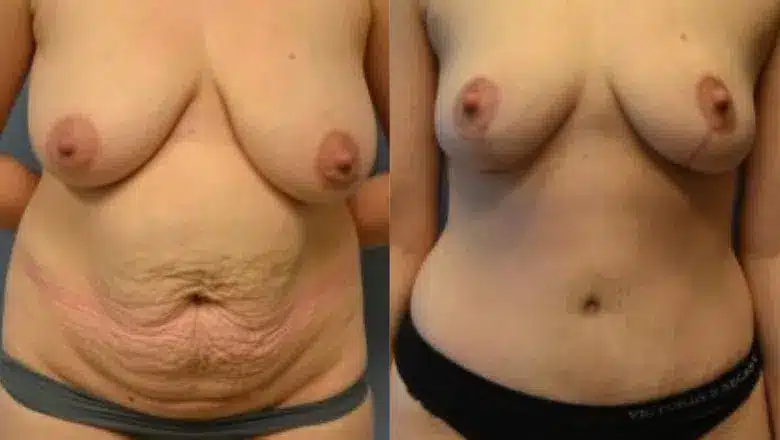
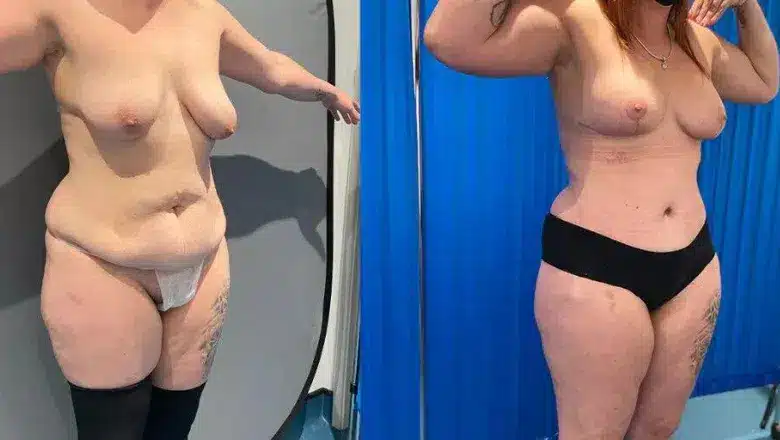
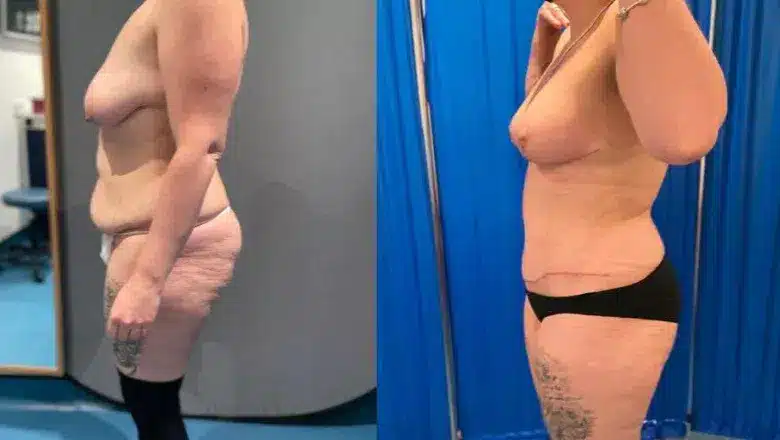
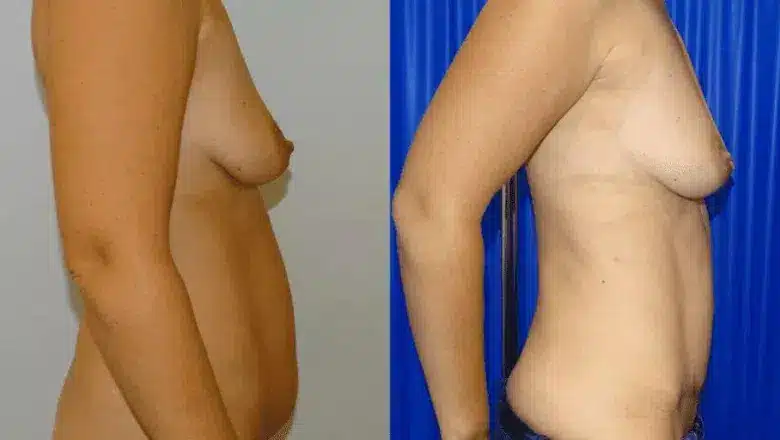
The primary cause is the significant stretching the abdomen undergoes as it expands to accommodate a growing baby. This is partly enabled by relaxin, a hormone released during pregnancy that relaxes ligaments and connective tissue to allow the body to stretch. As the abdominal muscles and tissue return towards their previous position after birth, the overlying skin doesn’t always retract with them, leaving genuine skin laxity behind.
Younger women, who generally have higher collagen and elastin levels — the proteins responsible for skin elasticity — tend to see faster recovery than older women, though there’s no guarantee the skin will fully return to its pre-pregnancy state at any age. Genetics, how much weight was gained during pregnancy, and whether this was a first or subsequent pregnancy all meaningfully affect how much loose skin remains.
Not every woman is left with a postpartum belly to the same extent, and some aren’t left with any noticeable loose skin at all — but for the many who are, it’s a genuine physical change, not a failure of diet or exercise.





Can You Prevent Loose Skin After Pregnancy?
Some measures can reduce the likelihood or extent, though it isn’t always fully preventable — genetics and how much the skin has to stretch (particularly with multiple pregnancies) play too large a role for that:
- Manage weight gain within recommended ranges: excess weight gain stretches the skin further than necessary; your midwife monitors this throughout pregnancy for good reason.
- Stay well hydrated and moisturise regularly: supports skin elasticity, helping it stretch and retract more effectively.
- Maintain a nutrient-rich diet: adequate protein and collagen-supporting nutrients help the skin’s structural proteins do their job.
- Breastfeed, if it suits you: can support a gradual return to pre-pregnancy weight, though very rapid weight loss can itself contribute to loose skin — a steady approach works better than either extreme.
Even with all of these followed carefully, some women will still be left with a genuine postpartum belly — this reflects real variation in skin quality and pregnancy physiology, not a lack of effort.
Non-Surgical Options for Tightening Skin After Pregnancy
For mild to moderate laxity, several non-surgical treatments can genuinely help — though it’s worth being upfront that none of them match what surgical skin removal achieves for more significant laxity.
Diet and Exercise
A diet rich in protein and collagen-supporting nutrients, combined with strength training, can help restore some muscle tone beneath loose skin and modestly improve its appearance. This is genuinely effective for minor cases, but its ability to tighten skin that’s lost significant elasticity is limited — for more pronounced laxity, other treatments are usually needed.
Morpheus8 RF Microneedling
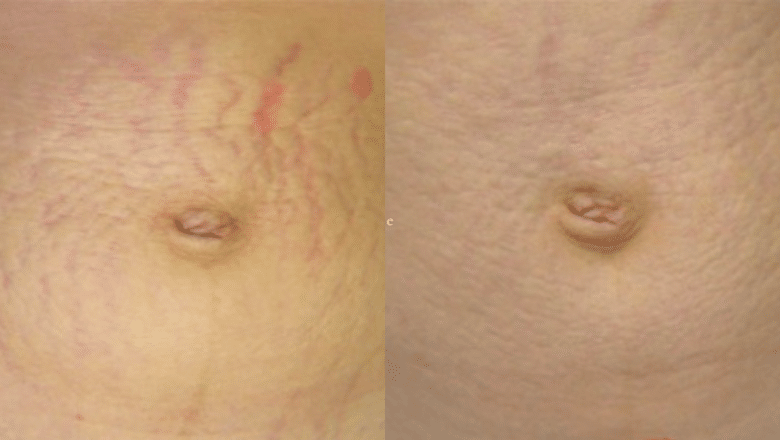
Morpheus8 combines microneedling with radiofrequency (RF) energy, stimulating collagen production through controlled, minor injury to the skin. It’s genuinely effective for tightening mild to moderate loose abdominal skin, with a relatively short recovery — typically around a week for body treatments. It’s well suited to those who prefer a non-surgical route or want to try a less invasive option before considering surgery. Breastfeeding women should wait until after weaning before treatment.
Laser Stretch Mark Removal (LineLase)
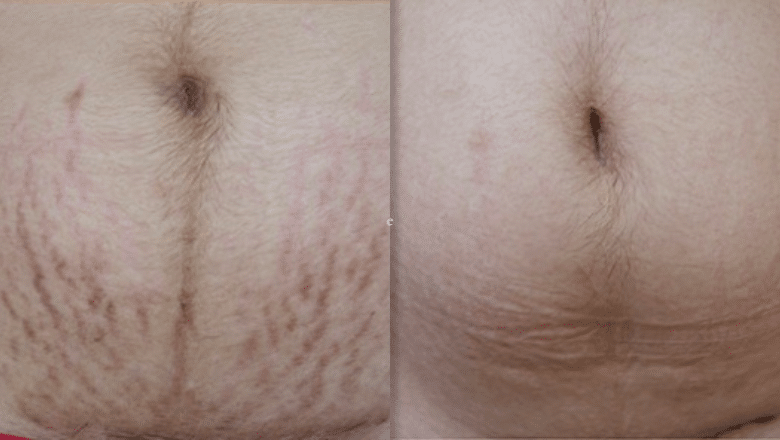
Stretch marks are a common result of the rapid stomach expansion during pregnancy, and while they often fade, they frequently remain visible permanently without treatment. Our laser stretch mark removal uses Fotona’s non-ablative Er:YAG laser in SMOOTH® mode to stimulate neocollagenesis, followed by full- or fractional-ablative Er:YAG laser to target remaining imperfections. Combining this with Morpheus8 can further improve results.
Treatments We Don’t Recommend
To be genuinely useful rather than just promotional, it’s worth naming what doesn’t work well: laser skin tightening (laser lipolysis) carries real risks — burns, scarring, uneven texture, discolouration, occasionally skin necrosis — and widespread patient dissatisfaction, so we don’t offer it. Firming creams and lotions lack meaningful evidence of effectiveness on genuine post-pregnancy skin laxity. Collagen supplements, despite common online claims, aren’t effective for resolving loose abdominal skin specifically, whatever modest benefit they may have elsewhere.
Surgical Options
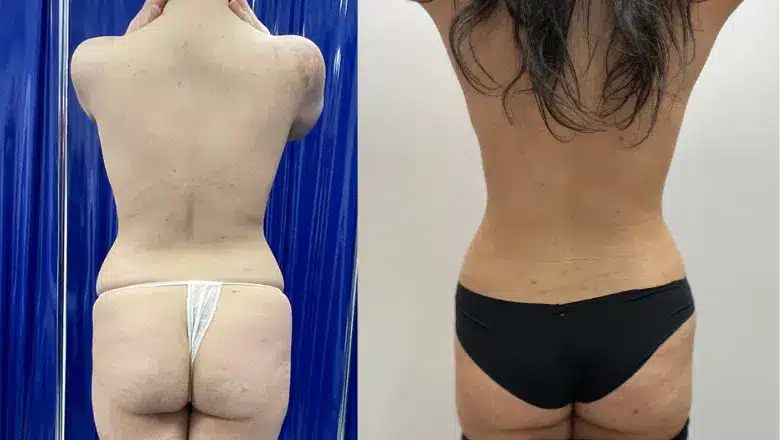
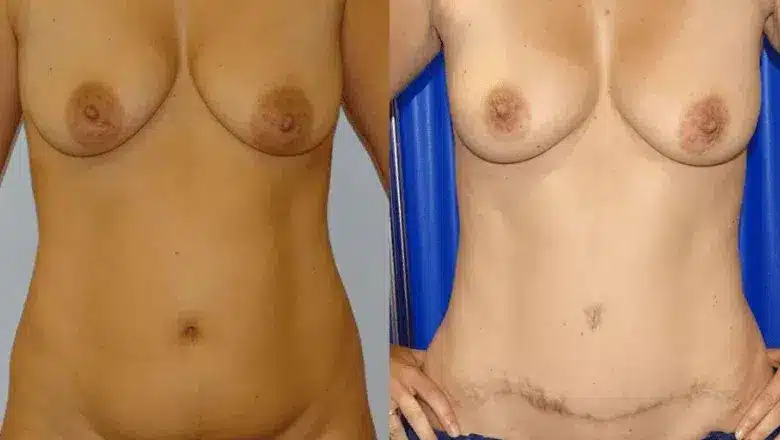
Where non-surgical treatment isn’t enough — which is common for moderate to severe laxity — surgery is the only treatment that physically removes excess skin rather than attempting to tighten what’s already there.
Mini Tummy Tuck
A mini tummy tuck addresses loose skin confined to the lower abdomen, below the navel, through a shorter incision, without repositioning the belly button. It’s suited to mild to moderate excess skin without significant muscle separation, and typically doesn’t include muscle repair — making it quicker to perform and involving less recovery than a full tummy tuck.
Full Tummy Tuck
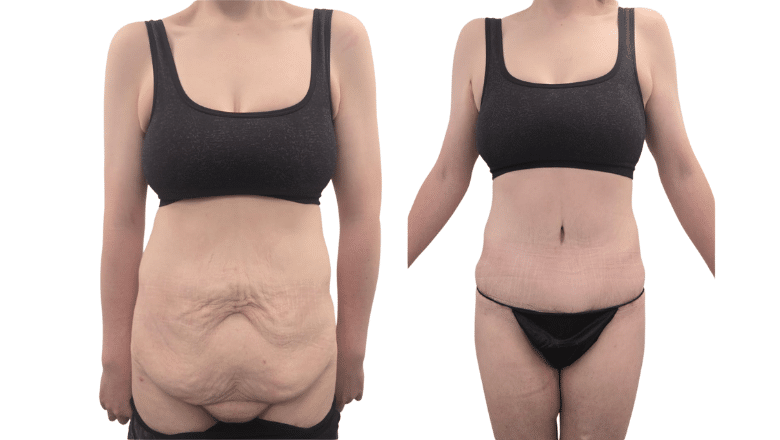
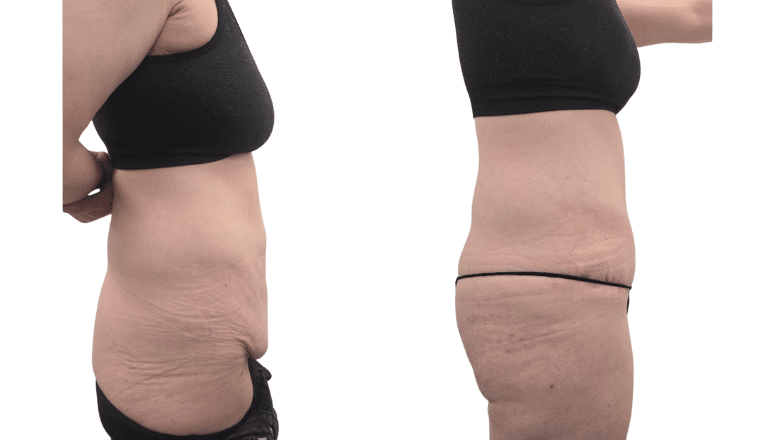
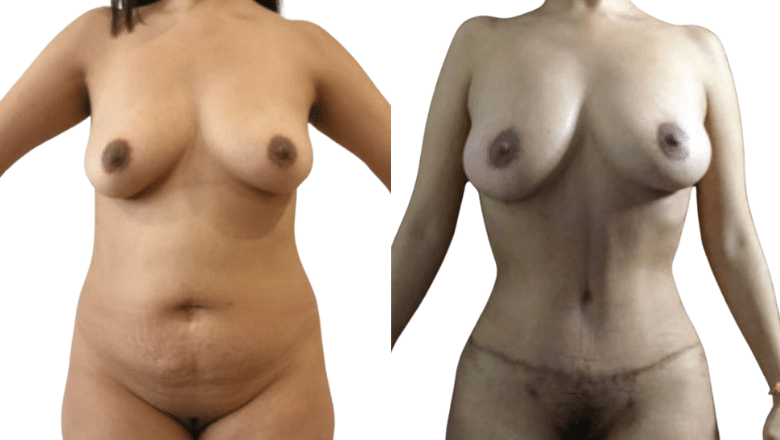
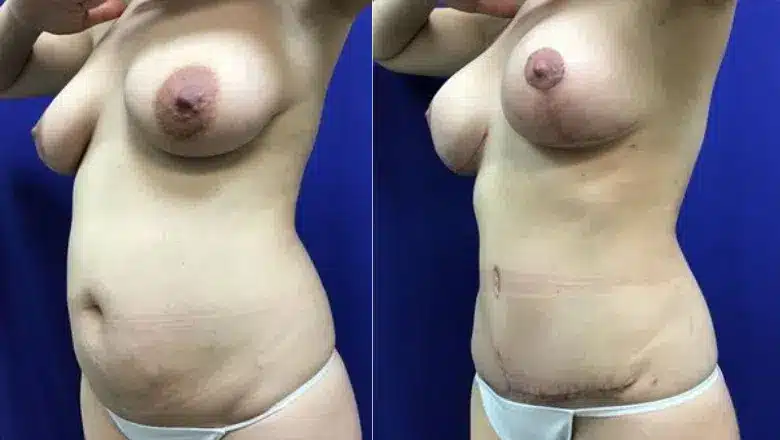
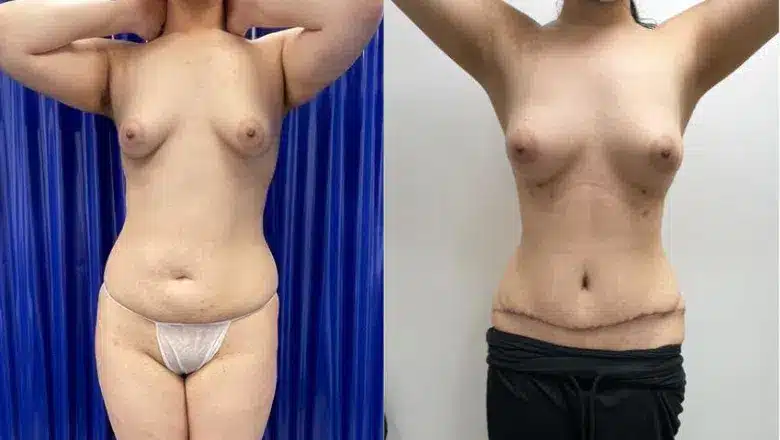
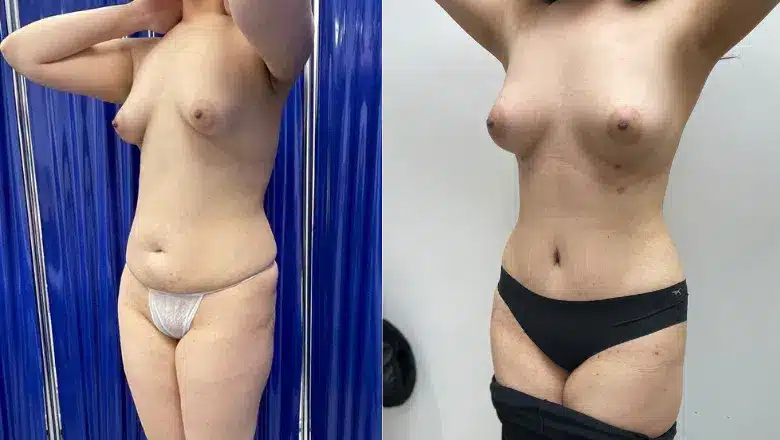
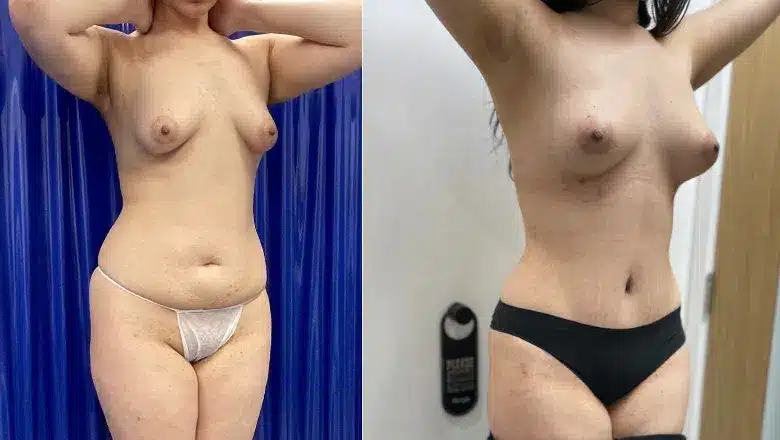
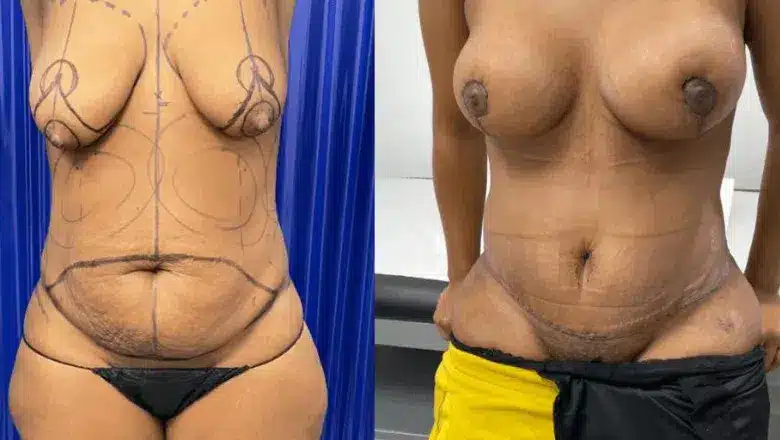
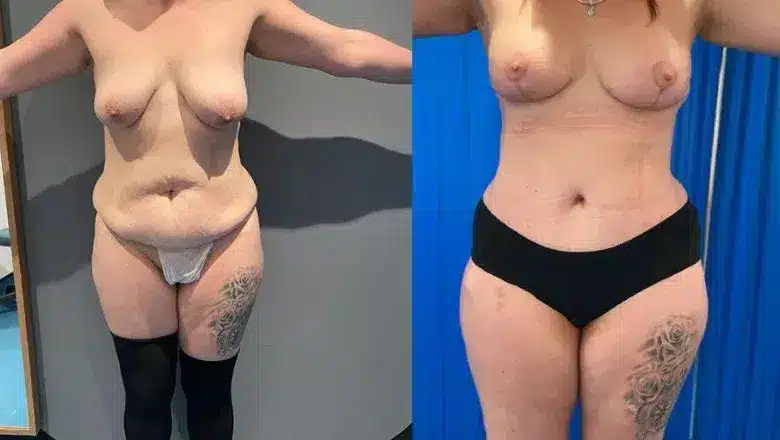
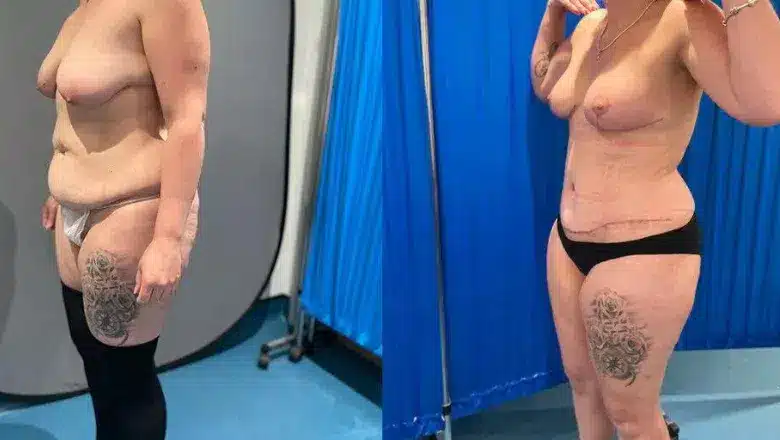
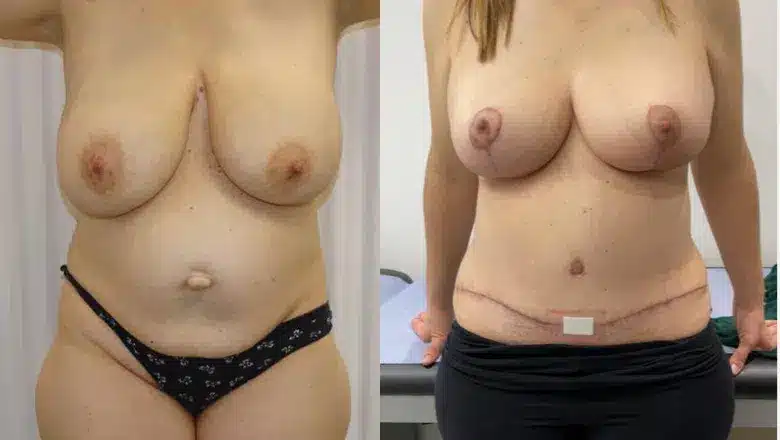
A full tummy tuck is the more comprehensive option, suited to moderate to severe laxity extending above and below the navel. Two incisions are used — one along the bikini line and one around the belly button — through which excess skin is removed and diastasis recti (abdominal muscle separation, common after pregnancy) is corrected using dissolvable sutures, tightening and realigning the muscles for a smoother, firmer profile.
Extended Tummy Tuck
The extended tummy tuck addresses loose skin extending beyond the abdomen into the flanks — commonly called “love handles” — through an incision that extends outward from the standard bikini-line approach. It’s a comprehensive option for reshaping the abdomen, flanks, and waist in a single procedure, particularly common after significant weight loss.
Fleur-de-Lis Tummy Tuck
The Fleur-de-Lis tummy tuck is designed for severe skin laxity, most often following substantial weight loss such as after bariatric surgery. It combines a horizontal incision along the bikini line with a vertical incision from the ribcage to the mid-abdomen, allowing removal of excess skin in both directions.
Abdominoplasty vs Brazilian Tummy Tuck
Where stubborn fat around the flanks is also a concern alongside loose skin, a Brazilian tummy tuck (lipoabdominoplasty) combines any of the above techniques with liposuction in the same operation for a more defined waistline — see our full comparison: abdominoplasty vs Brazilian tummy tuck.
Liposuction
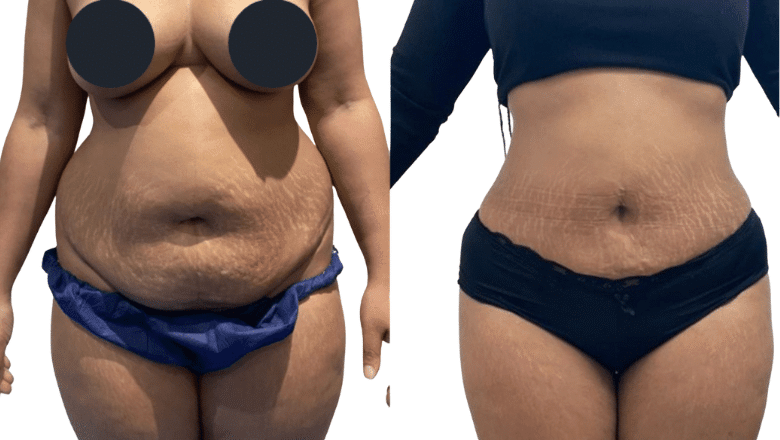
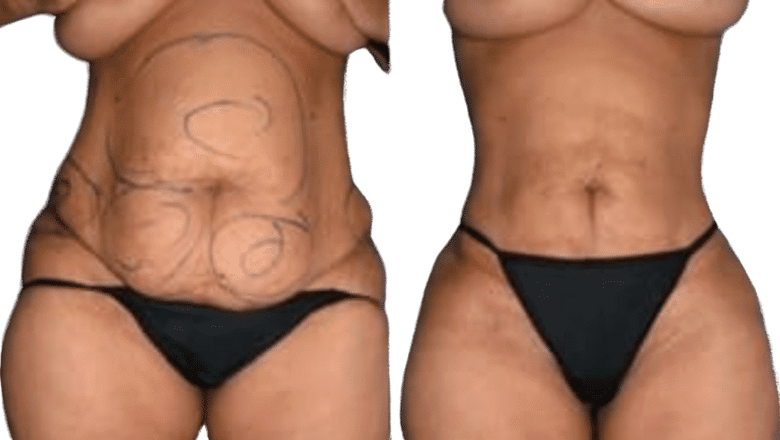
Liposuction removes stubborn fat but isn’t designed to address loose skin directly — it’s most valuable when combined with a tummy tuck, allowing more precise sculpting of the whole torso rather than fat removal alone.
Mummy Makeover
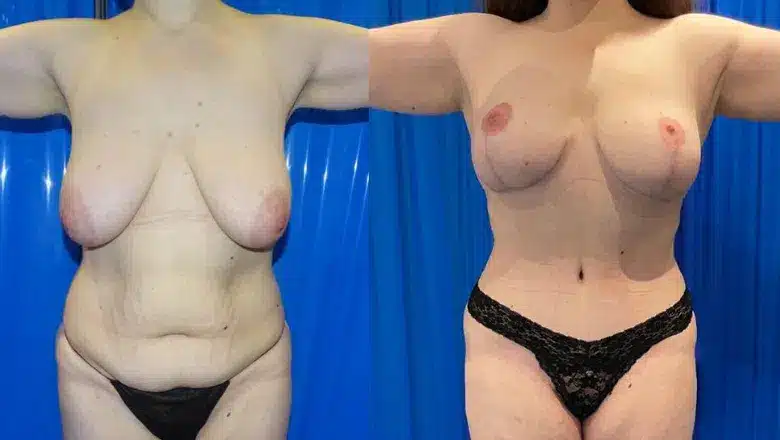
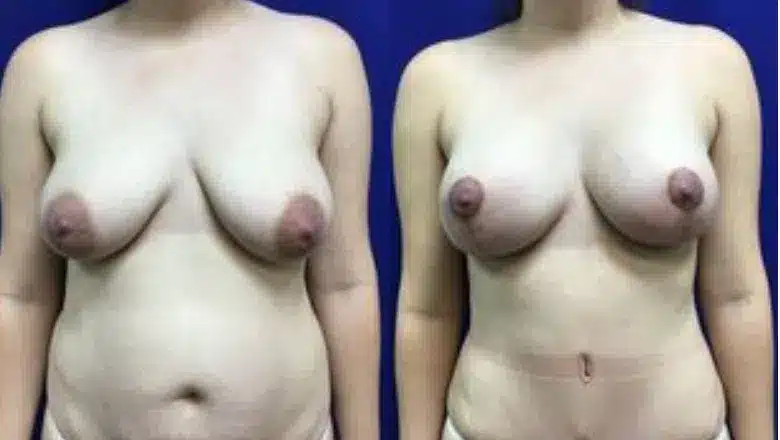
A mummy makeover combines procedures to address the full range of physical changes from pregnancy and breastfeeding in one surgical journey — typically a breast lift or breast augmentation alongside a tummy tuck, with liposuction where fat is also a concern.
Full Mummy Makeover
A more extensive combination can also include 360° liposuction and fat transfer to the hips for a more defined, balanced silhouette — see the full range of combinations on our Mummy Makeover service page.
Which Treatment Fits Your Degree of Skin Laxity?


Am I a Suitable Candidate?
Excess skin removal surgery is genuinely effective for the right candidates, but specific criteria matter for safety and results:
- Desire to address mild to severe skin laxity specifically, rather than expecting weight loss from the procedure itself.
- Weight stability, at or near your ideal weight, with a BMI of 30 or below.
- Good physical and psychological health, which meaningfully reduces surgical risk.
- Realistic expectations, discussed in full detail at consultation.
Best Timing for Treating Loose Skin After Pregnancy

Getting timing right matters for surgical results specifically. It can be tempting to address loose skin immediately after your first pregnancy, but this can work against you if you’re planning further children — becoming pregnant again after a tummy tuck can undo the muscle repair and skin tightening achieved, sometimes requiring revision surgery. It isn’t dangerous to become pregnant after abdominoplasty, but your aesthetic results are likely to be lost.
An experienced consultant plastic surgeon will generally recommend waiting until you’ve completed your family before undergoing a tummy tuck or mummy makeover. For surgical procedures specifically, we recommend waiting 6–12 months following childbirth, allowing your weight, hormones, and abdominal shape to properly stabilise, and finishing breastfeeding beforehand.
How Long Does Recovery Take?
Tummy Tuck and Mummy Makeover
These more comprehensive procedures typically require about a week off work for initial recovery. Strenuous activity and heavy lifting should be avoided for 4–6 weeks post-surgery, with total recovery to all normal activities usually spanning 10–12 weeks.
Morpheus8 RF Microneedling
Considerably shorter downtime — typically 1–5 days depending on individual skin response, or up to a full week for body treatments such as the abdomen. Mild redness and swelling at treatment sites usually subside within 2–3 days.
How Much Does It Cost to Tighten Loose Skin After Pregnancy?
Pricing depends on the extent and combination of procedures chosen:
- Mini and full tummy tuck: current starting prices are in our tummy tuck cost guide
- Extended or Fleur-de-Lis tummy tuck: priced individually based on the extent of correction, confirmed at consultation
- Tummy tuck with liposuction (Brazilian tummy tuck): priced individually, confirmed at consultation
- Mummy makeover: priced individually based on the procedures combined, confirmed at consultation
- Morpheus8: priced per session, confirmed at consultation
- Laser stretch mark removal: priced per treatment area, confirmed at consultation
All surgical packages include your surgeon’s fee, TIVA (Total Intravenous Anaesthesia) — delivered entirely intravenously without inhaled anaesthetic gases, for a smoother, faster recovery than a traditional general anaesthetic — theatre time at our CQC-regulated Baker Street facility, compression garment, your surgeon’s direct number for the first 24 hours, wound checks, and follow-up reviews. Your initial consultation is £100, redeemable against the cost of your procedure if you proceed. Finance is available through Chrysalis Finance, subject to status.
Frequently Asked Questions

Can loose skin after pregnancy naturally tighten over time?
It’s genuinely rare for loose skin to fully tighten on its own once significant elasticity has been lost, and skin naturally loses further elasticity with age. For most women with noticeable postpartum belly, a cosmetic procedure or treatment is the most effective way to permanently address it.
Will my stretch marks look the way they did before?
Stretch marks tend to become less noticeable over time but usually don’t disappear entirely without treatment, and most over-the-counter creams and oils lack strong evidence of effectiveness. See: Will a Mummy Makeover Remove Stretch Marks?
Does a tummy tuck remove stretch marks?
A tummy tuck primarily tightens abdominal skin by removing excess skin. Stretch marks located on the removed skin go with it; stretch marks outside the treated area remain unaffected.
Are tummy tuck results permanent?
Results can be permanent, but maintaining them requires a stable weight — significant weight fluctuation can enlarge fat cells and potentially create new loose skin over time.
How long will it take to tighten loose skin?
Loose skin from pregnancy may never regain its pre-pregnancy firmness through time alone. For significant, lasting change, procedures such as a tummy tuck, BodyTite, or Morpheus8 are typically necessary.
Why Choose Centre for Surgery for Loose Skin After Pregnancy?
Every surgical procedure at Centre for Surgery is performed by a GMC-registered plastic surgeon at our purpose-built, CQC-regulated Baker Street clinic, rated “Good” overall.
Every package includes a thorough pre-operative consultation, a recommended two-week cooling-off period, full pre-operative medical assessment, a dedicated patient coordinator throughout, and structured aftercare through your follow-up reviews.
Book Your Consultation
Phone: 020 7993 4849
Email: contact@centreforsurgery.com
Address: 95-97 Baker Street, London W1U 6RN
Your initial consultation is £100, redeemable against the cost of your procedure if you proceed. Finance is available through Chrysalis Finance — see our Finance Options page for details.

Related Articles
- Can You Have a Mummy Makeover If You Plan to Have More Children?
- Will A Mummy Makeover Remove Stretch Marks?
- What Is A Mummy Makeover And Who Is It For?
- How to Get Rid of a Mum Tum
- C-Section Pouch — Causes, Treatment & Prevention
- Mini vs Full Tummy Tuck
- Abdominoplasty vs Brazilian Tummy Tuck
- Can I Get a Breast Lift and a Tummy Tuck at the Same Time?
- Is A Mummy Makeover Worth It?


