


In this guide15 sections
- Key Points
- What Are the Best Areas for Liposuction?
- Why Some Areas Give Better Liposuction Results Than Others
- Best Areas for Liposuction for Women
- Best Areas for Liposuction for Men
- Which Areas Are Harder to Treat With Liposuction?
- Which Body Areas Are Most Painful for Liposuction?
- Which Is the Best Type of Liposuction for Each Area?
- How Many Areas Can You Have Liposuction On at Once?
- Does Fat Come Back in the Treated Areas?
- Liposuction Results by Area
- How Your Treatment Areas Affect Recovery and Cost
- Frequently Asked Questions
- References
- Talk to a Surgeon About Liposuction
Key Points
- The areas that give the best liposuction results are those with a defined pocket of pinchable fat under firm skin: most often the flanks (love handles), stomach, outer and inner thighs, upper arms, chin, bra roll and, in men, the chest.
- Liposuction only removes subcutaneous fat, the fat you can pinch. It cannot reach visceral fat around the organs, so a firm, round belly with little to pinch will not flatten with liposuction.
- Loose skin is the main reason an area does badly. Where skin will not shrink back, a lift or tummy tuck, or skin tightening alongside liposuction, gives a better result.
- Treated areas keep their new shape if your weight stays stable, but a 2011 randomised trial found that fat can return elsewhere, particularly the abdomen, if you gain weight.
- Several areas can usually be treated in one operation, with up to five litres removed in a single session at Centre for Surgery, but combining more surgery adds risk.
“What are the best areas for liposuction?” really means two things: which parts of the body can be treated, and which ones give a result worth having. Almost any area with fat under the skin can be treated with liposuction, and our full guide to liposuction areas of the body goes through each one in turn. This article focuses on the second question: where lipo tends to work best, where it disappoints, and how surgeons decide which areas to treat for you.
The short answer is that liposuction works best on stubborn, pinchable fat under good-quality skin, in someone close to their usual weight. If you are not sure whether that describes you, our checklist on whether you are suitable for liposuction is a good place to start.
What Are the Best Areas for Liposuction?
The areas most patients and surgeons find give the most predictable, natural-looking results are:
- Flanks and love handles. Fat on the sides of the waist is often the most diet-resistant area of all, and removing it changes the outline of the waist from the front and back. See our guides to love handles liposuction and muffin top liposuction.
- Stomach. Lower tummy fat responds well when the skin is firm and the muscles have not separated. Our stomach liposuction page explains who it suits.
- Outer and inner thighs. Outer thigh fat (saddlebags) is a classic liposuction area. Inner thigh fat that rubs when walking can cause chafing and irritation, and removing it can make walking and exercise more comfortable.
- Upper arms. Fat on the back of the arm responds well if the skin is reasonably firm. Our guide to arm liposuction explains when an arm lift is the better choice for bingo wings.
- Chin and neck. A small amount of fat makes a big difference to the jawline, and chin liposuction can often be done under local anaesthetic.
- Bra roll and upper back. Fat that bulges around the bra strap is a common request, covered in our guides to bra bulge removal and back liposuction.
- Knees and the inner knee. A small area, but one that changes how the whole leg looks.
- The male chest. Where enlarged male breasts are mostly fat, liposuction is often part of gynaecomastia surgery.

Why Some Areas Give Better Liposuction Results Than Others
Four things decide how well an area responds. Your surgeon assesses each one at consultation.
1. The type of fat: can you pinch it?
Liposuction removes subcutaneous fat, the layer between the skin and the muscle. It cannot remove visceral fat, which sits deeper inside the abdomen around the organs. If you can grab a handful of soft fat, liposuction can treat it. If your stomach is firm and rounded with little to pinch, most of the fat is likely to be visceral, and liposuction will not flatten it. Our guide to visceral vs subcutaneous fat explains the difference and how to reduce visceral fat.
This is also why liposuction is not a health treatment for obesity. In a 2004 study in the New England Journal of Medicine ↗[1], women who had around 9–10 kg of fat removed by large-volume liposuction saw no improvement in insulin sensitivity, blood pressure, cholesterol or other heart disease risk factors. Liposuction changes shape; weight loss changes health.
2. Skin quality
Liposuction removes fat but does not remove skin. Firm, elastic skin shrinks back over the new contour; thin, stretched or loose skin may not. That is why younger patients and those without major weight loss or pregnancy-related stretching tend to get the smoothest results. Where skin is looser, adding skin tightening such as BodyTite can help, and where there is a lot of excess skin, a tummy tuck or lift is the better operation.
3. A stable weight
Liposuction works best when you are at or near your usual weight and have been stable for some time. It is not a way to lose weight, and our guide to how much fat can be removed with liposuction explains realistic volumes. A BMI over 30 may mean waiting until weight comes down.
4. Safe access to the fat
Some areas are simply easier to treat smoothly than others. Large, flat areas such as the flanks and thighs give the surgeon room to work evenly. Small, thin-skinned areas, or areas over bone such as the ankles, need more care to avoid dents and irregularities.
Best Areas for Liposuction for Women
For women, the most commonly treated areas are the flanks, stomach, outer thighs, inner thighs, upper arms and bra roll, often in combination. Treating the flanks and lower back together reshapes the waist, while treating the outer and inner thighs together keeps the legs in proportion.
Some women have fat on the legs that is painful, bruises easily and does not respond to weight loss. This may be lipoedema rather than ordinary fat, and the approach is different. In a 2016 follow-up study in the British Journal of Dermatology ↗[2] of 85 women with lipoedema, the improvements in spontaneous pain, sensitivity to pressure, swelling, bruising and restricted movement after liposuction were still present eight years later. Our article on lipoedema or fat legs explains how to tell the difference, and our lipoedema treatment page covers surgery.
Best Areas for Liposuction for Men
Men tend to store fat around the waist and chest, so the most commonly treated areas are the flanks, stomach, chest, chin and upper back. Liposuction of the flanks gives men a more V-shaped torso from behind, and treating the chest flattens fatty enlargement of the male breasts. If the chest contains firm glandular tissue as well as fat, that tissue usually needs to be cut out too. See male liposuction for the full picture.
Men with a firm, protruding stomach often have more visceral fat than women, which liposuction cannot remove. It is worth checking this before planning abdominal liposuction.
Which Areas Are Harder to Treat With Liposuction?
Liposuction is possible in these areas, but results are less predictable and suitability is assessed more carefully:
- Calves and ankles. The fat layer is thin and the skin is tight over bone, so irregularities show more easily and swelling takes longer to settle.
- Buttocks. Removing fat from the buttock itself can flatten it or cause sagging. Liposuction is more often used around the buttocks, on the flanks, lower back and banana roll fat under the buttock crease.
- Areas with loose skin. The lower stomach after pregnancy, the upper arms after weight loss and the inner thighs in older patients may need skin removal rather than, or as well as, liposuction.
- Hip dips. The inward curve below the hip is largely due to the shape of the pelvis, so liposuction alone does not remove it. Hip liposuction can soften the area above and below, and fat transfer can fill the dip.
- The face. Apart from the chin and jowls, the face needs very small volumes and great precision, and fat loss in the face can make it look older.
Which Body Areas Are Most Painful for Liposuction?
Areas with dense, fibrous fat, such as the upper back, flanks and male chest, are usually the most uncomfortable afterwards, because the surgeon has to work harder to break up and remove the fat. Large areas also mean more bruising, and treating several areas at once means more overall soreness. The stomach and outer thighs tend to be more comfortable.
Most people describe the pain as a deep ache similar to a hard workout, at its worst in the first few days. Our guide to whether liposuction hurts covers pain at each stage. At Centre for Surgery, larger liposuction procedures are usually performed under TIVA (total intravenous anaesthesia) combined with local anaesthetic. Our regular post-operative pain audits show that combining TIVA with local anaesthetic, even for large procedures, has minimised and sometimes eliminated the need for opioid painkillers afterwards. Small areas can often be treated with liposuction under local anaesthetic.
Which Is the Best Type of Liposuction for Each Area?
There is no single best technique for every area. The main options at Centre for Surgery are:
- Power-assisted liposuction (PAL), which uses a vibrating cannula to remove fat smoothly with less force.
- VASER liposuction, which uses ultrasound to loosen fat before it is removed.
Both are equally available and both work well on fibrous areas such as the back, flanks and male chest. Your surgeon chooses based on your tissue and goals, and our comparison of power-assisted liposuction vs VASER explains the differences. For a more athletic, defined look, HD lipo sculpts around the muscles, and 360 liposuction treats the whole waist in one operation.
How Many Areas Can You Have Liposuction On at Once?
Several areas can usually be treated in one operation, and up to five litres of fat can be removed in a single session at Centre for Surgery. Treating connected areas together, such as the stomach, flanks and back, often gives a more even result than treating them separately.
The limit is safety. In a 2017 study of more than 31,000 liposuction procedures in Aesthetic Surgery Journal ↗[3], liposuction on its own had a major complication rate of 0.7%. Combining liposuction with other procedures, a higher BMI and older age all increased the risk. For larger plans, your surgeon may suggest treating some areas in a second, separate operation. The risks are covered in our guide to liposuction risks.
Does Fat Come Back in the Treated Areas?
The fat cells removed from an area do not grow back, so treated areas keep their new shape as long as your weight stays stable. If you gain weight, though, the remaining fat cells, both in the treated area and elsewhere, get bigger.
In a 2011 randomised controlled trial in Obesity ↗[4], women who had small-volume liposuction of the lower abdomen, hips or thighs found that their overall body fat had returned to its previous level by one year. The thighs stayed slimmer, but fat had been restored in the abdomen. Keeping your weight stable with diet and exercise protects your result. Our article on whether fat can come back after liposuction explains what to expect.
Liposuction Results by Area
These are real Centre for Surgery patients, photographed at least six months after surgery.

Back liposuction.

Thigh liposuction.

360 liposuction of the waist.
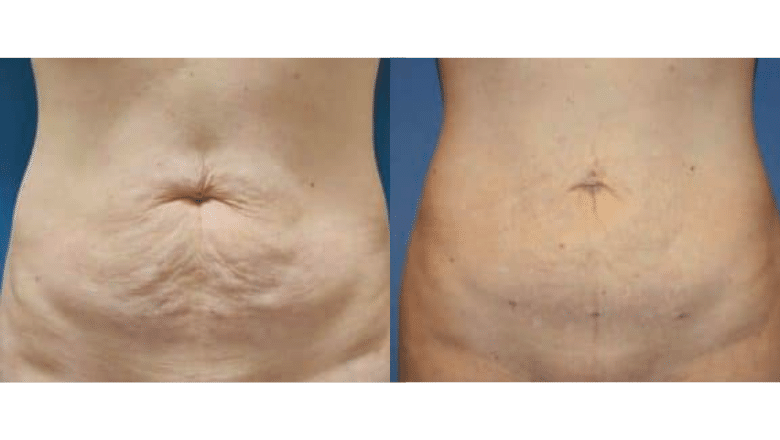
Stomach liposuction with BodyTite skin tightening.
You can see more results by area in our liposuction before and after photos.
How Your Treatment Areas Affect Recovery and Cost
The more areas you have treated, the longer the operation and the more swelling and bruising there is to settle. Most people return to desk work within three to seven days after a small area, or one to two weeks after several areas, and to strenuous exercise at about six weeks. Our liposuction recovery guide explains the timeline. The number and size of the areas is also the main thing that decides the price, which our liposuction cost guide sets out.
Frequently Asked Questions
What is the most popular area for liposuction?
The stomach and flanks (love handles) are the most commonly treated areas in both women and men, often together. The thighs and upper arms are also very popular in women, and the chest and chin in men.
Which is the best type of liposuction?
There is no single best type. Power-assisted liposuction and VASER both give smooth, reliable results, and the choice depends on your tissue, the area and the look you want. The skill and judgement of the surgeon matter more than the brand of machine.
Who is liposuction suitable for?
Adults at or near their usual weight, with stubborn areas of pinchable fat, reasonably firm skin and realistic expectations. You need to be in good general health, and to stop smoking and nicotine four weeks before and four weeks after surgery. It is not suitable as a weight-loss treatment.
Does fat grow back where you get liposuction?
The fat cells removed do not grow back, so the treated area keeps its improved shape if your weight stays stable. If you gain weight, the remaining fat cells enlarge, and fat may build up in untreated areas such as the abdomen.
What does no one tell you about liposuction?
That the final result takes time. Swelling can hide the change for several weeks, and the final shape can take three to six months to settle. Many people are also surprised that liposuction does not tighten loose skin, does not remove cellulite and does not reduce visceral fat inside the abdomen.
References
- Klein S, Fontana L, Young VL, et al. Absence of an effect of liposuction on insulin action and risk factors for coronary heart disease. N Engl J Med. 2004;350(25):2549-2557. doi:10.1056/NEJMoa033179 ↗
- Baumgartner A, Hueppe M, Schmeller W. Long-term benefit of liposuction in patients with lipoedema: a follow-up study after an average of 4 and 8 years. Br J Dermatol. 2016;174(5):1061-1067. doi:10.1111/bjd.14289 ↗
- Kaoutzanis C, Gupta V, Winocour J, et al. Cosmetic liposuction: preoperative risk factors, major complication rates, and safety of combined procedures. Aesthet Surg J. 2017;37(6):680-694. doi:10.1093/asj/sjw243 ↗
- Hernandez TL, Kittelson JM, Law CK, et al. Fat redistribution following suction lipectomy: defense of body fat and patterns of restoration. Obesity (Silver Spring). 2011;19(7):1388-1395. doi:10.1038/oby.2011.64 ↗
Talk to a Surgeon About Liposuction
If you would like to know which areas would give you the best result, you can book a consultation at our Baker Street clinic by calling 020 7993 4849 or using the form below. Your surgeon will examine each area, check your skin and the type of fat, and explain what liposuction can and cannot achieve for you.







