


In this guide13 sections
- Key Points
- Can You Get a Boob Job and Nose Job at the Same Time?
- Is It Safe to Have Breast Augmentation and Rhinoplasty at the Same Time?
- How Long Does Breast Augmentation and Rhinoplasty Take Together?
- Who Can Have a Boob Job and Nose Job at the Same Time?
- Is It Cheaper to Get a Breast Augmentation and Rhinoplasty at the Same Time?
- Will One Surgeon Do Both Operations?
- What Is Recovery Like From Breast and Nose Surgery?
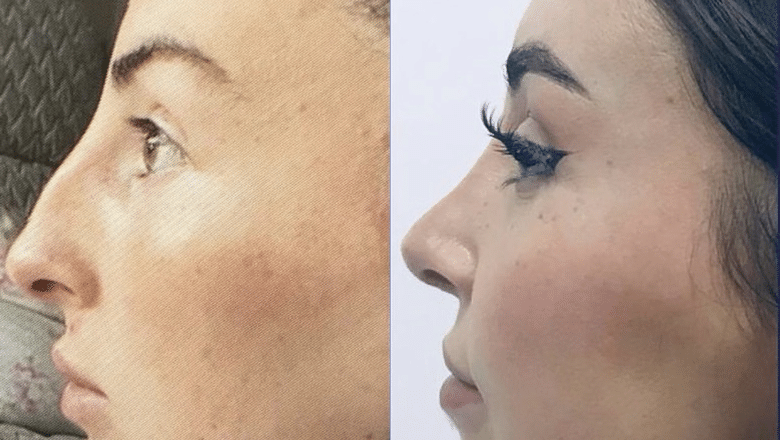
- Breast Augmentation and Rhinoplasty Before and After Photos
- When Is It Better to Have Breast Augmentation and Rhinoplasty Separately?
- Breast Augmentation and Rhinoplasty in London
- Frequently Asked Questions
- References
Key Points
- Can you get a boob job and a nose job at the same time? For suitable patients, yes. Breast augmentation and rhinoplasty can be combined under one anaesthetic, but it is a decision made for each patient at consultation, not a rule.
- The main safety issue is how long you are under anaesthetic. Longer operations are linked to a higher risk of blood clots, so surgeons plan the combined operating time carefully and may advise staging the surgery if it would run long.
- There is little research on this exact pairing. The closest evidence comes from combined breast and tummy surgery, where combining procedures raised the chance of a return to theatre but not overall surgical or medical complications.
- You recover from both at once. That means one recovery window, but also a swollen nose and sore chest at the same time, so sleeping, bras and glasses need planning.
- Not everyone is suitable. Smoking, high blood pressure, a high BMI, a history of clots and long or complex nose surgery can all point towards doing the operations separately.
- Cost is not automatically lower. Fees depend on the procedures, the surgeons and the length of the operation, so ask for a written breakdown rather than assuming a saving.
Breast augmentation and rhinoplasty sit side by side among the most commonly performed aesthetic operations in the world[1], so it is no surprise that many people ask whether a nose job and a boob job can be done in the same operation. This guide answers the questions people search for most: whether it is safe, how long the surgery takes, who is suitable, what recovery is like and when it is wiser to space the operations apart.
If you are still weighing up each operation on its own, our service pages on breast augmentation and rhinoplasty (nose reshaping) explain what each involves, and our wider guide to combining cosmetic surgery procedures covers which pairings surgeons commonly consider.
Can You Get a Boob Job and Nose Job at the Same Time?
Yes, it is often possible. A boob job (breast augmentation) and a nose job (rhinoplasty) are operations on two different parts of the body, performed through separate incisions, so one does not need to be finished before the other can begin. Some patients choose to combine them to have one anaesthetic, one period away from work and one recovery rather than two.
Whether it is right for you depends on three things: your general health, how complex each operation is, and how long the two would take together. A straightforward breast augmentation with a simple nose reshaping is very different from a complex revision of a previously operated nose combined with a breast augmentation and a lift. The surgeon will give a view at consultation, and in some cases the most sensible advice is to do the bigger or more complex operation first and the second one a few months later.
It is also worth knowing that “at the same time” can mean two things. It may mean the same operation under the same anaesthetic, or it may mean planning both within a short period of one another. A longer gap simply gives you a full recovery before the next procedure. Our guide to the right age for breast augmentation and our guide to choosing a nose job surgeon in London may help with the first decisions.
Is It Safe to Have Breast Augmentation and Rhinoplasty at the Same Time?
For a healthy adult, combining procedures can be reasonable, but the word “safe” needs care. No operation is risk free, and the evidence specific to breast augmentation with rhinoplasty is limited. What the wider plastic surgery literature does show is that the length of the operation matters.
In a 2015 analysis of 19,276 plastic surgery cases under anaesthesia ↗ published in the Journal of Plastic Surgery and Hand Surgery, 0.36% of patients developed a venous thromboembolism (a blood clot in the deep veins or lungs). Operations that ran longer than average for that procedure were independently linked to a higher clot risk[4]. This is why surgeons talk so much about total anaesthetic time when two procedures are planned together.
Is there a safe limit for time under anaesthetic?
There is no single number that applies to everyone. Reviews of combined cosmetic surgery stress that the length of surgery, together with the patient’s own risk factors, is central to the decision[2][3]. In practice, the surgical and anaesthetic team estimate the combined time, review your medical history and agree whether one session is reasonable. If the plan looks likely to run long, staging the operations is the cautious choice. Our guide to anaesthesia options for cosmetic surgery explains how anaesthetic is chosen.
What does the research on combined surgery show?
The nearest studied pairing is combined cosmetic breast surgery and tummy tuck. In a 2025 database study of 7,865 women ↗ in Aesthetic Plastic Surgery, combining the two raised the chance of a return to theatre compared with a tummy tuck alone, but did not increase overall surgical or medical complications. Compared with breast surgery alone, the combined group had more overall and medical complications[5]. That study did not look at nose surgery, so it cannot be applied directly, but it shows why individual assessment matters more than a general “yes” or “no”.
How do surgeons reduce the risks?
Clot prevention is a routine part of planning. Tools such as the Caprini risk assessment score are used to estimate each patient’s risk, and the choice of preventive measures is weighed against the risk of bleeding[6]. Practical steps usually include a thorough health check beforehand, early walking after surgery, and avoiding anything that raises clot risk where possible.
Smoking deserves a special mention. A 2015 systematic review and meta-analysis ↗ of cosmetic and other plastic surgery found that smoking was linked to roughly two to two-and-a-half times higher odds of surgical site infection and delayed wound healing in cosmetic surgery patients[7]. If you smoke or vape nicotine, many surgeons will ask you to stop well before and after surgery, and combined surgery is unlikely to be advised if you cannot.
How Long Does Breast Augmentation and Rhinoplasty Take Together?
The two operations are timed separately and then added together, plus the time needed to put you to sleep and wake you up. Each depends on the technique, the incision, the implant position and, for the nose, whether the surgery is open or closed and how much reshaping is needed. A revision nose operation typically takes much longer than a first-time one.
Your surgeon should be able to give you an estimated combined operating time at the consultation. If that estimate feels uncomfortably long, ask what the alternatives are. Questions worth asking include:
- How long do you expect the whole operation, including anaesthetic, to take?
- Which operation would be done first, and why?
- What are my personal clot and bleeding risk factors?
- Would staging the operations be safer for me?
- Who will be with me overnight or at home in the first days afterwards?
Who Can Have a Boob Job and Nose Job at the Same Time?
Suitability is individual, but the following points are commonly considered. They are not a checklist you pass or fail, only the things a careful surgeon will explore.
- General health: being fit for a longer anaesthetic, with blood pressure, heart and lung health reviewed.
- Weight and clot history: a higher BMI, a personal or family history of clots, or hormone treatments that raise clot risk can tip the balance towards staging.
- Smoking and nicotine: linked with poorer healing, as above[7].
- Complexity of the nose surgery: a first-time nose reshape is usually simpler than a revision, or a nose operation that also addresses breathing or needs cartilage grafts. See our guide to cartilage graft nose jobs.
- Complexity of the breast surgery: an implant-only augmentation is shorter than one combined with a lift or fat transfer. Our comparison of breast lift vs breast augmentation explains when a lift is needed too.
- Realistic expectations and support at home: you will need someone to help you for the first days, and time to rest.
If you are also thinking about adding a tummy procedure, the picture changes again. Adding more procedures lengthens the operation and raises the importance of planning, which is covered in our guide to a mummy makeover.
Is It Cheaper to Get a Breast Augmentation and Rhinoplasty at the Same Time?
It is a common assumption, but it is not safe to assume a saving. The overall fee depends on which procedures you have, the surgeons and anaesthetist involved, the implants and the length of the operation. Some elements of a hospital stay may be shared when two operations are combined, others are charged separately, and a longer operation can mean more theatre and anaesthetic time rather than less.
The sensible approach is to ask for a clear written quote that sets out exactly what is included for the combined plan, and what each operation would involve if done separately. Cost should never be the reason to combine procedures, because the most important question is whether combining them is right for your health.
Surgery is not usually the only expense to consider. Time off work, help at home and follow-up appointments all form part of the real picture, and a single recovery period can reduce the time you need to take away from work or family life. Any comparison, however, should be made from itemised quotes and not from rules of thumb.
Will One Surgeon Do Both Operations?
Not necessarily. Breast surgery and nose surgery are different areas of specialist training, and some surgeons focus on one rather than both. Depending on the clinic, the two parts of a combined plan may be carried out by different surgeons working as a team, or by a single surgeon experienced in both. What matters is that each part is performed by someone who regularly does that operation, and that the whole plan is coordinated with the anaesthetist.
At consultation, ask who will perform each part, how often they perform it, and who will manage your aftercare. A clinic should be able to answer clearly and put it in writing.
What Is Recovery Like From Breast and Nose Surgery?
Recovering from two operations at once means managing two sets of instructions. Neither is unusually hard on its own, but the combination is a different experience from healing one area at a time. Your surgeon’s own written aftercare advice always takes priority over any general guide.
Nose Surgery Recovery

Recovery from nose surgery is usually described as discomfort and congestion more than sharp pain. Swelling and bruising are the most common effects. Surgical texts list bleeding, bruising and swelling among the early problems to watch for[8], and research on rhinoplasty notes that swelling (oedema) and bruising (ecchymosis) are the usual complications after the bones are reshaped, influencing both satisfaction and how soon people feel ready to be seen socially[9]. Cold compresses, keeping your head raised and following your surgeon’s instructions on splints and dressings are standard. Swelling around the tip can take many months to settle fully, so the final shape is judged later than most people expect. Our guide to whether a nose job is permanent explains the longer-term picture.
Breast Augmentation Recovery

After breast augmentation, soreness and tightness across the chest are usual in the first days, easing over the following weeks as the muscles and skin adapt to the implants. A supportive or surgical bra is normally worn, and heavy lifting and strenuous exercise are limited for several weeks. Time off work varies a great deal. In one small French study of 60 women ↗, those who paid privately went back to work after about nine days on average, compared with about 18 days for those whose operation was funded by the health system, a reminder that return-to-work timing depends on many things besides the surgery[10]. For more detail, see our guides to breast augmentation recovery and aftercare, how painful breast augmentation is and the drop and fluff timeline.
Combined Recovery
With both operations, you have one recovery window rather than two, which many people value. The trade-off is that the demands overlap. Practical points that people often raise include:
- Sleeping: both operations usually call for rest with your head and chest raised, which is manageable, but side or front sleeping is off the table for a while.
- Glasses and sunglasses: these may need to be kept off the bridge of the nose for a period, so ask about contact lenses or lightweight alternatives.
- Dressing: front-fastening tops are easier when your arms and chest are sore, and pulling clothes over a tender nose is worth avoiding.
- Help at home: lifting, driving and everyday tasks are limited, so arrange support for the first days.
- Warning signs: heavy bleeding, a sudden swollen or painful breast, a hot swollen leg, chest pain or breathlessness need urgent medical attention. Our guide to side effects after breast augmentation explains what is expected and what is not.
Breast Augmentation and Rhinoplasty Before and After Photos
Before and after photos can help you understand the kind of change each operation produces, but they come from different patients and show individual results. These images show a rhinoplasty and a breast augmentation performed at Centre for Surgery on separate patients. They do not show the two operations on the same person. More examples are in our galleries of rhinoplasty before and after photos and breast augmentation before and after photos.

When Is It Better to Have Breast Augmentation and Rhinoplasty Separately?
Separating the operations is often the better choice in a few situations. Your surgeon may suggest it if the total operating time would be long, if you have risk factors for clots or bleeding, if you smoke, if the nose surgery is a revision or especially complex, or if you are still deciding on implant size or a lift. Having one operation first also lets you judge how you feel about the result before committing to the second, and it keeps your recovery manageable.
Another reason to stage is that your priorities may change. Some people begin with the nose, find that their proportions look different, and revisit their breast plans afterwards. Others want to be certain about implants or a breast lift first. Spacing the operations out costs time but spares you from deciding everything at once. If you have had breast implants for a long time and are considering changes, our page on breast implant removal and the option of hybrid breast augmentation explain what else may be on the table.
A comparable combination is covered in our article on combining blepharoplasty and rhinoplasty, which looks at the same questions of safety and timing for a facial pairing.
Breast Augmentation and Rhinoplasty in London
The first step is a consultation, where the surgeon can assess your nose, chest and general health, talk through whether combining the operations is appropriate and explain the alternatives. Centre for Surgery is a CQC-regulated private hospital at 95-97 Baker Street, London. If you would like to talk it through, our team can arrange a consultation to discuss your options.
Phone: 020 7993 4849 | Email: contact@centreforsurgery.com | Address: 95-97 Baker Street, London W1U 6RN
Contact us to schedule a consultation
Frequently Asked Questions
Can nose and breast surgery be done together?
For suitable patients, yes, under one anaesthetic. The decision rests on your health, the complexity of each operation and the combined operating time. If the plan would run long or you have risk factors for clots, your surgeon may advise doing them separately.
Can you get a septoplasty and a rhinoplasty at the same time?
Yes, this is a very common pairing. Septoplasty straightens the cartilage dividing the nose to help breathing, while rhinoplasty reshapes the outside. The two are often planned together as a single operation, sometimes called a septorhinoplasty, and this is a different question from combining nose surgery with breast surgery.
Does breast augmentation count as surgery?
Yes. Breast augmentation is a surgical operation in which implants are placed through small incisions, under anaesthetic. It carries the same kinds of risks as other operations, including bleeding, infection and scarring, as well as implant-specific risks that your surgeon will explain.
References
- Triana L, Palacios Huatuco RM, Campilgio G, Liscano E. Trends in surgical and nonsurgical aesthetic procedures: a 14-year analysis of the International Society of Aesthetic Plastic Surgery (ISAPS). Aesthetic Plastic Surgery 2024;48(20):4217–4227. doi:10.1007/s00266-024-04260-2 ↗
- Matarasso A, Smith DM. Combined breast surgery and abdominoplasty: strategies for success. Plastic and Reconstructive Surgery 2015;135(5):849e–860e. doi:10.1097/PRS.0000000000001238 ↗
- Shermak MA. Abdominoplasty with combined surgery. Clinics in Plastic Surgery 2020;47(3):365–377. doi:10.1016/j.cps.2020.02.001 ↗
- Mlodinow AS, Khavanin N, Ver Halen JP, Rambachan A, Gutowski KA, Kim JYS. Increased anaesthesia duration increases venous thromboembolism risk in plastic surgery: a 6-year analysis of over 19,000 cases using the NSQIP dataset. Journal of Plastic Surgery and Hand Surgery 2015;49(4):191–197. doi:10.3109/2000656X.2014.981267 ↗
- Knoedler S, Alfertshofer M, Matar DY, et al. Safety of combined versus isolated cosmetic breast surgery and abdominoplasty: insights from a multi-institutional database. Aesthetic Plastic Surgery 2025;49(15):4273–4284. doi:10.1007/s00266-025-04800-4 ↗
- Agrawal NA, Hillier K, Kumar R, Izaddoost SA, Rohrich RJ. A review of venous thromboembolism risk assessment and prophylaxis in plastic surgery. Plastic and Reconstructive Surgery 2022;149(1):121e–129e. doi:10.1097/PRS.0000000000008663 ↗
- Pluvy I, Panouillères M, Garrido I, et al. Smoking and plastic surgery, part II. Clinical implications: a systematic review with meta-analysis. Annales de Chirurgie Plastique Esthétique 2015;60(1):e15–e49. doi:10.1016/j.anplas.2014.09.011 ↗
- Momeni A, Gruber RP. Primary open rhinoplasty. Aesthetic Surgery Journal 2016;36(9):983–992. doi:10.1093/asj/sjw093 ↗
- Jafari M, Maleki Delarestaghi M, Jahandideh H, Rajaeih S, Ghashghaei S, Wood DA. The effect of subcutaneous dexamethasone to reduce edema and ecchymosis in rhinoplasty patients. International Journal of Otolaryngology 2022;2022:3054767. doi:10.1155/2022/3054767 ↗
- Chatel H, Bonneau C, De Fremicourt MK, Revol M, Mazouz Dorval S. Delay of professional activity recovery after implant based breast augmentation surgery: influence of healthcare coverage. Annales de Chirurgie Plastique Esthétique 2015;60(4):262–267. doi:10.1016/j.anplas.2015.05.003 ↗







