


In this guide17 sections
- What Is a Flat Stomach?
- What Causes Abdominal Fat and a Non-Flat Stomach?
- Why a Flat Stomach Matters Beyond Appearance
- Is It Fat, Loose Skin, or Both?
- How to Get a Flat Stomach Through Diet
- How to Get a Flat Stomach Through Exercise
- Sleep, Stress and Hydration
- Non-Surgical Options
- Surgical Options
- Am I a Suitable Candidate for Surgery?
- How Is Treatment Performed?
- Recovery
- How Much Does It Cost to Get a Flat Stomach?
- Are the Results Permanent?
- Why Choose Centre for Surgery?
- Frequently Asked Questions
- Learn More
A flat stomach — sometimes searched as a flat tummy, a flatter belly, or simply how to flatten your stomach — is achievable through diet, exercise, non-surgical treatments, or surgery, depending on whether your concern is fat, loose skin, or both. This guide covers what actually causes abdominal fat and skin laxity (including the recent rise of GLP-1 medications), honest lifestyle strategies, and every treatment option available at Centre for Surgery — from TightSculpting through to liposuction and tummy tuck — with specific pricing and honest answers throughout, not vague “confirmed at consultation” placeholders.
What Is a Flat Stomach?
A flat stomach — or flat tummy — describes an abdomen with minimal excess fat and reasonably toned underlying muscle, giving a smooth, level profile rather than a rounded or overhanging one. It’s one of the most commonly searched body goals, and also one of the most misunderstood: many people assume it’s purely a matter of willpower, when in reality genetics, hormones, skin elasticity and, increasingly, medication all play a substantial role that diet and exercise alone can’t fully override.
What Causes Abdominal Fat and a Non-Flat Stomach?
- Genetics: where your body preferentially stores fat is substantially inherited. Some people store proportionally more fat around the abdomen than others regardless of overall weight — the same genetic pattern that drives love handles and a muffin top.
- Diet and lifestyle: a caloric surplus, particularly from processed food, refined sugar and alcohol, combined with a sedentary lifestyle, is the most common driver of excess abdominal fat.
- Hormones: hormonal changes — including those linked to menopause, pregnancy and stress (via cortisol) — can shift fat storage toward the abdomen even without a change in diet or activity level.
- Medications: certain medications, including corticosteroids, some antipsychotics and antidepressants, can increase appetite and slow metabolism, contributing to abdominal weight gain.
- GLP-1 medications and rapid weight loss: GLP-1 medications have helped enormous numbers of people lose significant weight, sometimes quickly. The flip side is that skin stretched over time doesn’t always retract at the same pace fat is lost, which is why a flat stomach goal after GLP-1-assisted weight loss is often genuinely a loose-skin problem rather than a fat problem. See our dedicated guide: do GLP-1 medications cause loose skin?
- Ageing: skin loses collagen and elastin progressively from the late 20s onward, and metabolism slows, making it easier to accumulate abdominal fat and harder for skin to retract even after fat loss.
- Pregnancy: the abdominal skin and muscles stretch substantially during pregnancy, and may not fully recover afterwards, particularly after multiple pregnancies. See our dedicated guide on tummy tuck after a C-section if this is your specific concern.
Why a Flat Stomach Matters Beyond Appearance
The appeal of a flat stomach isn’t purely cosmetic. Excess abdominal fat — particularly visceral fat around the organs — is linked to increased risk of cardiovascular disease, type 2 diabetes, and certain cancers, because it’s metabolically active tissue that releases inflammatory compounds. Carrying excess weight around the midsection can also strain the lower back and put pressure on the knees and ankles, contributing to musculoskeletal discomfort. And the psychological impact is real too — self-consciousness about the stomach area is one of the most common reasons people avoid tight clothing, swimwear, or exercise itself, which can become a self-reinforcing cycle. None of this is said to shame anyone currently carrying more abdominal weight than they’d like — it’s simply worth being honest that the motivation for a flat stomach is rarely vanity alone.
Is It Fat, Loose Skin, or Both?

This is the question that decides which approach is right for you, and it’s the piece most flat-stomach advice online glosses over. Fat and loose skin are physically different problems requiring different solutions — no amount of diet, exercise, or non-surgical treatment will tighten skin that has already lost its elastic recoil, and conversely, surgery isn’t necessary for straightforward fat that responds to lifestyle change or non-surgical fat reduction.
If your stomach is mainly fat with good skin elasticity — pinch it and it feels soft and springs back — diet, exercise, or non-surgical fat reduction may be enough. If you can gather loose, hanging skin that doesn’t retract, particularly after significant weight loss, multiple pregnancies, or GLP-1-assisted weight loss, surgical skin removal is genuinely the only treatment that resolves it. Many people have a combination of both, which is why an honest consultation — not a generic online guide — is the only reliable way to know which category you fall into.
How to Get a Flat Stomach Through Diet
Diet is the foundation for reducing abdominal fat, though it’s worth being realistic: no specific food or “flat stomach diet” targets the abdomen specifically, since spot-reduction isn’t physiologically possible anywhere on the body. What actually works is a sustained caloric deficit built from whole foods.
- Reduce refined sugar and processed food: these are calorie-dense, contribute to bloating and water retention, and are consistently linked to increased abdominal fat, including visceral fat.
- Prioritise protein: protein supports satiety, preserves muscle during weight loss, and requires more energy to digest than fat or carbohydrate — all of which help with sustainable fat loss.
- Reduce salt intake: excess sodium contributes to water retention and bloating, which can make the stomach look less flat even when underlying fat hasn’t changed. Cutting daily salt intake by a few grams can visibly reduce bloating within days.
- Limit alcohol: alcohol is calorie-dense and directly linked to abdominal fat accumulation.
- Aim for a genuine, sustainable calorie deficit: most nutritionists recommend a daily deficit of 500-800 calories for steady, maintainable fat loss — larger deficits are harder to sustain and more likely to be regained.
Be sceptical of specific “flat stomach diets” promoted online (keto, carnivore, or otherwise) — the evidence supports sustainable calorie deficit and diet quality far more than any single named diet framework, and the best diet is the one you can realistically maintain.
How to Get a Flat Stomach Through Exercise
Flat stomach exercises — crunches, planks, sit-ups — build abdominal muscle, but they don’t burn fat from the abdomen specifically, however many repetitions you do. Research on targeted resistance training consistently shows no meaningful effect on the fat layer sitting over those muscles: the body draws on fat stores from across the body during exercise, not preferentially from the area being worked.
What genuinely helps: regular cardiovascular exercise (walking, running, cycling, swimming) for overall fat reduction, combined with resistance training — including but not limited to core work — for muscle tone that becomes visible once fat has reduced. NHS guidelines recommend at least 150 minutes of moderate activity per week. Consistency matters more than intensity; a routine you can sustain will outperform an ambitious one you abandon after a few weeks.
Sleep, Stress and Hydration
These are genuinely underrated factors. Chronic stress raises cortisol, which is specifically linked to increased abdominal fat storage — managing stress through whatever works for you (exercise, sleep, mindfulness practices) has a real physiological effect here, not just a wellness-industry talking point. Poor sleep disrupts the hormones that regulate appetite and metabolism; 7-9 hours per night supports both. Adequate hydration supports metabolic function and can reduce the bloating that makes a stomach look less flat even when fat hasn’t changed.
Non-Surgical Options

TightSculpting
TightSculpting is a non-surgical laser treatment using the Fotona SP Dynamis platform, combining fat-cell disruption with skin tightening in the same session. It suits mild excess fat and mild-to-moderate skin laxity. Typically 3-8 sessions are needed. Current pricing is set out on our TightSculpting page.
BodyTite
BodyTite uses radiofrequency energy to remove fat and tighten skin simultaneously through small incisions — a middle option between non-invasive treatments and surgery. Current pricing is set out in our BodyTite cost guide.
Argo Plasma Skin Tightening
Argo Plasma combines cold plasma and radiofrequency energy to tighten skin, frequently combined with liposuction. Current pricing is set out in our Argo Plasma cost guide.
It’s worth being honest here in a way most flat-stomach content isn’t: where fat and skin laxity are significant, non-surgical treatments genuinely can’t match surgical results. They’re a legitimate option for the right candidate, not a universal alternative to surgery.
Surgical Options

Liposuction
Liposuction is the most direct surgical route to a flatter stomach where the concern is mainly fat with good skin elasticity. Small incisions allow a fine cannula to remove fat with precise contouring. At Centre for Surgery, this is performed as power-assisted liposuction with fat equalisation. It doesn’t address loose skin or separated abdominal muscles. Current pricing is set out in our liposuction cost guide.
Tummy Tuck (Abdominoplasty)
A tummy tuck removes excess skin and fat and repairs separated abdominal muscles (diastasis recti) — a combination liposuction alone cannot achieve. This is genuinely the most effective route to a flat stomach where skin laxity or muscle separation is present, which is common after pregnancy or significant weight loss, including GLP-1-assisted weight loss. A mini tummy tuck suits more limited lower-abdominal concerns. A full tummy tuck includes muscle repair, with liposuction of the abdomen and flanks where your surgeon recommends it. Current prices are in our tummy tuck cost guide. Where the primary issue is an overhanging pannus of skin without significant muscle separation, an apronectomy may be more appropriate and is typically lower cost.
Many patients — particularly after pregnancy or significant weight loss — need a tummy tuck specifically because liposuction alone would leave loose skin behind. Choosing between the two isn’t about which is “better” in the abstract; it’s about which matches your actual anatomy, honestly assessed at consultation.
Am I a Suitable Candidate for Surgery?
- Excess abdominal fat and/or loose skin that hasn’t responded to diet, exercise or non-surgical treatment
- 18 years or older
- At or near a stable weight, ideally maintained for at least three months — these are body-contouring procedures, not weight-loss methods
- A BMI under 30 for most procedures — above this, surgical risk increases and further weight stabilisation is recommended first
- Non-smoker, or willing to stop smoking for at least two weeks before surgery and throughout recovery
- Realistic expectations about the degree of change achievable
A face-to-face consultation with one of our surgeons at 95–97 Baker Street will confirm your suitability and which treatment fits your anatomy.
How Is Treatment Performed?
All surgical procedures are performed as a day case at our CQC-regulated Baker Street facility under TIVA (Total Intravenous Anaesthesia), delivered entirely intravenously without inhaled anaesthetic gases for a smoother, faster recovery than a traditional general anaesthetic. Liposuction involves fat removal through small incisions using a fine cannula. A tummy tuck additionally separates the skin from the underlying muscle, repairs and sutures the muscles into a tighter configuration, then removes excess skin and repositions the belly button.
Recovery
Bruising, swelling and discomfort are normal for the first 1-2 weeks following liposuction, and slightly longer following a tummy tuck given the additional muscle repair — most patients take 1-2 weeks off work after liposuction, 2-3 weeks after a full tummy tuck. Strenuous exercise should be avoided for around six weeks. Final results become visible as swelling settles, typically over 3-6 months.
How Much Does It Cost to Get a Flat Stomach?
- TightSculpting
- Argo Plasma skin tightening
- Liposuction
- BodyTite
- Mini tummy tuck
- Apronectomy
- Full tummy tuck (with muscle repair, plus liposuction where recommended)
All surgical packages include your surgeon’s fee, TIVA anaesthesia, theatre time, dissolvable sutures, your surgeon’s direct number for the first 24 hours, a wound check, and your follow-up review. Your initial consultation is £100, redeemable against the cost of your procedure. Finance is available through Chrysalis Finance, subject to status. These are cosmetic procedures and aren’t available on the NHS or covered by private medical insurance in most cases.
Are the Results Permanent?
Fat removed by liposuction, and skin removed during a tummy tuck, don’t return — provided your weight remains stable afterwards. Significant future weight gain can still add new fat to the treated area or elsewhere. Non-surgical treatments produce more gradual, generally more limited results that aren’t equivalent to surgical removal where fat or skin excess is significant.
Why Choose Centre for Surgery?
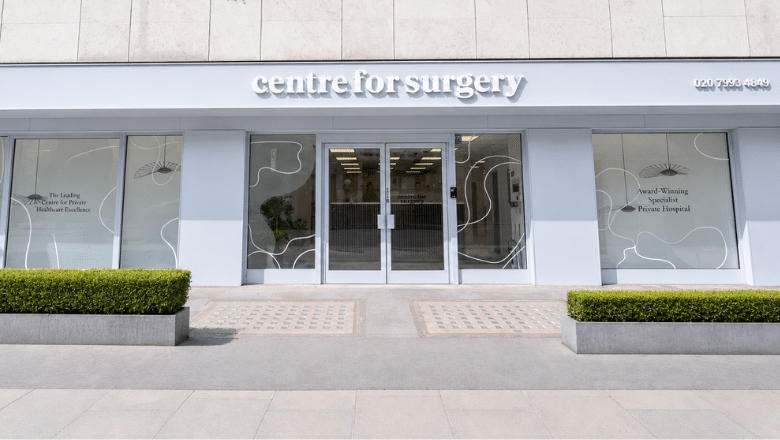
Whichever treatment is right for your anatomy, it’s performed by a GMC-registered plastic surgeon at our purpose-built, CQC-regulated hospital on Baker Street, rated “Good” by the CQC. We offer the full range of relevant treatments, from TightSculpting through to tummy tuck, so your surgeon recommends what genuinely fits your anatomy rather than defaulting to one default procedure.
Every package includes unlimited pre-operative consultations, a recommended two-week cooling-off period, full pre-operative medical assessment, a dedicated patient coordinator, and full aftercare through your follow-up reviews.
Book Your Consultation
Phone: 020 7993 4849
95–97 Baker Street, Marylebone, London W1U 6RN
Contact us to schedule your consultation
Your initial in-person consultation is £100, redeemable against the cost of surgery if you proceed.
Frequently Asked Questions
Can you get a flat stomach in a week?
No — this isn’t achievable through diet, exercise, or non-surgical treatment, and even surgery needs 3-6 months for swelling to fully resolve and final results to show. Anyone promising a flat stomach in a week is selling something that doesn’t hold up.
What’s the fastest way to get a flat tummy?
Surgery (liposuction or a tummy tuck) is the fastest way to achieve a visible, lasting change in stomach shape, though results still take months to fully settle. Diet and exercise can meaningfully improve a flat stomach goal but typically take considerably longer and, for genuine loose skin, won’t achieve it at all.
Is it possible to get a flat stomach without surgery?
Yes, if your concern is mainly fat with good skin elasticity — sustained diet and exercise, potentially supported by non-surgical treatments like TightSculpting, BodyTite or Argo Plasma, can achieve a genuinely flatter stomach. If your concern includes significant loose skin, no non-surgical approach will fully resolve it.
Will losing weight give me a flat stomach after a C-section?
Not necessarily — a C-section can involve stretched or separated abdominal muscles alongside skin laxity, neither of which weight loss alone resolves. See our dedicated guide: tummy tuck after C-section.
Liposuction or tummy tuck for a flat stomach — which is better?
It depends on whether skin laxity or muscle separation is present alongside the fat. Liposuction alone suits good skin elasticity with intact muscles. Where skin laxity or diastasis recti is present — common after pregnancy or significant weight loss — a tummy tuck is the more effective route, since liposuction alone would leave those issues unresolved.
Do flat stomach exercises actually work?
They build abdominal muscle tone, which becomes visible once the overlying fat has reduced through overall fat loss — but they don’t burn fat from the abdomen specifically. Spot-reduction isn’t physiologically possible anywhere on the body.
Learn More
- Liposuction
- Tummy tuck
- Mini tummy tuck
- TightSculpting
- BodyTite
- Argo Plasma skin tightening
- How to get rid of apron belly
- How to get rid of belly fat
- Tummy tuck after C-section
- Do GLP-1 medications cause loose skin?
- Muffin top liposuction
- Love handles liposuction