


In this guide13 sections
- Key Points
- Why Does the Skin on Your Face Sag?
- Where Is Your Face Sagging?
- How to Tighten Sagging Skin on Your Face Naturally
- How to Tighten Loose Skin on the Face Without Surgery
- Sagging Face After Weight Loss
- What to Expect from Non-Surgical Skin Tightening
- When Is Facial Skin Too Loose for Non-Surgical Treatment?
- What Are the Treatments for Sagging Jowls?
- How We Assess Sagging Skin at Centre for Surgery
- Frequently Asked Questions
- References
- Talk to a Surgeon About Sagging Skin
Key Points
- Sagging facial skin is caused by more than the skin itself. Collagen and elastin decline, but the fat pads, the ligaments that hold them and the facial bones also change with age.
- Daily broad-spectrum sunscreen and not smoking are the two habits with the strongest evidence for slowing sagging. In a randomised trial, daily sunscreen users showed 24% less skin ageing over four and a half years.
- Facial exercises and collagen supplements have only small or early evidence behind them. They will not lift skin that is already loose.
- Mild to moderate laxity can often be tightened without surgery using radiofrequency microneedling (Morpheus8), Fotona 4D laser or FaceTite, with injectables to restore lost volume.
- Once loose skin hangs below the jawline as jowls or folds in the neck, surgery such as a facelift or neck lift is the only treatment that repositions the deeper tissues and removes the excess skin.
- At Centre for Surgery, only surgeons give injectable treatments, and a surgeon can tell you honestly whether a non-surgical treatment will be enough.
Most people notice sagging skin on the face first along the jawline, around the mouth or under the chin, often in their forties. This guide explains how to tighten sagging skin on your face: why it happens, what you can do yourself, which non-surgical treatments work for which degree of laxity, and when surgery is the more realistic option.
If you want a side-by-side comparison of every clinic treatment, our guide to facial skin tightening treatments covers each one in detail. For loose skin under the chin and on the neck, see how to tighten neck skin without surgery.
Why Does the Skin on Your Face Sag?
Facial sagging is the visible result of changes in four layers at once, which is why no single cream or treatment fixes all of it:
- Skin. Collagen gives skin its strength and elastin lets it spring back. Both decline with age and with sun damage, so the skin becomes thinner and less elastic and creases more easily.
- Fat pads. The face has separate pockets of fat. With age some shrink and others slide downwards, so the cheeks look flatter and fullness gathers along the jaw.
- Ligaments. Small ligaments anchor the skin and fat to the deeper tissues. As they loosen, tissue drops, deepening the nasolabial folds and forming jowls.
- Bone. The eye sockets widen and the jaw recedes slightly over time, leaving the skin less support.
Our guide to the signs of ageing in the face over time explains how these changes show up decade by decade.
What speeds up facial sagging?
Sun exposure and smoking are the two biggest avoidable causes. In a study of 79 pairs of identical twins in which only one twin smoked, or one had smoked for at least five years longer, the smoking twins had more upper eyelid skin, more lower lid and cheek bags, deeper nasolabial folds and worse jowls[1]. Rapid or large weight loss also leaves the skin with less volume underneath it, which can make sagging appear quickly.
Where Is Your Face Sagging?
The right approach depends on which part of the face has dropped:
- Jowls and the jawline. Fullness hanging below the jaw is the most common reason people look into tightening. Our guide to sagging jowls covers this area in depth.
- Cheeks and the nasolabial folds. Flattened cheeks and deeper lines from nose to mouth are usually about volume loss as much as loose skin.
- Under the chin and neck. Loose neck skin and vertical bands usually need a different treatment plan from the face.
- Eyelids and brows. Heavy upper eyelids or a drooping brow can feel tiring and, when skin sits on the lashes, can affect the upper field of vision. Our article on non-surgical alternatives to eyelid surgery covers this area.
How to Tighten Sagging Skin on Your Face Naturally
Nothing done at home will lift skin that already hangs, but daily habits make a measurable difference to how quickly sagging progresses.
Wear sunscreen every day. This has the strongest evidence of anything you can do yourself. In a 2013 randomised trial of 903 adults published in the Annals of Internal Medicine ↗[2], people who applied broad-spectrum sunscreen daily showed no detectable increase in skin ageing over four and a half years, and 24% less ageing than those who used it only when they chose to.
Stop smoking. The twin study above shows that smoking affects the middle and lower face most, the same areas where sagging is most visible[1].
Keep your weight stable. Repeated large swings in weight stretch the skin and reduce facial fat, both of which make sagging look worse.
Use proven skincare. Vitamin C is needed to make collagen and helps protect skin from UV damage, although a 2017 review concluded that the benefit of applying it to the skin, rather than getting enough in your diet, is less clear[3]. Moisturisers make skin look smoother but do not tighten it.
Do facial exercises tighten sagging skin?
The evidence is small. In a 2018 pilot study in JAMA Dermatology ↗[4], middle-aged women who followed a 20-week facial exercise programme were judged to have slightly fuller upper and lower cheeks. Only a small number of women completed the programme and there was no control group, so the results are encouraging rather than proof. Facial exercises work the muscles; they do not remove loose skin.
Can collagen supplements improve skin elasticity?
There is some evidence they can, modestly. A 2021 meta-analysis of 19 trials with 1,125 participants found that hydrolysed collagen taken for around 90 days improved skin hydration, elasticity and wrinkles compared with placebo[5]. The trials were short and many were funded by manufacturers, and improved elasticity is not the same as lifting sagging skin. Our guide to whether collagen supplements work looks at what the independent trials found.
What vitamins are good for skin tightening?
Vitamin C is the best understood, as it is essential for collagen production. A varied diet with fruit and vegetables usually provides enough. No vitamin tightens skin that has already sagged, and high-dose supplements are not a substitute for sunscreen.
How to Tighten Loose Skin on the Face Without Surgery
Non-surgical treatments work best for mild to moderate laxity, where the skin has softened but is not hanging. They tighten by triggering the skin to make new collagen, or by restoring lost volume underneath it. The improvement is gradual and more modest than surgery, and most need repeating over time.

Radiofrequency microneedling (Morpheus8)
Morpheus8 combines fine needles with radiofrequency energy to heat the deeper layers of the skin and stimulate collagen. It is well suited to early jowls, loose skin around the mouth and crepey skin, and the effect builds over the months after a course of treatments.
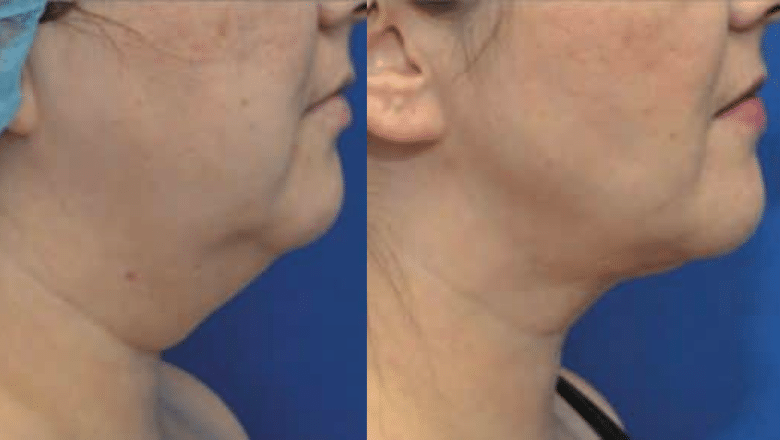
Real Centre for Surgery patient before and after Morpheus8. See more results in our Morpheus8 before and after photos.
Fotona 4D laser
Fotona 4D uses laser energy in several steps, including from inside the mouth, to tighten the skin and improve its texture without needles or downtime for most people.
FaceTite
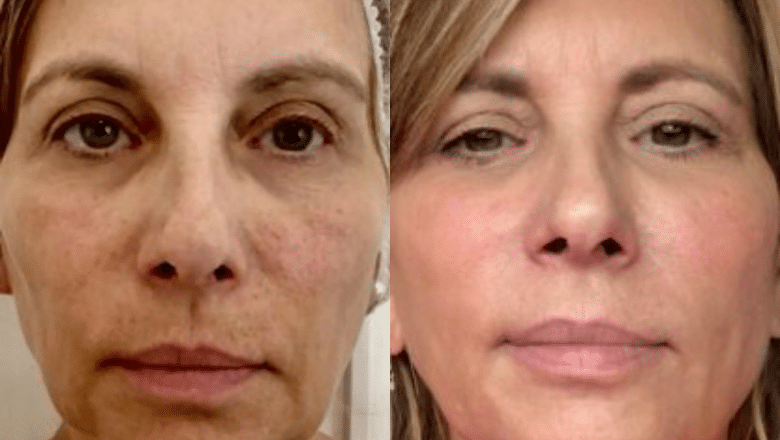
FaceTite is a minimally invasive treatment that delivers radiofrequency energy under the skin through a tiny opening. It tightens more than surface treatments and suits people with moderate laxity, often along the jaw and under the chin, who are not ready for a facelift.
Injectables to restore volume
Some sagging is really volume loss. Dermal fillers placed in the cheeks, temples and jawline can restore support and give a subtle lift, and Profhilo and polynucleotides improve skin quality and hydration rather than lifting. At Centre for Surgery, only surgeons give injectable treatments. Filler is not a substitute for tightening heavy skin, and too much filler can make the face look heavier rather than lifted.
For a fuller comparison of these and other options, including how long each lasts, see our guides to facial skin tightening treatments and facelift alternatives without surgery.
Sagging Face After Weight Loss
Losing a lot of weight, particularly quickly, takes volume out of the face as well as the body. The skin that stretched over that fullness does not always shrink back, so the cheeks can look hollow while the jowls and neck look looser. This has become more common with GLP-1 weight-loss medicines, and our article on facial changes after GLP-1 weight loss explains the pattern.
The approach is the same as for any sagging, with one difference: volume usually needs replacing as well as skin tightening. Filler or fat transfer to the face can restore lost fullness, and where loose skin is marked, surgery is usually planned once your weight has been stable for at least six months, ideally twelve. Our guide to face and neck lift surgery after weight loss covers the surgical side.
What to Expect from Non-Surgical Skin Tightening
Most people are surprised by how gradual the results are. Radiofrequency and laser treatments work by causing a controlled injury that the skin repairs with new collagen, which takes weeks to months. A typical plan involves:
- A course of treatments spaced several weeks apart, rather than a single session.
- Short-lived redness and swelling for a day or a few days after Morpheus8 or Fotona 4D, and pinpoint marks after microneedling. Most people return to work quickly.
- Numbing cream or local anaesthetic to keep the treatment comfortable.
- Results that develop over the following months, with occasional maintenance treatments to keep pace with ageing.
Are there risks with non-surgical skin tightening?
Side effects are usually mild, but no treatment is risk-free. Energy-based treatments can occasionally cause burns, prolonged redness or changes in skin colour, which is more likely in darker skin types and is one reason the settings need to be chosen by an experienced practitioner. Fillers can cause bruising, swelling and lumps and, rarely, block a blood vessel, which needs urgent treatment. Having treatment with a surgeon who can recognise and manage complications is the safest approach.
When Is Facial Skin Too Loose for Non-Surgical Treatment?
Non-surgical tightening improves skin quality and firmness, but it cannot move tissue that has dropped or remove skin that has stretched. Signs that surgery is more likely to give the result you want include:
- Jowls that hang below the line of the jaw rather than softening it.
- Loose skin or vertical bands in the neck.
- Deep nasolabial folds caused by the cheek dropping, rather than by lost volume alone.
- Having had non-surgical treatments with little lasting change.
A facelift lifts the deeper tissue layer as well as the skin, and a deep plane facelift releases the ligaments so that the cheeks and jawline can be repositioned as one unit. A mini facelift, usually done under local anaesthetic with or without sedation, suits earlier jowls with less loose neck skin, and a neck lift treats the neck directly. Our guide to the best age for a facelift explains how timing affects the choice.
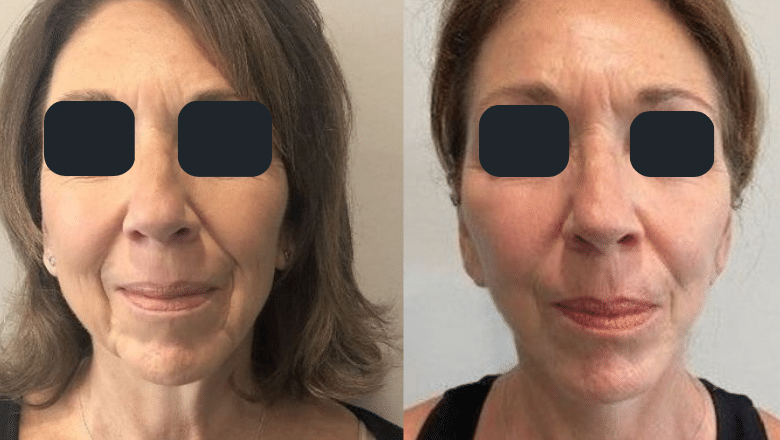
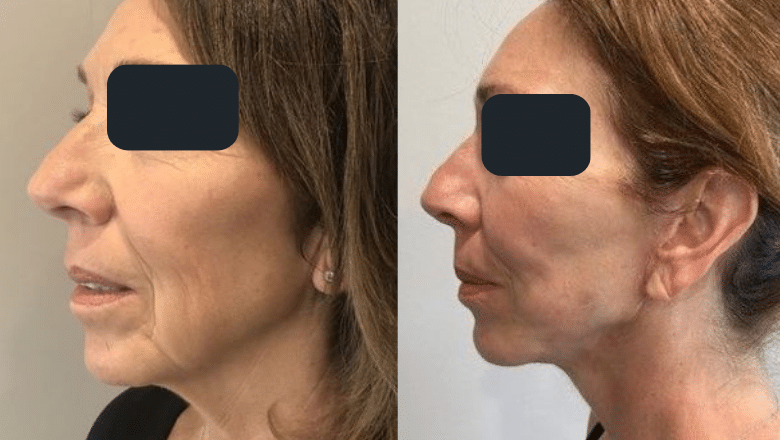
Real Centre for Surgery patient, photographed at least six months after mini facelift surgery. See more results in our facelift before and after photos.
What Are the Treatments for Sagging Jowls?
Jowls are the clearest example of why the degree of sagging matters. Early jowls that soften the jawline often respond to Morpheus8, FaceTite or carefully placed jawline filler. Established jowls that hang below the jaw usually need a lower facelift (jowl lift), which repositions the tissue rather than tightening the skin over it. Our guide to the best non-surgical treatments for jowls compares the options.
How We Assess Sagging Skin at Centre for Surgery
At a consultation, a surgeon examines your skin quality, how much skin there is to spare, where the fat has moved and how the neck and jawline look from the side. They will then explain honestly what a non-surgical treatment can achieve for you and whether surgery would give a better or longer-lasting result. Patients can come back for as many consultations as they need before deciding, and for surgery, the consultant who assesses you is the consultant who performs your operation.
Frequently Asked Questions
How do you tighten skin on the face?
Protect what you have with daily sunscreen and by not smoking, then match the treatment to the degree of sagging. Mild laxity responds to skin treatments such as Morpheus8 or Fotona 4D, moderate laxity to FaceTite, often with filler to restore volume, and marked sagging with jowls or loose neck skin to a facelift or neck lift.
How long do skin tightening results last?
It depends on the treatment. Collagen built by radiofrequency or laser treatments continues to improve for several months, but the skin keeps ageing, so most people have occasional maintenance sessions. Surgical results last much longer, although the face continues to age from its new starting point. Our guide to facial skin tightening treatments compares how long each lasts.
Can sagging skin on the face be reversed?
It can be improved but not fully reversed. Non-surgical treatments firm the skin and can soften mild sagging. Surgery can reposition tissue that has dropped and remove excess skin, which is the closest to reversing it, but ageing continues afterwards.
What does it mean when your face feels tight?
A tight feeling is usually a sign of dry or irritated skin, for example after cleansing with harsh products, in cold weather or with conditions such as eczema. It is not the same as firm skin. A gentle cleanser and moisturiser usually help, and a rash or persistent tightness is worth showing to your GP.
How much does skin tightening usually cost?
The cost depends on the treatment, the area and how many sessions you need. Current prices for our non-surgical skin treatments are on our price list, and surgical treatments are quoted after a consultation.
References
- Okada HC, Alleyne B, Varghai K, Kinder K, Guyuron B. Facial changes caused by smoking: a comparison between smoking and nonsmoking identical twins. Plast Reconstr Surg. 2013;132(5):1085-1092. doi:10.1097/PRS.0b013e3182a4c20a ↗
- Hughes MCB, Williams GM, Baker P, Green AC. Sunscreen and prevention of skin aging: a randomized trial. Ann Intern Med. 2013;158(11):781-790. doi:10.7326/0003-4819-158-11-201306040-00002 ↗
- Pullar JM, Carr AC, Vissers MCM. The roles of vitamin C in skin health. Nutrients. 2017;9(8):866. doi:10.3390/nu9080866 ↗
- Alam M, Walter AJ, Geisler A, et al. Association of facial exercise with the appearance of aging. JAMA Dermatol. 2018;154(3):365-367. doi:10.1001/jamadermatol.2017.5142 ↗
- de Miranda RB, Weimer P, Rossi RC. Effects of hydrolyzed collagen supplementation on skin aging: a systematic review and meta-analysis. Int J Dermatol. 2021;60(12):1449-1461. doi:10.1111/ijd.15518 ↗
Talk to a Surgeon About Sagging Skin
If you would like an honest assessment of what will tighten your skin, from skin treatments to surgery, you can book a consultation at our Baker Street clinic by calling 020 7993 4849 or using the form below.







