


In this guide17 sections
- Key Points
- How Long Is Mummy Makeover Recovery?
- Mummy Makeover Recovery Timeline: Week by Week
- Does Your Combination of Procedures Affect Recovery?
- Which Procedures Can a Mummy Makeover Include?
- Sleeping, Driving and Daily Life After a Mummy Makeover
- Preparing for Mummy Makeover Recovery
- Swelling, Bruising and Compression After a Mummy Makeover
- When Can I Exercise After a Mummy Makeover?
- Mummy Makeover Aftercare: Dos and Don’ts
- Mummy Makeover Scars and Scar Care
- When to Contact Your Surgeon After a Mummy Makeover
- Emotional Wellbeing During Recovery
- Choosing the Right Surgeon and Clinic
- Mummy Makeover Recovery FAQs
- Mummy Makeover in London
- References
Key Points
- How long is mummy makeover recovery? Usually two to three weeks off work and six to eight weeks before most normal activities, with the final result settling over six to 12 months.
- What makes it different? Several areas heal at once, usually the breasts and abdomen, so swelling, tightness and restrictions add up, and the slowest procedure sets the pace.
- When can I lift my children? Avoid lifting anything heavy, including children, for about six weeks, and arrange help at home for at least the first two weeks.
- How should I sleep? On your back, with your upper body raised and knees bent, for about four to six weeks.
- When can I exercise? Walking from day one, light exercise from about six weeks, and core work, running and heavy weights from around three months.
- When will I see results? Changes are visible straight away, but swelling hides much of the result for three months, and scars keep fading for 12 to 18 months.
Mummy makeover recovery is longer than recovery from any single procedure, because a mummy makeover combines several operations, usually breast surgery, a tummy tuck and liposuction, in one visit to theatre. Most people need two to three weeks off work, six to eight weeks before getting back to most normal activities, and around three months before heavy lifting and core exercise. How long your own recovery takes depends mainly on which procedures make up your plan.
A mummy makeover at Centre for Surgery is usually a day case under TIVA (total intravenous anaesthesia); our guide to anaesthesia for cosmetic surgery explains what that involves. Where you have surgery matters too: recovering after a long flight home is one of the risks our guide to the mummy makeover abroad covers. This guide sets out the mummy makeover recovery timeline week by week, how your combination of procedures changes healing, sleeping, childcare, exercise and scars, and the warning signs to look out for. For advice that applies to every operation, see our recovery after cosmetic surgery hub, and to see settled results, browse our mummy makeover before and after photos.
How Long Is Mummy Makeover Recovery?
Mummy makeover recovery has three stages. The first two weeks are about rest, short walks and protecting the incisions, with full-time help at home. From about two to six weeks you return to desk work and daily life while avoiding lifting and straining. From six weeks to three months you build back up to full exercise. Swelling settles over three to six months, and the final result is clear between six and 12 months.
The tummy tuck is usually the part that sets the pace, because it involves the longest incision and often muscle repair. The NHS guidance on tummy tuck recovery ↗ advises about four to six weeks off work and exercise and a support garment for six weeks, and a combined operation is rarely quicker than that. Treat every timeline here as a guide, and follow your own surgeon’s instructions.
Your mummy makeover recovery dates
Add your operation date to see the milestones in this guide as dates, then save them to your phone's calendar.
Mummy Makeover Recovery Timeline: Week by Week

Day of surgery
You go home the same day once you are comfortable. A responsible adult must take you home and stay with you for 24 hours; the Royal College of Anaesthetists’ advice for the person looking after you ↗ explains what that involves. You will be wearing a support bra and an abdominal garment, and after a full tummy tuck you will usually have drains. You are given your surgeon’s direct number for the first 24 hours on your discharge summary.
Days 1–3
These are usually the hardest days. Expect swelling, bruising, tightness across the abdomen and tenderness in the breasts, controlled with the painkillers you are prescribed. You will walk slightly bent forward to protect the tummy tuck incision. Rest with your upper body raised, but get up for short walks around the home every couple of hours to keep your circulation moving and lower the risk of a blood clot.
Week 1
Soreness, stiffness and tiredness are normal as your body directs its energy into healing. Drains are usually removed after a few days, once the fluid has slowed. Keep your arms below shoulder height, avoid lifting anything heavier than a kettle, and keep walking for 10–15 minutes every couple of hours.
Weeks 2–3
Pain and tightness ease noticeably, and you can stand straighter each day. Many people return to desk-based work during this stage, depending on their job and how they feel. Keep increasing your walking gradually, and keep avoiding heavy lifting, stretching and anything high-impact.
Weeks 4–6
Most people are back to most usual daily activities, including driving, by this stage. Keep wearing your garments for the full six weeks unless your surgeon advises otherwise. Towards the end of this stage your surgeon will usually review you and advise on exercise.
Weeks 6–12
Lighter exercise such as a static bike, light weights and gentle yoga can usually be reintroduced with your surgeon’s approval. Lifting heavier children, running, core exercise and heavy weights still wait until around three months, especially after muscle repair.
3–12 months
Most of the swelling has gone by three months, so the new shape is much clearer, but small refinements continue for up to a year. Breast implants settle into their final position over three to six months, and scars keep fading for 12 to 18 months.
Does Your Combination of Procedures Affect Recovery?

Yes. A mummy makeover is a combination of operations, so your recovery depends on exactly which surgeries make up your plan:
- Breast augmentation with liposuction: one of the more straightforward combinations, often with a shorter overall recovery. Our breast augmentation recovery guide covers the breast side in detail.
- Tummy tuck with a breast lift: a moderate combination, broadly following the timeline above. Our breast lift recovery guide explains how the breasts heal.
- Tummy tuck with a breast reduction: two more extensive operations together, which typically means a longer recovery. Our tummy tuck recovery guide shows how much of the timeline the abdomen sets.
Combining operations means one anaesthetic and one recovery period, but it also means swelling and restrictions in more than one area at once. The evidence on safety is reassuring when patients are carefully selected. A 2026 systematic review and meta-analysis of 138,020 patients ↗ found that combining a tummy tuck with breast surgery carried a complication rate similar to a tummy tuck alone, but higher than breast surgery alone[1]. In a 2015 study of 25,478 abdominoplasties ↗, major complications occurred in 3.1% of tummy tucks done alone, 4.3% when combined with a breast procedure and 4.6% when liposuction was added as well[2]. Combined operations can also mean more follow-up visits and a higher chance of a later touch-up procedure[3], which is worth planning for.
Some people choose to stage their operations instead, which means two shorter recoveries rather than one longer one. Your surgeon will discuss which combination and approach suit your goals and health at consultation. If implants are part of your plan, we use Silimed implants with a 10-year warranty covering grade III–IV capsular contracture and rupture, and submit implant operations to the Breast and Cosmetic Implant Registry.
Which Procedures Can a Mummy Makeover Include?
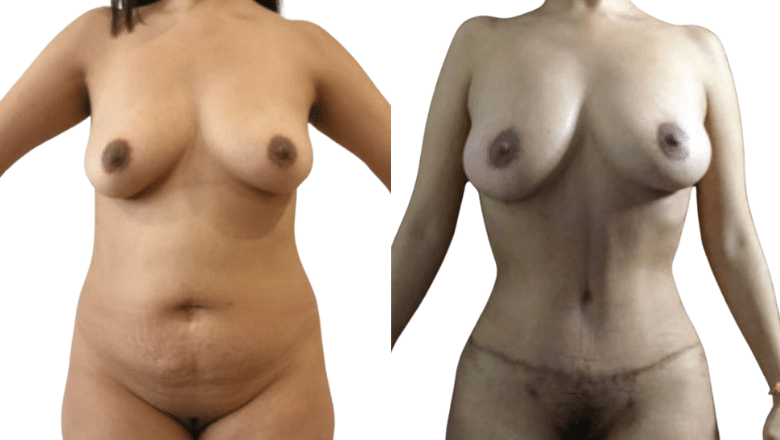
A mummy makeover is built around your own concerns rather than a fixed package. Most plans combine breast surgery (augmentation, lift or reduction) with a tummy tuck, often with muscle repair for separated stomach muscles, and liposuction of the waist or flanks. Some people also include vaginal rejuvenation or labiaplasty to address other changes after pregnancy and childbirth. Each extra procedure adds another area that is healing at the same time, and our liposuction recovery guide explains what the liposuction element adds. If you are unsure what is causing the change in your abdomen, our guide to the mum tum explains the difference between fat, loose skin and separated muscles.
Sleeping, Driving and Daily Life After a Mummy Makeover
Sleeping after a mummy makeover
Sleep on your back with your upper body raised, ideally in a recliner or propped up on several pillows, with a pillow under your knees, for about four to six weeks. Avoid sleeping on your front or side until your surgeon says it is safe, particularly if you have had breast implants or muscle repair. Our guide to how to sleep after a mummy makeover covers positions and pillows in more detail.
Childcare and lifting
This is the hardest part of recovery for most parents. Avoid lifting anything heavy, including children, for about six weeks, and arrange full-time help for at least the first two weeks. Toddlers can climb onto your lap while you are sitting, rather than being lifted, once your surgeon agrees.
Driving
Do not drive until you are off painkillers that cause drowsiness and can turn, wear a seatbelt comfortably and make an emergency stop. This usually takes three to four weeks after a mummy makeover that includes a full tummy tuck.
Showering and bathing
Your surgeon will confirm when you can shower. Keep the incisions dry at first, and avoid baths, pools and saunas until they have fully healed, usually at least four weeks.
Going back to work
Desk-based work is usually possible from two to three weeks. Physically demanding jobs usually need six to eight weeks.
Tiredness
Post-operative tiredness is common, especially in the first week or two, as your body puts its energy into healing several areas at once. Rest, good food and sleep help.
Preparing for Mummy Makeover Recovery
- Get the timing right. For breast surgery after pregnancy, wait at least three months after you stop breastfeeding, ideally around six, and aim to be at a stable weight, at or near your target. Our guide to a mummy makeover after pregnancy explains the timing, and our guide to a mummy makeover if you plan more children covers what a future pregnancy would mean.
- Stop smoking and all nicotine at least four weeks before surgery.
- Set up a recovery space at home in advance, with pillows or a recliner, so you can rest as soon as you get home.
- Prepare a recovery kit with your prescribed medicines, a gentle laxative or stool softener if advised, gentle soap, front-fastening tops and easy, healthy snacks.
- Arrange a support team for childcare, school runs, household tasks and emotional support, and book enough time off work.
Swelling, Bruising and Compression After a Mummy Makeover
- Drains, if used after a tummy tuck, are usually removed after a few days.
- Compression: an abdominal garment, usually worn day and night for six weeks, and a supportive surgical bra as your surgeon advises. Garments are bought separately and confirmed before surgery.
- Cold packs can help in the first few days, wrapped in a cloth and used for short periods only.
- Walking little and often helps circulation and swelling.
- A low-salt diet and plenty of water limit fluid retention and bloating.
Swelling peaks in the first week, improves a great deal by six to eight weeks, and fades slowly over three to six months. It is usually worse in the evening and after a long day on your feet.
When Can I Exercise After a Mummy Makeover?
- Weeks 1–2: rest, with short walks of 10–15 minutes every couple of hours, ideally with someone with you at first.
- Weeks 3–4: gradually longer walks and light household tasks, still avoiding lifting, stretching and anything high-impact.
- Weeks 6–8: a wider range of exercise, such as a static bike, light weights and gentle yoga, with your surgeon’s approval.
- Around 3 months: running, core exercises, heavy weights and most sports, once your surgeon confirms you are ready.
Raising your arms above your head is usually comfortable from two to three weeks. Our guide to exercising after cosmetic surgery explains how to build back up safely.
Mummy Makeover Aftercare: Dos and Don’ts
Do
- Attend all your follow-up appointments so any problems are spotted early.
- Take your medicines exactly as prescribed, including painkillers and any antibiotics or stool softeners.
- Eat well, with lean protein such as chicken, fish, eggs and beans for tissue repair, fruit and vegetables, and high-fibre wholegrains to prevent constipation.
- Drink plenty of water, and use nourishing smoothies if your appetite is low.
- Rest properly, with daytime rest as well as a good night’s sleep.
- Wear your garments as instructed, without removing them early.
Don’t
- Smoke, vape or use nicotine. In a 2003 study of 132 abdominoplasties, wound healing problems needing treatment occurred in 47.9% of smokers compared with 14.8% of non-smokers[4]. Stop for at least four weeks before and four weeks after surgery.
- Drink alcohol in the early weeks, because it can delay healing and interacts with some medicines.
- Take over-the-counter medicines or supplements without checking with your surgeon, and take blood thinners only on medical advice.
- Lift, strain or do strenuous exercise for at least six to eight weeks.
- Eat a lot of salty or processed food, which worsens swelling.
- Rush the process. Timelines vary, and patience protects your result.
Mummy Makeover Scars and Scar Care
A mummy makeover usually leaves scars in more than one area: a low scar across the abdomen and around the belly button, and scars around the breasts depending on the breast procedure. Keep the incisions clean and dry and follow your surgeon’s dressing instructions. Once they have fully closed, with no scabs or openings, silicone gel or sheets can help: a Cochrane review found weak evidence that silicone sheeting lowers the risk of raised scars in people prone to them and can improve the thickness and colour of existing scars, although the studies were of poor quality[5]. Protect the scars from the sun for at least a year. They usually look most obvious in the first few months, then fade and flatten over 12 to 18 months. Our guide to mummy makeover scars covers scar care in more detail.
When to Contact Your Surgeon After a Mummy Makeover
Contact your surgical team straight away if you have:
- a temperature, or spreading redness, heat or discharge around an incision
- heavy bleeding, or a rapidly growing, tense or painful swelling in one breast or on one side of the abdomen
- pain that is not controlled by your prescribed painkillers, or sudden severe abdominal pain
- repeated vomiting
- a painful, swollen calf, or breathlessness or chest pain (call 999 for chest pain or difficulty breathing)
Walking regularly, and moving your feet and ankles while resting, helps prevent blood clots; the NHS guidance on DVT ↗ describes the symptoms. For the first 24 hours, call your surgeon on the direct number on your discharge summary. After that, call the clinic on 020 7993 4849, 9am–6pm Monday to Saturday, and NHS 111 out of hours, or 999 in an emergency.
Emotional Wellbeing During Recovery
It is normal for your mood to go up and down while you heal. Swelling, bruising, tiredness and the slow pace of visible change can feel discouraging in the early weeks, even when everything is healing as expected, and being unable to lift or care for your children as usual can be hard. It helps to remember that early results are never the final picture. In the longer term, the picture is encouraging: in a 2026 prospective study of 36 women after combined tummy tuck and breast surgery ↗, physical functioning, energy, pain, self-esteem and wellbeing scores had all improved significantly by 12 months[6]. Lean on your support network, stay in touch with your surgical team, and give yourself permission to rest without guilt.
Choosing the Right Surgeon and Clinic
A mummy makeover combines several operations, so choose a surgeon with experience in each procedure your plan includes, in a CQC-regulated hospital where complications can be managed. Be wary of hard selling and prices that seem too good to be true. A face-to-face consultation, where your surgeon examines you and explains what each part of your plan means for your recovery, is the best foundation for a smooth recovery and a result you are happy with.
Mummy Makeover Recovery FAQs
How long is mummy makeover recovery time?
Usually two to three weeks off work and six to eight weeks before most normal activities, with heavy lifting and core exercise from around three months. More extensive combinations take longer.
How painful is recovery from a mummy makeover?
Expect moderate pain, tightness and soreness for the first few days, controlled with prescribed painkillers, then steady improvement. Severe or worsening pain is not normal; contact your surgical team if it happens.
Can I sleep on my side after a mummy makeover?
Not at first. Sleep on your back with your upper body raised for about four to six weeks, and only change position when your surgeon says it is safe.
When can I pick up my child after a mummy makeover?
Avoid lifting children for about six weeks, and longer after muscle repair. Until then, let them climb onto your lap while you sit, and arrange help for anything that involves lifting.
When can I return to work after a mummy makeover?
Most people take at least two weeks off, and often three, for desk-based work. Physically demanding jobs usually need six to eight weeks.
How soon can I work out after a mummy makeover?
Walking starts on day one. Light exercise usually resumes at six to eight weeks, and running, core work and heavy weights at around three months, with your surgeon’s agreement.
When can I see the results of my mummy makeover?
You will see a change straight away, but swelling hides much of the result for the first three months. The final result is usually clear between six and 12 months. Our guide to how long mummy makeover results last explains what affects them in the long term.
Is it better to have everything done at once or in stages?
Doing everything at once means one anaesthetic and one recovery, but a more demanding one. Staging means two shorter, gentler recoveries but more time off in total. Your surgeon will help you weigh up which suits your health and circumstances.
Do I need to lose weight before a mummy makeover?
It is not essential, but being at a stable weight at or near your target gives the best and longest-lasting result, because large weight changes afterwards can affect the outcome.
How can I speed up healing after a mummy makeover?
Follow your surgeon’s instructions closely, walk little and often, eat well, drink plenty of water, rest, wear your garments, and avoid nicotine, alcohol and lifting too soon.
How long does mummy makeover surgery take?
It depends on the number and type of procedures, but a typical combined operation takes around four to six hours.
Mummy Makeover in London
Mummy makeover surgery at Centre for Surgery is performed by GMC-registered surgeons at our CQC-regulated Baker Street hospital, rated Good overall by the CQC. The consultant who assesses you at consultation is the consultant who performs your surgery, and you have follow-up reviews as you heal. We recommend a two-week cooling-off period between your consultation and booking surgery, so you have time to plan your recovery and support at home. Your initial consultation is £100, redeemable against the cost of surgery if you go ahead; our mummy makeover cost guide explains what the price includes, and finance options are available, subject to status.
Phone: 020 7993 4849 | Address: 95–97 Baker Street, Marylebone, London W1U 6RN
Contact us to schedule a consultation
References
- Skorochod R, Wolf Y. Risk of concomitant abdominoplasty and breast surgery versus isolated procedures: a systematic review and meta-analysis. Aesthetic Plastic Surgery 2026;50(13):5013–5022. doi:10.1007/s00266-026-05863-7
- Winocour J, Gupta V, Ramirez JR, et al. Abdominoplasty: risk factors, complication rates, and safety of combined procedures. Plastic and Reconstructive Surgery 2015;136(5):597e–606e. doi:10.1097/PRS.0000000000001700
- Pouramin P, Dow T, Williams J. Exploring complication rates: a comparative study of breast reduction and combined breast reduction with abdominoplasty. Aesthetic Plastic Surgery 2024;48(22):4660–4666. doi:10.1007/s00266-024-04040-y
- Manassa EH, Hertl CH, Olbrisch RR. Wound healing problems in smokers and nonsmokers after 132 abdominoplasties. Plastic and Reconstructive Surgery 2003;111(6):2082–2087. doi:10.1097/01.PRS.0000057144.62727.C8
- O’Brien L, Jones DJ. Silicone gel sheeting for preventing and treating hypertrophic and keloid scars. Cochrane Database of Systematic Reviews 2013;(9):CD003826. doi:10.1002/14651858.CD003826.pub3
- Toto V, Faiola A, Ponzo M, et al. Long-term psychosocial benefits after combined abdominoplasty and breast surgery in postpartum women: a prospective 12-month study. Journal of Plastic, Reconstructive and Aesthetic Surgery 2026;121:49–55. doi:10.1016/j.bjps.2026.07.006



