


In this guide11 sections
- What Is a Buffalo Hump?
- What Causes a Buffalo Hump?
- Buffalo Hump vs Dowager’s Hump — What’s the Difference?
- Is a Buffalo Hump a Lipoma?
- How to Get Rid of a Buffalo Hump
- Buffalo Hump Removal with Liposuction
- Am I a Suitable Candidate for Buffalo Hump Removal?
- Recovery After Buffalo Hump Removal
- How Much Does Buffalo Hump Removal Cost in London?
- Frequently Asked Questions
- Buffalo Hump Removal at Centre for Surgery
A buffalo hump — an accumulation of fat at the back of the neck, medically known as a dorsocervical fat pad — is a common and often distressing cosmetic concern. Also called a neck hump, it can protrude visibly above the collar line, alter the profile, restrict clothing choices, and take a real toll on confidence. While it is usually harmless in itself, its appearance and its underlying cause both matter, and understanding them is the first step towards effective treatment.
At Centre for Surgery in London, our GMC-registered surgeons remove buffalo humps with liposuction at our CQC-regulated Baker Street clinic. This comprehensive guide explains what a buffalo hump is, what causes it, how it differs from a dowager’s hump, whether it could be a lipoma, and the full range of treatment options — along with realistic detail on the procedure, recovery, cost, and results that most guides leave out.
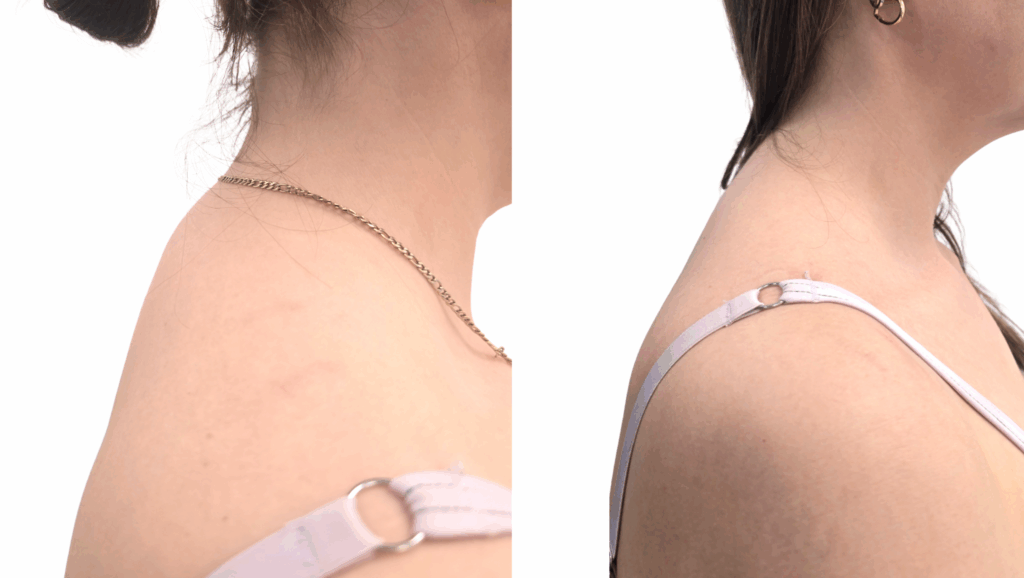
What Is a Buffalo Hump?

A buffalo hump is an excess build-up of fat at the base of the back of the neck, between the shoulders, presenting as a rounded lump or hump. Its formal name — dorsocervical fat pad, or dorsocervical fat pad hypertrophy when enlarged — simply describes its location: “dorso” meaning back, “cervical” meaning neck. Everyone has a small amount of fat in this area; a buffalo hump is when that pad becomes enlarged enough to be visibly prominent.
The fat itself is soft and typically painless, though when large it can cause a feeling of tightness, affect neck posture, and contribute to discomfort in the neck and upper back. Crucially, a buffalo hump is a symptom rather than a diagnosis in its own right — the fat accumulation is real and treatable, but it is always worth understanding why it has developed, because in some cases it points to an underlying medical cause that also needs attention.
What Causes a Buffalo Hump?

A buffalo hump can develop for several reasons, and identifying which applies to you is an essential part of the assessment.
Cushing’s Syndrome
Cushing’s syndrome — a condition caused by prolonged exposure to high levels of the hormone cortisol — is one of the classic medical causes of a buffalo hump. The excess cortisol drives fat redistribution to characteristic areas including the back of the neck, the face (producing a rounded “moon face”), and the abdomen. Where Cushing’s is suspected, the underlying condition needs medical investigation and management in its own right, separate from any cosmetic treatment of the hump.
This is the single most important thing on this page, so it is worth being specific about what to look for. A buffalo hump on its own is very rarely Cushing’s. What raises the possibility is a buffalo hump appearing alongside several of the following:
- A rounded, flushed face — the “moon face” appearance, developing over months
- Weight gain concentrated centrally — abdomen and trunk, while the arms and legs become comparatively thinner
- Wide purple or red stretch marks (striae), typically over the abdomen, thighs or upper arms, and noticeably broader than ordinary stretch marks
- Skin that bruises very easily and heals slowly
- Muscle weakness in the thighs and shoulders — difficulty rising from a chair or climbing stairs is a classic pattern
- New or worsening high blood pressure or diabetes
- Mood changes, disrupted sleep, or unexplained fatigue
- In women, irregular periods or increased facial hair
If several of these have developed together, see your GP and specifically mention that you are concerned about cortisol. Cushing’s is diagnosed with straightforward tests — usually a late-night salivary cortisol, a 24-hour urinary free cortisol, or an overnight dexamethasone suppression test — and it is very treatable once identified. Left undiagnosed it causes progressive cardiovascular and metabolic harm.
We would not operate on a buffalo hump in this situation without that assessment being done first. Removing the fat would leave the underlying condition untreated and the hump would be likely to recur.
Steroid and Medication Use
Long-term or high-dose use of corticosteroid medication is a common cause, essentially producing the same cortisol-driven fat redistribution as Cushing’s syndrome. This is often unavoidable — people taking steroids long term for asthma, inflammatory bowel disease, rheumatoid arthritis, lupus or after a transplant are taking them for good reason. Never stop or reduce a prescribed steroid because of a buffalo hump; that must be managed by the prescribing team, and abrupt withdrawal is dangerous.
HIV-associated lipodystrophy
Some older antiretroviral therapies — particularly certain protease inhibitors and thymidine-analogue drugs used more widely in the late 1990s and 2000s — were associated with lipodystrophy, a syndrome of abnormal fat redistribution. It typically combines fat accumulation in some areas (the dorsocervical pad, the abdomen, sometimes the breasts) with fat loss in others (the face, buttocks, arms and legs). Modern regimens carry a substantially lower risk, but people who took the earlier drugs can be left with changes that persist long after the medication has been switched.
This group is genuinely underserved. The fat redistribution is a visible, permanent consequence of treatment that saved their lives, and NHS funding for correcting it is inconsistent and varies considerably by region. It is worth asking your HIV team what is available locally before assuming you have to pay privately.
Where correction is pursued, the two components are addressed differently. The dorsocervical accumulation responds to liposuction in the same way as any other buffalo hump. Facial fat loss — facial lipoatrophy — is a separate problem requiring volume replacement rather than removal, typically through fat transfer or dermal filler. We would assess both at consultation rather than treating the hump in isolation, since for most patients the facial changes are the more distressing of the two.
Weight-loss medications and fat redistribution
A newer question we are asked increasingly often is whether GLP-1 medications reduce a buffalo hump. They reduce overall fat, so some reduction is common — but the dorsocervical pad is characteristically stubborn, and a proportion of patients find it becomes more prominent in relative terms as fat is lost elsewhere and the surrounding contour thins. Rapid weight loss can also leave skin laxity across the upper back, which changes the surgical plan.
Obesity and Weight Gain
Excess body weight leads to fat accumulation throughout the body, and the dorsocervical region is one area where it can settle prominently. In these cases, weight loss may reduce the hump to some degree — but because this is a stubborn, localised fat deposit, it frequently persists even after significant weight loss and diet and exercise, which is one of the most common reasons patients ultimately seek surgical removal.
Genetics and Fat Distribution
Some people are simply predisposed by their genetics to store fat in the dorsocervical area, developing a buffalo hump without any underlying hormonal condition or significant weight gain. In these cases the hump is a localised cosmetic issue rather than a sign of illness, and responds very well to liposuction.
Buffalo Hump vs Dowager’s Hump — What’s the Difference?

This is one of the most important distinctions to understand, because the two are frequently confused and require entirely different treatments.
There is a third possibility worth ruling out before either, particularly in younger patients. Sustained forward head posture from screen use rounds the upper back over time, producing a raised appearance at the base of the neck that is neither fat nor a spinal change — it is muscle and posture, and it is the version most likely to improve without any procedure at all. Our guide to tech neck and how to fix it covers the corrective exercises, which have been shown to measurably reduce forward head posture. If your hump softens or visibly reduces when you consciously straighten up, read that first. A buffalo hump is a soft, movable accumulation of fat — it can be treated effectively by removing the fat with liposuction. A dowager’s hump (medically, a form of kyphosis) is a forward curvature of the upper spine, producing a bony, fixed hump caused by changes in the vertebrae, often associated with ageing, poor posture, or osteoporosis. A dowager’s hump is a skeletal problem rather than a fatty one, so liposuction cannot correct it — it requires postural, physiotherapy, or in some cases orthopaedic management.
Telling them apart is usually straightforward on examination: a buffalo hump is soft and can be moved under the skin, while a dowager’s hump is firm and fixed because it is bone. Some patients have a degree of both. Establishing which you have — and whether liposuction is the appropriate treatment — is a key part of the consultation, and it is something a proper assessment identifies immediately.
A self-test you can do at home
You can get a reasonable indication yourself in about thirty seconds:
- Press firmly into the hump with your fingertips. Fat gives way and feels soft and doughy. Bone stops your fingers immediately and feels hard.
- Try to move it. Take the tissue between your fingers and shift it side to side. A fatty pad slides over the underlying structures. A bony prominence does not move at all.
- Lie face down on a flat bed with no pillow and look in a mirror, or have someone photograph you from the side. A fatty hump flattens out considerably when you lie flat. A bony hump keeps its shape, because the spine itself is curved.
- Check your posture standing side-on. If your upper back has a visible forward rounding and your head sits forward of your shoulders, that points towards a postural or skeletal component regardless of what else is present.
If it presses soft, moves freely, and flattens when you lie down, you are almost certainly dealing with a fatty dorsocervical pad — the type liposuction treats. If it feels hard, will not move, and holds its shape lying flat, that points to kyphosis, and the right first step is your GP rather than a cosmetic clinic. Where it is bony, a bone-density check is often appropriate, since osteoporosis is a common underlying reason.
What causes a dowager’s hump?
A dowager’s hump has four main causes, and none of them is fat.
Osteoporosis and vertebral compression fractures. The most significant cause in older adults. As bone density falls, vertebrae can collapse at the front while retaining height at the back, wedging the spine into a forward curve. Each fracture adds to the angle, and they are often painless and unnoticed at the time.
Forward head posture. Sustained neck flexion — desk work, driving, phone use — shortens the muscles at the front of the neck and lengthens those behind it. This does not cause true kyphosis on its own, but it exaggerates the appearance considerably and is the most common cause in people under fifty.
Age-related disc changes. Intervertebral discs lose height and water content with age, and because they thin unevenly, the spine gradually settles into more curve.
Scheuermann’s kyphosis. A developmental condition affecting adolescents, in which the vertebrae grow into a wedge shape. It produces a rigid curve that is established well before middle age.
What actually helps a dowager’s hump?
We do not treat dowager’s hump at Centre for Surgery, and it is worth saying plainly that no cosmetic procedure corrects it. Liposuction removes fat, and a dowager’s hump is not fat. What does help:
Assessment first. Start with your GP rather than a cosmetic clinic. A lateral spine X-ray establishes whether there is true structural kyphosis and whether any vertebrae have fractured, and a DEXA scan measures bone density. Both change what is worth doing next.
Bone health where osteoporosis is present. Treating the underlying bone loss will not straighten an existing curve, but it substantially reduces the risk of further fractures making it worse. This is the single most useful intervention for anyone in that group.
Physiotherapy and targeted exercise. Strengthening the deep neck flexors and the muscles between the shoulder blades, alongside mobility work through the thoracic spine, improves the postural component. Where the curve is largely postural rather than structural, this can make a visible difference. Where it is structural, it improves function and slows progression rather than reversing the shape.
Orthopaedic or spinal referral for severe, progressive or painful curves.
The honest summary: a fatty dorsocervical pad is a cosmetic problem with a surgical solution, and a dowager’s hump is a medical problem with a medical one. If you are unsure which you have, the self-test above will usually tell you, and a consultation will confirm it — including telling you when we are not the right people to help.
Is a Buffalo Hump a Lipoma?
Patients often ask whether their buffalo hump is a lipoma, since both are soft fatty lumps. They are related but not the same. A buffalo hump is a diffuse accumulation of normal fat spread across the dorsocervical area, whereas a lipoma is a discrete, encapsulated benign fatty tumour with a defined edge, which can occur anywhere on the body. Occasionally a lump in this area is in fact a lipoma rather than a true buffalo hump, and the two are managed slightly differently — a lipoma is removed as a contained mass, while a buffalo hump is contoured with liposuction. Part of the value of a proper assessment is confirming which you are dealing with.
How to Get Rid of a Buffalo Hump
Treatment depends on the cause. Where a buffalo hump is driven by an underlying medical condition or a medication, addressing that cause — under the care of the relevant medical specialist — is the first priority and may reduce the hump. Where it is caused by weight, some reduction may follow weight loss, including with the newer weight-loss medications (GLP-1 treatments) that have become widely used. However, because the dorsocervical fat pad is a stubborn, localised deposit, it very often persists regardless of weight loss — and for a definitive, lasting cosmetic result, surgical removal is the most reliable option.
Buffalo Hump Removal with Liposuction
Liposuction is the gold-standard treatment for removing a buffalo hump and is highly effective for this specific area. The procedure targets the excess fat directly: through a few tiny incisions, a thin cannula is used to break up and gently suction away the dorsocervical fat pad, recontouring the back of the neck to a smooth, natural profile. The incisions are very small and well placed, so scarring is minimal and typically inconspicuous. At Centre for Surgery we offer two main approaches for this area.
Power-Assisted Liposuction (PAL)
Power-assisted liposuction uses a cannula with a rapidly vibrating tip that loosens and dislodges fat cells efficiently, allowing precise, controlled removal. This is particularly valuable in the dorsocervical area, where the fat is often dense and fibrous and harder to treat with traditional liposuction alone. Our post on liposuction under local anaesthetic explains how smaller-area treatments like this can sometimes be performed without general anaesthesia.
Vaser Liposuction
Where the dorsocervical fat is particularly dense, Vaser liposuction is a useful alternative or addition. Vaser uses ultrasound energy to selectively emulsify fat before it is removed, which makes fibrous fat easier to extract and reduces the mechanical force needed to do it. In an area like the back of the neck — where the fat pad is firm, the skin is thick and the working space is limited — that selectivity is genuinely useful.
Vaser is not automatically better than power-assisted liposuction, and we would not present it that way. The two suit different tissue: PAL handles volume efficiently, while Vaser earns its place where the fat is fibrous or a more defined contour is wanted. Some buffalo humps are treated with one, some with both. Our comparison of power-assisted liposuction versus VASER liposuction sets out the differences, and the most effective type of liposuction explains why the answer depends on the area treated rather than on one technique being universally better.
BodyTite with PAL for Skin Tightening
For patients where skin laxity is a consideration — for example after a larger hump is removed, or where skin quality is reduced — combining BodyTite radiofrequency-assisted skin tightening with PAL liposuction addresses both the fat and the skin in one procedure. BodyTite delivers controlled radiofrequency energy that contracts the skin as the fat is removed, helping the neck contour tighten smoothly rather than leaving loose skin. Our post on the skin-tightening benefits of BodyTite covers how this technology works in more detail.
Am I a Suitable Candidate for Buffalo Hump Removal?
Ideal candidates are those with a stubborn dorsocervical fat pad that has resisted diet, exercise, and weight loss; who are in good general physical and psychological health; who are at or near a stable target weight (a BMI of 35 or below is generally advised); and who have realistic expectations about what the procedure can achieve. Where a buffalo hump is caused by an untreated underlying condition such as Cushing’s syndrome or ongoing steroid use, this should be assessed and managed first, since removing the fat without addressing the cause can allow it to recur. All of this is established at consultation, where your surgeon will examine the hump, confirm it is fatty rather than skeletal, consider the likely cause, and advise honestly on whether removal is right for you.
Recovery After Buffalo Hump Removal
Recovery from buffalo hump liposuction is generally quick and well tolerated — a genuine advantage of this treatment that many guides omit entirely. Most patients return home the same day and can resume desk-based work and light activity within a few days to a week. A compression garment or dressing is worn over the treated area for a period after surgery — typically a few weeks — to reduce swelling, support the tissues, and help the skin contract smoothly to the new contour. Some bruising, swelling, and tenderness at the back of the neck is normal in the first one to two weeks and settles progressively.
Strenuous exercise and heavy lifting should be avoided for around four to six weeks. The final contour becomes apparent as swelling resolves over the following weeks to months. Liposuction permanently removes the fat cells from the treated area, so the results are long-lasting, as explained in our post on whether liposuction is permanent — and the fat does not typically come back in the treated area provided a stable weight is maintained.
How Much Does Buffalo Hump Removal Cost in London?
At Centre for Surgery, buffalo hump removal through Power-Assisted Liposuction is priced in line with our liposuction cost guide, with the exact cost confirmed at consultation depending on the size of the hump, the technique used, whether BodyTite skin tightening is added, and the type of anaesthesia required. Our liposuction cost guide sets out current London pricing across areas for comparison. Finance options are available through our partner Chrysalis Finance for procedures over £1,500 — visit our Finance Options page for details.
Frequently Asked Questions
Is a buffalo hump dangerous?
The fat accumulation itself is generally harmless. However, because a buffalo hump can be a sign of an underlying condition such as Cushing’s syndrome or a medication side effect, it is worth having the cause assessed. The hump itself is treated for cosmetic and comfort reasons rather than medical necessity.
Can a buffalo hump go away on its own?
If the cause is a medication or a treatable underlying condition, addressing that may reduce it. Weight loss can help where weight is the cause. However, the dorsocervical fat pad is a stubborn, localised deposit that very often persists despite diet, exercise, and weight loss — which is why liposuction is frequently the most reliable solution.
What is the difference between a buffalo hump and a dowager’s hump?
A buffalo hump is soft fat and can be removed with liposuction. A dowager’s hump is a bony curvature of the upper spine (kyphosis) and cannot be treated by liposuction — it requires postural or orthopaedic management. Confirming which you have is a key part of the consultation.
Is buffalo hump removal painful?
No — the procedure is performed under local anaesthetic or TIVA, so you remain comfortable throughout. Afterwards, discomfort is generally mild and well controlled with simple pain relief, with some bruising and tenderness in the first week or two.
Will the buffalo hump come back after removal?
Liposuction permanently removes the fat cells from the treated area, so recurrence is uncommon provided a stable weight is maintained. Where the hump was caused by an underlying condition or medication, managing that cause helps prevent it returning.
Will I have loose skin after buffalo hump removal?
Skin in this area usually contracts and tightens well after fat removal. Where more significant skin laxity is a concern, combining BodyTite radiofrequency skin tightening with liposuction addresses the skin at the same time as the fat.
What anaesthetic is used for buffalo hump removal?
It depends on the size of the hump and the technique used. Smaller humps can often be treated under local anaesthetic, while larger corrections or combined procedures may use TIVA. Your surgeon will advise which is appropriate at consultation.
How long does buffalo hump removal take to recover from?
Most patients return to desk work within a few days to a week, wear a compression garment for a few weeks, and avoid strenuous exercise for four to six weeks. Swelling settles progressively, with the final contour visible over the following weeks to months.
Buffalo Hump Removal at Centre for Surgery
Centre for Surgery performs buffalo hump removal with liposuction, including Power-Assisted Liposuction and combined BodyTite skin tightening, at our CQC-regulated Baker Street clinic in central London. All procedures are performed by GMC-registered surgeons following a thorough consultation to confirm the cause of the hump, rule out a skeletal or lipoma-related cause, and plan the most effective treatment for a smooth, natural, lasting result.
Finance options are available through our partner Chrysalis Finance — visit our Finance Options page for details.
Phone: 020 7993 4849 | Email: contact@centreforsurgery.com | Address: 95-97 Baker Street, London W1U 6RN



