


In this guide13 sections
- Key Points
- Does Liposuction Cause Loose Skin?
- Does Skin Tighten After Liposuction? How Long Does It Take?
- Who Gets Loose Skin After Liposuction? Risk Factors
- How to Prevent Loose Skin After Liposuction
- How to Tighten Skin After Liposuction Without Surgery
- Liposuction With Skin Tightening: BodyTite and Argo Plasma
- How to Get Rid of Loose Skin After Liposuction: Surgical Options
- Liposuction or Tummy Tuck If You Already Have Loose Skin?
- What Happens at a Consultation for Liposuction and Skin Tightening?
- Frequently Asked Questions
- Loose Skin After Liposuction in London
- References
Key Points
- Does liposuction cause loose skin? Liposuction removes fat, not skin. Firm, elastic skin usually shrinks back over three to six months, but skin that has lost elasticity may stay looser than before.
- Does lipo tighten skin? Not reliably. Standard liposuction relies on your skin’s own ability to retract, and a 2025 systematic review found the evidence for any added skin-tightening device is limited and inconsistent[1].
- Who is most at risk of saggy skin after lipo? People with stretch marks or thin, crepey skin, older patients, and anyone whose skin has been stretched by pregnancy or major weight loss.
- Mild looseness often improves with time and compression. Moderate looseness may suit skin tightening such as BodyTite or Argo Plasma combined with liposuction, and a hanging fold needs a surgical lift such as a tummy tuck, arm lift or thigh lift.
- Judge the result at three to six months. Swelling can make skin look looser than it really is for the first weeks.
- Plan for your skin before surgery, not after. A consultation assesses your skin, not just your fat, so the plan can include tightening or a lift from the start.
Loose skin after liposuction is one of the commonest worries patients raise, and it is a fair one. Liposuction (also called lipo or liposculpture) removes the fat under the skin, and the skin then has to shrink to fit the smaller volume. Some skin does this well and some does not, which is why two people having the same operation can end up with different results.
This guide explains why skin can look loose after liposuction, how long it takes to tighten, who is most likely to be left with extra skin, how to lower the risk, and what helps if you already have it. If you are still deciding between operations, our comparison of liposuction vs tummy tuck and our guide to loose skin vs fat help you work out which problem you have.
Does Liposuction Cause Loose Skin?
Liposuction does not cause skin to become loose in the way many people fear. It removes fat from beneath the skin and leaves the skin itself in place. What it can do is reveal looseness that the fat was previously hiding, or leave skin that cannot fully shrink back to the new contour. In both cases the skin was less elastic to begin with. Our liposuction page explains what happens to the fat and the tissue around it.
Why Does Skin Sag After Liposuction?
Skin is held in place by collagen and elastin, the fibres that let it stretch and spring back. With age, pregnancy, sun damage, smoking and large changes in weight, those fibres weaken and the skin recoils less well. After liposuction there is simply less underneath it, so skin with weak recoil can look slack, rippled or crepey rather than smooth.
Three things decide how much skin you are left with: how elastic your skin was before surgery, how much fat is removed from that area, and how thick the layer of fat was in the first place. A small volume taken from firm skin rarely causes trouble. A large volume taken from skin that has already been stretched is where extra skin is most likely, which is why we keep each session within safe limits and never exceed five litres.
Which Areas Are Most Likely to Look Loose?
Thinner, more delicate skin is more prone to looseness. The lower abdomen (especially after pregnancy), the upper arms, the inner thighs and the area below the buttocks are the places patients most often notice it. Our guides to arm liposuction and 360 liposuction cover what to expect in each area.
Does Skin Tighten After Liposuction? How Long Does It Take?
Often it does, at least partly. Skin retraction is a gradual process, and the early weeks are the worst time to judge it. Swelling and bruising peak in the first few days and take weeks to settle, and skin that looks lumpy or wrinkled at two weeks may look quite different at three months.
In practice most of the tightening happens over about three to six months, and smaller refinements can continue for up to a year. This is why we advise against judging the result, or deciding on a second procedure, before the three-month point. Our liposuction recovery and aftercare guide sets out the full timeline.

What Does Loose Skin After Liposuction Look Like?
True loose skin tends to look and feel like a soft, slightly crinkled or hanging layer that you can pinch and lift away from the muscle beneath, often with fine ripples when you move or bend. Swelling looks different: the area is firm, tight, sometimes tender and may look larger rather than looser. A pinch test at your follow-up appointments helps your surgeon tell the two apart, and so does time. If you are unsure which you have, our guide to telling loose skin from fat explains how the difference feels.
How Much Skin Retraction Can You Expect?
There is no reliable number, and anyone who promises one is overselling. A 2025 systematic review of 19 studies in Aesthetic Plastic Surgery ↗ compared skin retraction after different liposuction techniques. Reported average retraction ranged from about 12% after standard suction-assisted liposuction to about 31% with radiofrequency-assisted liposuction, but the studies varied enormously, around half had a serious risk of bias, and the authors concluded that no device could be shown to be superior[1].
What the research does show is that the starting point matters. A 2026 study of 59 patients in the Journal of Cosmetic Dermatology ↗ measured the skin of the upper abdomen after laser-assisted liposuction. The skin retracted by an average of 1.9 cm, and the patients with higher skin elasticity before surgery retracted more[2]. We do not offer laser-assisted liposuction, but the lesson applies to every technique: elasticity is the strongest clue to how your skin will respond.
Who Gets Loose Skin After Liposuction? Risk Factors
Your surgeon looks at your skin as carefully as your fat. The features that make loose skin more likely after liposuction include:
- Age: collagen and elastin decline over time, so skin recoils less in your forties and beyond than in your twenties.
- Stretch marks: these show that the deeper layers of skin have been stretched and torn, which usually means reduced recoil.
- Pregnancy: the abdominal skin is stretched for months. See our guide to loose skin after pregnancy for what changes and what does not.
- Major weight loss: after losing a large amount of weight the skin has often been stretched beyond what it can recover from. Our guide to loose skin after weight loss covers this in detail.
- Smoking and sun damage: both damage collagen and slow healing.
- Genetics: some people simply have more elastic skin than others.
- A large volume of fat in one area: more fat removed means more skin to contract.
None of this means you cannot have liposuction. It means your plan should match your skin. At Centre for Surgery your weight should have been stable for at least three months and close to a healthy level, and we advise stopping smoking for four weeks before and after surgery. A BMI above 30 may mean liposuction is not suitable.
How to Prevent Loose Skin After Liposuction
You cannot change your genetics, but several things improve the chance that your skin retracts well.
- Choose liposuction only where your skin suits it. If you already have a visible fold or overhang, liposuction alone will not remove it, and an honest surgeon will say so.
- Keep your weight stable before and after. Gaining or losing weight after surgery changes how the skin sits.
- Do not smoke. Stop at least four weeks before and four weeks after surgery.
- Follow your aftercare exactly, including your compression garment, walking from day one and avoiding strenuous exercise for four weeks.
- Choose a surgeon who assesses your skin. The surgeon who sees you at consultation should be the surgeon who operates, and should explain what your skin is likely to do.
Does a Compression Garment Help Skin Tighten After Liposuction?
A compression garment will not turn lax skin into firm skin, but it does reduce swelling, supports the healing tissue and helps the skin settle evenly onto its new contour. At Centre for Surgery you wear it continuously for six weeks, removing it only briefly to shower, and it is fitted before you go home. Taking it off early can affect how smoothly the skin settles. Our guide to liposuction aftercare explains what to wear and when.
How to Tighten Skin After Liposuction Without Surgery
If you have mild looseness after your result has settled, non-surgical treatment is worth considering. These treatments suit modest changes, not large amounts of skin, and the evidence for all of them is limited. A balanced view helps you choose.
TightSculpting
TightSculpting is a non-surgical Fotona laser treatment that heats the fat layer and then warms the skin surface to stimulate collagen. It needs no anaesthetic and no downtime, and it suits people at or near a stable weight with a small pocket of fat and mild laxity. It does not remove loose skin that hangs. The evidence comes from small studies, so expect a modest change from a short course rather than a dramatic one.
Morpheus8 and Other Radiofrequency Skin Tightening
Morpheus8 is radiofrequency microneedling: fine pins deliver energy into the skin from the surface to stimulate collagen, with no incisions and no fat removal. It suits mild laxity and skin texture when there is little or no fat left to treat. Our guide to radiofrequency skin tightening sets out which type does what, and our article on stomach skin tightening treatments compares the options for the tummy.
What Does Not Work?
Body wraps, firming creams, massage tools and supplements do not tighten skin in any lasting way, and no non-surgical treatment removes an overhang of skin. Our guide to non-surgical body contouring against the evidence grades what each device can and cannot do.
Liposuction With Skin Tightening: BodyTite and Argo Plasma
When your surgeon expects that skin may not retract fully, tightening can be combined with liposuction in the same operation. This is often the better time to do it, because the skin is treated from underneath while the fat is being removed, and it spares you a second procedure.
BodyTite (Radiofrequency-Assisted Liposuction)
BodyTite uses radiofrequency energy through the cannula to liquefy fat and heat the underside of the skin, which then contracts. It suits mild to moderate looseness with fat in the same area, on the tummy, flanks, arms or thighs. In a 2012 study of 97 patients in Aesthetic Plastic Surgery ↗, 82% of patients were satisfied with their skin tightening, but independent surgeons graded the tightening as good to excellent in only 58.5%, and the major complication rate was 6.25%[3].
The wider evidence is cautious. A 2022 systematic review of subsurface radiofrequency treatments ↗ found that most studies were small, three-quarters were by authors with a conflict of interest, and the skin response on the abdomen was poor, with lumps and seromas common[4]. In other words, BodyTite can help the right patient, but it will not lift a hanging fold, and your surgeon should be clear about what your skin is likely to achieve.
Argo Plasma Skin Tightening
Argo Plasma passes plasma energy through a fine probe under the skin, usually straight after liposuction, to heat and contract the connective tissue. It is the argon-based alternative to helium plasma devices such as Renuvion, which we do not offer. It suits mild to moderate looseness on the tummy, arms, thighs or neck. It is not yet proven how much tightening comes from the plasma rather than from the liposuction it is paired with, and it cannot tighten skin that genuinely hangs.
Which Skin Tightening Suits Which Level of Looseness?
As a rule of thumb, mild looseness is worth waiting on, moderate looseness suits energy-based tightening, and a hanging fold needs surgery. Your surgeon assesses where you sit on that scale with a pinch test and a look at your skin quality.

How to Get Rid of Loose Skin After Liposuction: Surgical Options
When skin hangs in a fold, or when tightening has not been enough, the only reliable way to deal with it is to remove it. Surgery trades a scar for a firmer, flatter contour, and the choice depends on the area.
Tummy Tuck for Loose Stomach Skin After Liposuction
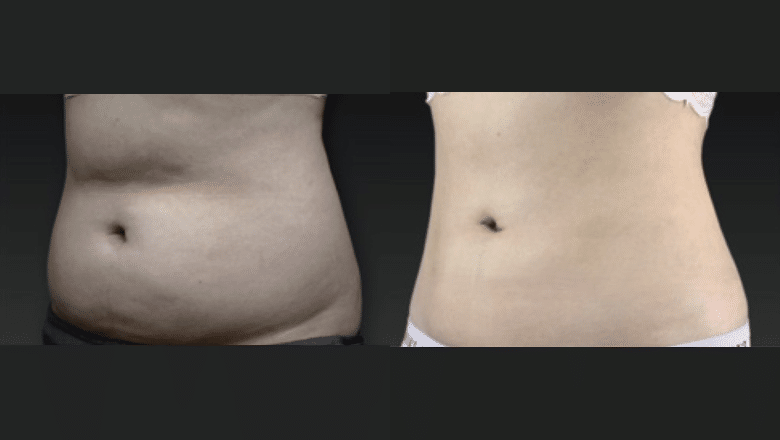
A tummy tuck (abdominoplasty) removes loose skin and fat from the abdomen and tightens the stomach muscles, and muscle repair is included as standard. It is the operation of choice for a hanging belly or for skin that remains loose after liposuction, and it can include liposuction of the waist in the same operation. A 2018 multicentre study of 214 women in Plastic and Reconstructive Surgery ↗ found that back pain and urinary leakage improved significantly six months after abdominoplasty with muscle repair[6]. If the looseness is limited to the area below the navel, a mini tummy tuck may be enough.
Arm Lift and Thigh Lift
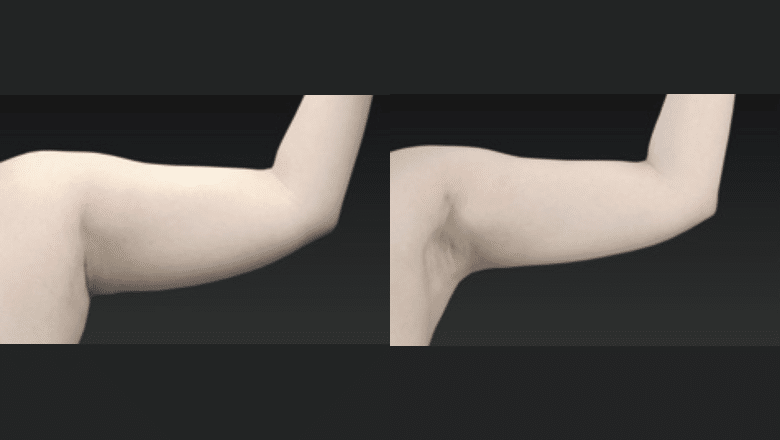
Loose skin on the upper arms responds to an arm lift (brachioplasty), and loose skin on the inner thighs to a thigh lift. Both remove the excess skin and leave a scar in a concealed position, such as the inner arm or the groin crease. Where the fat is the main problem and the skin is firm, liposuction on its own may still be the better choice, and our guide to arm liposuction explains how to decide.
Mons Lift, Lower Body Lift and Excess Skin Removal
Loose skin over the pubic area after liposuction can be treated with a mons lift (monsplasty). When looseness runs around the whole trunk, usually after major weight loss, a lower body lift treats the abdomen, flanks and buttocks together, and our page on excess skin removal surgery covers the wider options.
How Safe Is Surgery to Remove Loose Skin?
No operation is risk-free, and combining procedures raises the risk. A US database study of 31,010 liposuction procedures found a major complication rate of 0.7% for liposuction alone, and a risk almost five times higher when it was combined with other procedures[5].
Liposuction or Tummy Tuck If You Already Have Loose Skin?
If you are considering liposuction and you already have loose skin, the question is which problem is bigger. Where there is mostly fat and the skin is firm, liposuction often gives a good result. Where there is a visible fold, an overhang or separated muscles, liposuction alone will leave you disappointed, and a tummy tuck is more reliable. For borderline cases, liposuction combined with skin tightening is the middle route, with the understanding that a lift may still be needed later.
Waiting is sometimes the right answer too. Wait at least six months after giving birth, and six to twelve months after a caesarean, before liposuction, and avoid it while your weight is still changing. Our guide to whether fat can come back after liposuction explains how weight affects the result in the long term.
What Happens at a Consultation for Liposuction and Skin Tightening?
At Centre for Surgery, GMC-registered surgeons see you at our CQC-regulated hospital at 95–97 Baker Street, and the surgeon who assesses you is the surgeon who operates. Your liposuction consultation includes:
- measuring the areas and assessing your skin quality, stretch marks and elasticity
- a pinch test to separate fat from loose skin
- a plan that says honestly whether liposuction alone, liposuction with tightening, or a lift will suit you
- an explanation of anaesthesia (most liposuction is done under TIVA, so you are asleep, with local anaesthetic used for smaller areas) and of your recovery
Costs depend on the areas treated and the technique, and your price is confirmed in writing after your consultation. We recommend a two-week cooling-off period after consent, and finance options are available, subject to status. You can also see real results in our liposuction before and after photos, and learn more about Centre for Surgery and our Baker Street hospital.
Frequently Asked Questions
Does lipo tighten your skin?
Not on its own, although healthy elastic skin usually retracts over three to six months. Standard liposuction removes fat and relies on your skin’s recoil. Where looseness is expected, skin tightening such as BodyTite or Argo Plasma can be combined with it, and a hanging fold needs a lift.
Will liposuction leave loose skin?
It can, particularly if your skin is thin, stretched, older or marked by stretch marks, or if a large volume of fat is removed. Many people with good elasticity are left with a smooth result, and your surgeon can tell you which group you are likely to fall into after examining your skin.
How long does it take for skin to tighten after liposuction?
Most skin retraction happens over about three to six months, and small refinements can carry on for up to a year. Swelling can make the area look loose or lumpy for the first weeks, so avoid judging the result, or planning more surgery, before three months.
Can you tighten loose skin after liposuction without surgery?
Mild looseness can improve with non-surgical treatments such as TightSculpting or Morpheus8, but the change is modest and suits small areas. These treatments cannot remove an overhang of skin or a hanging fold. If your skin hangs, surgery gives a more dependable result than a device.
How many sizes do you go down after liposuction?
There is no fixed number, because liposuction changes your shape rather than your weight. Typically one to four litres of fat is removed from specific areas, so the scales move little, but clothes fit differently where you were treated. Swelling hides the change at first, and the final result shows at three to six months.
What happens to your body 10 years after liposuction?
The fat cells removed do not grow back, so the result largely holds if your weight stays stable. Ageing, pregnancy and weight change still alter your shape and skin over time, and the remaining fat cells can enlarge if you gain weight. Our guide to whether fat can come back after liposuction explains this in more detail.
What is better, lipo or CoolSculpting?
For larger areas, or for one predictable result, liposuction removes far more fat in a single session. CoolSculpting (cryolipolysis) suits small, pinchable bulges in people who want to avoid surgery: a 2015 systematic review in Plastic and Reconstructive Surgery ↗ found it reduced the treated fat layer by roughly 10% to 28%, often needing more than one session. Neither treatment is designed to tighten loose skin, so where skin laxity is the main concern, skin tightening or skin removal is the better route. Our guide to whether fat freezing works compares the two in more depth.
Loose Skin After Liposuction in London
If you have loose skin after liposuction, or you are planning liposuction and worry about your skin, a consultation with a plastic surgeon will establish how elastic your skin is and which option would give the smoothest result. Find out more about body contouring at Centre for Surgery.
Phone: 020 7993 4849 | Address: 95–97 Baker Street, Marylebone, London W1U 6RN
Contact us to schedule a consultation
References
- Faustino LD, Cruciol FS, Motoki THC, de Almeida Arruda Felix G. Comparative efficacy of adjuvant technologies for skin tightening in liposuction: a systematic review and quantitative analysis. Aesthetic Plastic Surgery 2025;50(4):1556–1570. doi:10.1007/s00266-025-05334-5 ↗
- Žgaljardić I, Orehovec SS, Bulić K, et al. Supraumbilical skin retraction after laser assisted liposuction/lipolysis. Journal of Cosmetic Dermatology 2026;25(6):e70948. doi:10.1111/jocd.70948 ↗
- Theodorou SJ, Paresi RJ, Chia CT. Radiofrequency-assisted liposuction device for body contouring: 97 patients under local anesthesia. Aesthetic Plastic Surgery 2012;36(4):767–779. doi:10.1007/s00266-011-9846-1 ↗
- Swanson E. A systematic review of subsurface radiofrequency treatments in plastic surgery. Annals of Plastic Surgery 2022;89(3):274–285. doi:10.1097/SAP.0000000000003093 ↗
- Kaoutzanis C, Gupta V, Winocour J, et al. Cosmetic liposuction: preoperative risk factors, major complication rates, and safety of combined procedures. Aesthetic Surgery Journal 2017;37(6):680–694. doi:10.1093/asj/sjw243 ↗
- Taylor DA, Merten SL, Sandercoe GD, et al. Abdominoplasty improves low back pain and urinary incontinence. Plastic and Reconstructive Surgery 2018;141(3):637–645. doi:10.1097/PRS.0000000000004100 ↗







