


In this guide16 sections
- Key Points
- What Is the Best Age for Blepharoplasty?
- What Changes Happen to the Eyelids With Age?
- What Is the Minimum Age for Blepharoplasty?
- Eyelid Surgery in Your 30s
- Eyelid Surgery in Your 40s
- Eyelid Surgery in Your 50s
- Eyelid Surgery in Your 60s and Beyond
- Does the Timing of Eyelid Surgery Affect the Results?
- Does Blepharoplasty Hurt?
- What Are the Risks of Eyelid Surgery at Different Ages?
- How Much Does Blepharoplasty Cost?
- Can I Have Blepharoplasty After Laser Eye Surgery or If I Wear Glasses?
- Eyelid Surgery in London at Centre for Surgery
- Frequently Asked Questions
- References
Key Points
- There is no single ideal age for blepharoplasty. The right time depends on what has changed in your eyelids and how much it bothers you, not on a number. Most people who ask about the best age for blepharoplasty are in their 40s to 60s, but younger and older adults are also treated.
- In your 30s, eyelid surgery is usually about inherited heaviness or under-eye fat rather than ageing itself, and it is an adult decision rather than a preventive one.
- In your 40s and 50s, excess upper eyelid skin and under-eye bags tend to become more persistent, and surgery is often combined with other treatments for a balanced result.
- In your 60s and beyond, drooping skin can affect vision as well as appearance, and general health matters more than age on its own.
- Age changes the planning, not the principle. Healing, skin quality, ptosis and medical history are assessed at consultation at any age.
- Surgery does not stop ageing. Results are long-lasting for many people, but the eyelids keep changing over time.
Searching for the best age for blepharoplasty usually leads to a single number, and a single number is not much use. Two people of the same age can have very different eyelids: one with inherited, heavy upper lids in her thirties, another with healthy, firm skin well into his sixties. This guide sets out what typically changes in each decade, what the research says, and how age affects planning, risks and recovery. If you are considering blepharoplasty (eyelid surgery), it also explains when the eyelids themselves, rather than your age, are the better guide.
If you are mainly wondering how the operation would alter the look of your eyes, our guide to whether eyelid surgery changes your eye shape covers that in detail, and our guide to blepharoplasty recovery explains what the weeks after surgery look like.
What Is the Best Age for Blepharoplasty?
There is no age at which eyelid surgery is automatically right or wrong. What matters is the specific change that is bothering you, how it affects your appearance or vision, and whether you are well enough for surgery and anaesthesia. A person in their late thirties with hereditary eyelid heaviness may be an excellent candidate, while a person in their sixties with healthy skin and no real concern may not need surgery at all.
The question “what is the average age for blepharoplasty?” is a little easier to answer in general terms. Most people who come to a consultation are in their 40s, 50s or 60s, which reflects when eyelid skin and fat changes typically become noticeable. That is a pattern of presentation rather than a recommendation. In a 2024 prospective study of 79 patients using patient-reported outcome measures ↗, published in Aesthetic Plastic Surgery, satisfaction with the eyes improved significantly after upper blepharoplasty, and satisfaction did not depend on how severe the excess skin had been beforehand[1]. In other words, the study did not point to a particular age or severity at which surgery works best; it supported matching the decision to the person.
What Changes Happen to the Eyelids With Age?
Eyelid skin is among the thinnest on the body, so it tends to show ageing early. Over time the skin loses elasticity, the muscle beneath it weakens, and the fat pads around the eye can bulge forward. A review of lower eyelid and midface ageing describes it as a three-dimensional process involving volume loss, volume descent and changes in the skin, rather than skin laxity alone[2].
For the upper eyelids, the usual change is excess skin that rests on the lashes or creates a hooded look (see our guide to hooded eyes). For the lower eyelids, the usual change is fat bulging forward to form under-eye bags, sometimes with a hollow or dark circles beneath. Genetics plays a large part, which is why some people notice heavy lids in their thirties while others do not until much later.
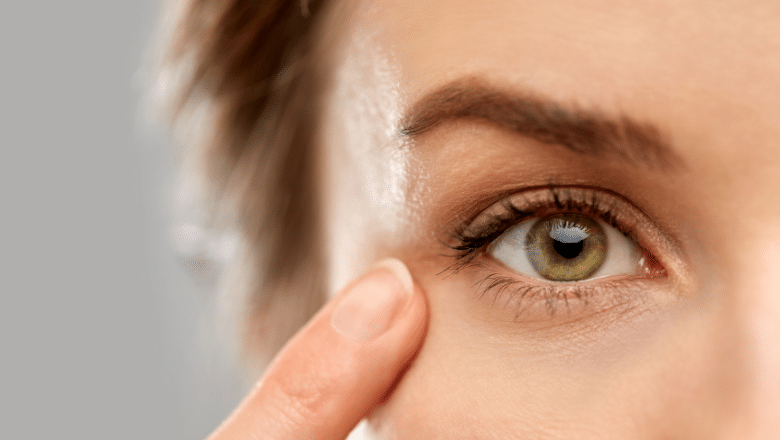
One distinction is worth making early. Excess skin is not the same thing as a low eyelid margin. When the eyelid itself sits too low because the lifting muscle has weakened, the cause is ptosis. The most common acquired form, involutional ptosis, is commonly attributed to the effect of age on the levator aponeurosis, and its repair is a different operation from skin removal[3]. Our guide to droopy eyelids explains how the two are told apart.
What Is the Minimum Age for Blepharoplasty?
Cosmetic eyelid surgery is for adults, so the minimum is 18, and surgery is only considered once facial growth is complete. Beyond that there is no fixed lower limit. Younger adults are most often treated for hereditary upper eyelid heaviness or persistent lower eyelid fat that runs in the family, and the question at consultation is whether the anatomy and your expectations support surgery. Surgery on someone under 18 would only be considered for a genuine functional problem such as ptosis that interferes with vision.
Eyelid Surgery in Your 30s
Most people in their 30s who ask about blepharoplasty are not seeing ageing as such. Common reasons are inherited skin hooding, a tired look caused by lower eyelid fat, or a family pattern they have watched in their parents. The skin is generally still elastic, so the aim is often a modest change that keeps the eyes looking natural.
Points worth weighing in your 30s:
- Upper eyelid surgery removes excess skin and, where needed, a little fat. It suits hereditary hooding that sits on the lashes. See also our guide to how eyelid surgery affects eye shape.
- Lower eyelid surgery repositions or removes prominent fat. Under-eye bags in the 30s are often fat rather than skin, which is why creams and sleep rarely shift them.
- It is not a preventive treatment. There is no good evidence that having surgery early slows later ageing, so the reason to operate should be a change you can see now.
- Further surgery later is possible. Ageing continues, so some people choose a second procedure years afterwards.
For milder concerns, a surgeon may suggest waiting or trying less invasive options first, and our guide to non-surgical alternatives to eyelid surgery sets out what they can and cannot do. One small 2026 case series tested focused ultrasound for under-eye fat protrusion, but it was preliminary and involved a handful of patients, so it should not be taken as a substitute for surgery[4].
Eyelid Surgery in Your 40s
The 40s are when many people first look at their eyelids and decide something has changed. Fine lines deepen, upper lid skin starts to fold over the crease, and lower lid bags become persistent rather than occasional. Stress, poor sleep and sun exposure may make these changes more visible, although they cannot be measured on a person-by-person basis.
Typical choices in your 40s are:
- Upper eyelid surgery for moderate excess skin, making the eyes look more open.
- Lower eyelid surgery for bags and puffiness, with the approach chosen according to whether skin, fat or both are the problem.
- Combined upper and lower surgery for a balanced result when both areas are affected.
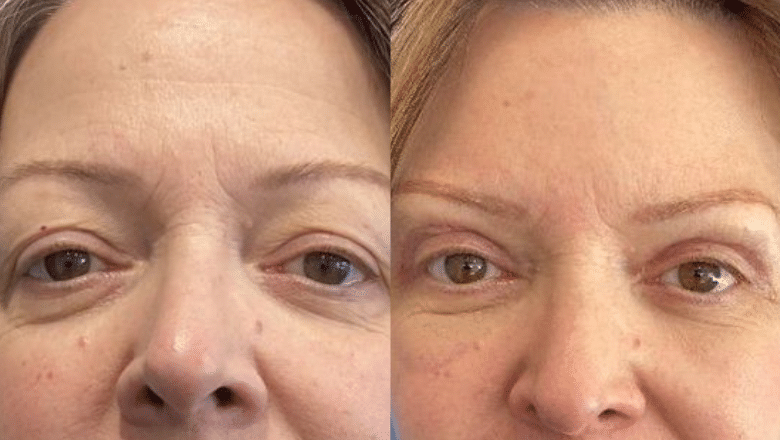
Healing in this decade is generally good, and the skin usually still has enough elasticity to settle smoothly. A consultation will also look at the brows, because a low brow can make the upper eyelids look heavier than they are. If that is the case, a brow lift may be discussed alongside or instead of eyelid surgery.
Eyelid Surgery in Your 50s
By the 50s, upper eyelid skin is often heavier, lower lid bags may be joined by skin laxity, and the eyes can look hollow as volume is lost around the socket. The reasons for surgery are often a mix of appearance and comfort: a heavy feeling in the lids, difficulty with makeup, or a tired look that does not match how you feel.
What changes in planning at this age:
- More skin may need removing from the upper lids, and lower lid surgery may need to address skin, fat and support together.
- Cheek and midface changes start to matter. Prominent bags that continue into the cheek may reflect midface ageing or festoons, a group that is recognised as more challenging to treat with eyelid surgery alone[5].
- Dry eyes and symmetry are checked more carefully. Our guide to whether blepharoplasty can cause dry eyes explains why.
- Brow position often needs assessing, since it affects how much upper lid skin can safely be removed.
Men’s periorbital anatomy and aesthetic goals differ from women’s, and a review of male periorbital rejuvenation highlights why a technique chosen for one is not always right for the other[6]. That is one reason a consultation looks at your own face rather than a standard plan.
Eyelid Surgery in Your 60s and Beyond
In the 60s, heavy upper eyelids may start to affect the field of vision as well as appearance. A 2026 narrative review of upper eyelid dermatochalasis in Orbit ↗ found that studies support an improvement in the upper visual field after upper blepharoplasty, with other reported benefits including eyelid heaviness and patient-reported visual quality of life, although no single validated questionnaire captures the whole burden[7]. The same review notes that NHS eligibility criteria are commonly centred on visual field loss, eyelid position or pupil occlusion, which is worth knowing if your concern is mainly functional.
Points specific to this decade and later:
- General health leads the decision. Heart disease, blood pressure, diabetes and medicines such as blood thinners are reviewed before surgery. A 2026 prospective study of 302 patients (mean age 70.7 years) having oculoplastic surgery under local anaesthetic ↗ found no major bleeding complications among the 77 who continued their blood-thinning medicines, with one minor bleed after upper blepharoplasty that settled by itself[8]. Decisions about medicines are always made by your surgeon together with the doctor who prescribed them, and should never be changed on your own.
- Combined treatment is common. People in their 60s often consider a facelift or brow lift alongside eyelid surgery for a balanced result, or choose eyelid surgery alone for a lighter intervention.
- Recovery may be slower. Healing time varies from person to person, and your surgeon can give a realistic expectation after examining you.
Is there an upper age limit for blepharoplasty?
There is no fixed upper age limit. The question is whether you are healthy enough for the planned anaesthetic and operation, and whether the benefit justifies it. People in their seventies and beyond are treated when the assessment supports it, and it can be done under local anaesthetic with sedation in some cases, depending on the plan.
Does the Timing of Eyelid Surgery Affect the Results?
Skin that is still elastic tends to settle smoothly after surgery, and healing is often quicker in younger patients, though this varies widely. It does not follow that waiting until your 60s means a worse result. What matters more is the quality and amount of the excess tissue, the anatomy of the eyelid and brow, any ptosis, your general health and realistic expectations.
Blepharoplasty also does not stop the clock. Many people enjoy long-lasting results, but ageing continues, and some choose additional treatment later. Having surgery earlier does not guarantee that you will avoid it again, and having it later does not rule out a good outcome.
Does Blepharoplasty Hurt?
Most people describe eyelid surgery recovery as uncomfortable rather than painful, with tightness, swelling and bruising the main symptoms. Blepharoplasty can be done under local anaesthetic with sedation or under TIVA (total intravenous anaesthesia), depending on the procedure and your preference; our guide to anaesthesia options explains the differences. After the operation, simple pain relief such as paracetamol is often enough, but your surgeon will advise you.
What Are the Risks of Eyelid Surgery at Different Ages?
All eyelid surgery carries risks, including bruising, infection, dry or irritated eyes, asymmetry, scarring and, rarely, problems with vision or eyelid position. Our guides to the risks of blepharoplasty and to avoiding blepharoplasty complications cover these in full.
Age changes some of the details:
- In your 30s and 40s, the main considerations are scar placement, avoiding over-removal of skin or fat that can leave hollowing, and realistic expectations of a subtle change.
- In your 50s, dry eyes, brow position and midface changes need closer assessment.
- In your 60s and older, medical conditions, medicines and anaesthetic fitness are the priorities, and any ptosis needs identifying before surgery.
Scarring is usually a concern at every age. A 2025 systematic review of 11 studies found that absorbable and non-absorbable stitches gave equivalent scar quality and complication rates after upper blepharoplasty, with risks depending more on technique than on stitch material[9]. For what scars look like as they heal, see our guide to blepharoplasty scars.
How Much Does Blepharoplasty Cost?
The cost of blepharoplasty depends on whether you are having upper eyelids, lower eyelids or both, and on the anaesthetic. Combining upper and lower surgery in one session usually involves one anaesthetic and one theatre visit rather than two. Our blepharoplasty cost guide explains what affects the total, and the exact figure is confirmed after your consultation.
Can I Have Blepharoplasty After Laser Eye Surgery or If I Wear Glasses?
Wearing glasses or contact lenses does not rule out blepharoplasty. You will usually need to avoid contact lenses for a period after surgery, and glasses can be worn when comfortable, taking care not to press on swollen areas. If you have had vision correction, our guide on how soon you can have blepharoplasty after laser eye surgery explains the usual timing. People of East Asian background may also want to read how Asian blepharoplasty differs from traditional eyelid surgery.
Eyelid Surgery in London at Centre for Surgery
At Centre for Surgery, blepharoplasty is planned around your individual eyelids, medical history and goals at a CQC-regulated hospital on Baker Street. A consultation will tell you whether surgery, a different treatment or no treatment at all is the sensible next step for your age and anatomy. You can contact us or call 020 7993 4849 to arrange one.
Frequently Asked Questions
Is 30 too young for blepharoplasty?
Not necessarily. If you have genuine excess skin or inherited puffiness that concerns you, and your anatomy supports surgery, 30 is not too young. The decision rests on clinical need and your expectations rather than a fixed age.
What is the average age for blepharoplasty?
Most patients who seek eyelid surgery are in their 40s, 50s or 60s, which is when eyelid changes usually become noticeable. Younger and older adults are also treated when it is appropriate for them.
Can you have blepharoplasty in your 20s?
Sometimes. Adults in their 20s may be considered if they have hereditary upper eyelid heaviness or lower eyelid fat that is causing real concern, and their expectations are realistic. Your surgeon will also consider whether waiting or other treatment would be better.
Is 70 too old for eyelid surgery?
There is no set upper age limit. Suitability depends on your general health, medicines and ability to have the planned anaesthetic. People in their seventies and older are treated when the assessment is favourable.
At what age should I consider eyelid surgery?
Consider it when eyelid changes bother you or affect your vision, rather than at a certain age. A consultation can show whether surgery will make a meaningful difference now or whether it can wait.
Does blepharoplasty last forever?
Results are long-lasting for many people, but they are not permanent in the sense of stopping ageing. Removed fat does not return, yet skin and tissues keep changing, so some people choose further treatment later.
Will I need more procedures if I have eyelid surgery young?
Possibly. Ageing continues, so younger patients may consider touch-ups or other treatments later. There is no guarantee either way.
Do the risks and recovery for eyelid surgery vary with age?
Yes, to a degree. Healing is often quicker in younger people, while older patients need closer review of medical conditions and medicines. Individual health matters more than age on its own.
Does eyelid surgery hurt?
Most people report tightness, swelling and bruising rather than significant pain, and simple pain relief is often enough. You will be comfortable during the operation under anaesthetic.
Can I have blepharoplasty if I wear glasses or contact lenses?
Yes. You will usually avoid contact lenses for a period afterwards, and your surgeon will advise on timing. Glasses can generally be worn once comfortable, avoiding pressure on swollen areas.
References
- Marangi GF, Mirra C, Savani L, et al. Is the severity of preoperative eyelid dermatochalasis directly correlated with patient satisfaction after upper blepharoplasty? A prospective study based on PROMs. Aesthetic Plastic Surgery 2024;48(20):4114–4120. doi:10.1007/s00266-024-04214-8 ↗
- Buchanan DR, Wulc AE. Contemporary thoughts on lower eyelid/midface aging. Clinics in Plastic Surgery 2015;42(1):1–15. doi:10.1016/j.cps.2014.09.003 ↗
- Chang S, Lehrman C, Itani K, Rohrich RJ. A systematic review of comparison of upper eyelid involutional ptosis repair techniques: efficacy and complication rates. Plastic and Reconstructive Surgery 2012;129(1):149–157. doi:10.1097/PRS.0b013e318230a1c7 ↗
- Kim HM, Oh SM, Oh M, et al. High-intensity focused ultrasound for the treatment of infraorbital fat protrusion: a preliminary case series. Clinical, Cosmetic and Investigational Dermatology 2026;19:643854. doi:10.2147/CCID.S643854 ↗
- Kpodzo DS, Nahai F, McCord CD. Malar mounds and festoons: review of current management. Aesthetic Surgery Journal 2014;34(2):235–248. doi:10.1177/1090820X13517897 ↗
- Scheuer JF, Matarasso A, Rohrich RJ. Optimizing male periorbital rejuvenation. Dermatologic Surgery 2017;43(Suppl 2):S196–S202. doi:10.1097/DSS.0000000000001344 ↗
- Whitelaw TA. Beyond visual field restriction: reconsidering functional assessment in upper eyelid dermatochalasis. Orbit 2026:1–10. doi:10.1080/01676830.2026.2727052 ↗
- Giacuzzo C, Wanas AM, Tan LT, et al. Assessing the safety of eyelid surgery in patients on antithrombotic therapy: empirical evidence supporting favourable outcomes. Klinische Monatsblätter für Augenheilkunde 2026;243(4):282–286. doi:10.1055/a-2788-5362 ↗
- Safaripour A, Keshtan SB, Boumeri E, et al. Absorbable versus non-absorbable sutures in upper eyelid blepharoplasty: a systematic review of clinical outcomes and follow-up burden. BMC Ophthalmology 2025;25(1):553. doi:10.1186/s12886-025-04370-8 ↗







