


In this guide17 sections
- Key Points
- What Is the Difference Between VASER and Liposuction?
- Is VASER Better Than Liposuction? What the Research Shows
- VASER vs Power-Assisted Liposuction: Which Is Better for Each Area?
- Why Combine VASER and PAL in One Operation?
- Is VASER Liposuction Safe? Risks and Side Effects
- Does VASER Tighten Skin Better Than Liposuction?
- VASER vs Liposuction Recovery: How Long Does It Take?
- What Anaesthetic Is Used for VASER and Liposuction?
- Is VASER More Expensive Than Liposuction?
- VASER vs Laser Lipo and BodyTite: What Is the Difference?
- VASER and Liposuction Before and After Photos
- Who Is Suitable for VASER or Liposuction?
- What Happens at a VASER or PAL Consultation?
- Frequently Asked Questions
- VASER and Liposuction in London
- References
Key Points
- VASER vs liposuction: VASER uses ultrasound energy to emulsify fat before it is removed, while power-assisted liposuction (PAL) uses a vibrating cannula to loosen and remove it. Both remove fat permanently through 3 to 5 mm incisions.
- Is VASER better than liposuction? Not in every case. A randomised trial found less blood loss and better skin retraction with VASER, but no difference in pain, swelling or appearance at six months.[1]
- VASER suits dense, fibrous fat such as the back, flanks and male chest, and fine definition work. PAL is efficient for softer fat across larger areas such as the abdomen and thighs.
- Centre for Surgery offers both, often in the same operation: VASER first where the fat is dense, then PAL with fat equalisation to smooth the finished contour.
- Neither technique replaces weight loss or a lift. Loose skin and separated muscles need a different operation, such as a tummy tuck.
- The surgeon matters more than the machine. Risks such as contour irregularity, seroma and numbness apply to both, and costs are confirmed after a face-to-face consultation.
If you are comparing VASER vs liposuction, you will find clinics describing VASER lipo as a premium upgrade and traditional liposuction as dated. The reality is more balanced. Modern liposuction is not one operation but a toolkit, and the two techniques most often discussed in the UK are power-assisted liposuction and VASER liposuction. Each has real strengths, and the research comparing them is thinner than the marketing suggests.
This guide explains the difference between VASER and liposuction in plain terms, what the trials show, which areas suit each technique, the risks, recovery and how to decide. It also explains why our surgeons often combine the two, and how that differs from other approaches such as laser lipo, which we do not offer. For a wider overview, see our guide to the different types of liposuction.
What Is the Difference Between VASER and Liposuction?
All liposuction follows the same basic sequence. Tumescent fluid, a mix of saline, local anaesthetic and a drug that narrows blood vessels, is infiltrated into the fat. The fat is then loosened, removed through a thin cannula, and the contour is refined. The difference between VASER and standard liposuction lies in how the fat is loosened.
What is power-assisted liposuction (PAL)?
Power-assisted liposuction fits the cannula with a motor that vibrates it rapidly back and forth over a very short distance. That vibration separates fat from its fibrous framework with less effort from the surgeon than a hand-driven cannula. In a small pilot study of 15 women, a 2005 comparative study in Aesthetic Plastic Surgery ↗ found that PAL increased the average fat output per area by about 17% compared with traditional suction-assisted liposuction.[5] At Centre for Surgery, PAL is performed in three stages: separation, aspiration and fat equalisation, the last being a smoothing pass that evens out the remaining fat layer to reduce ripples and irregularities.
What is VASER liposuction?
VASER stands for Vibration Amplification of Sound Energy at Resonance. A fine probe delivers ultrasound energy into the tumescent fat, which emulsifies it, meaning it breaks the fat into a liquid that is easier to suction out. Fibrous connective tissue, nerves and blood vessels are more resistant to ultrasound than fat cells, which is why the technique is described as selective. VASER is classed as third-generation ultrasound-assisted liposuction, and our liposuction page explains what happens to the fat cells.
How is VASER different from traditional liposuction?
Traditional, or suction-assisted, liposuction relies on the surgeon moving a cannula through the fat to break it up mechanically while suction removes it. VASER adds an ultrasound step first. That extra step takes slightly longer and needs training, because ultrasound energy produces heat and must be applied within set limits. In return it can make dense fat easier to remove and allows finer sculpting. Our companion article asks whether ultrasonic liposuction is better than regular liposuction from a general viewpoint; this page focuses on how VASER and PAL compare and combine.
Is VASER Better Than Liposuction? What the Research Shows
The honest answer is that VASER is better in some respects and some situations, but the evidence for a dramatic difference in final results is limited.
The most cited study is a 2012 randomised, single-blind trial in Plastic and Reconstructive Surgery ↗. Twenty women had suction-assisted liposuction on one side of the body and VASER on the other, across 33 paired regions. The VASER side showed 26% less blood in the aspirate and 53% greater skin retraction. Pain, swelling, appearance and patient and surgeon preference did not differ at six months.[1] It is a small study, but it is one of the few direct comparisons.
A 2025 evidence review in Aesthetic Plastic Surgery ↗ identified only five studies directly comparing ultrasound-assisted and traditional liposuction. Its authors concluded that ultrasound-assisted liposuction is effective and relatively safe, with a lower rate of postoperative anaemia and less effort for the surgeon, but that there is little convincing long-term data showing superior aesthetic results or skin tightening, and that promising scar-free tightening is potentially misleading.[2] The same paper estimated that VASER is used in roughly one in five liposuction cases.
Practice patterns tell a similar story. A 16-year review of American Board of Plastic Surgery data covering 2,810 liposuction cases found that use of power-assisted liposuction rose from 24% to 40% between the early and recent cohorts, while ultrasound-assisted liposuction fell from 5% to 2%, without an increase in adverse events.[4] Surgeons choose tools for different reasons, and neither technique has replaced the other.
What this means for you: choosing VASER over PAL, or the reverse, will not by itself determine your result. Planning, how much fat is taken, how evenly it is removed and how your skin responds matter more. Our article on the type of liposuction that suits you takes the same evidence-led approach.
VASER vs Power-Assisted Liposuction: Which Is Better for Each Area?
Technique choice depends less on the label than on the tissue being treated. Fat in the abdomen is often soft and treats readily, while fat in the back or male chest is firmer and more fibrous.

Is VASER better for stomach fat?
For a soft, pinchable tummy, PAL alone is often sufficient and efficient. VASER adds most where the abdomen is firm or where you want visible muscle definition. Our pages on stomach liposuction and high definition liposuction explain how the two approaches are used for different goals. If the problem is loose skin or separated muscles rather than fat, a tummy tuck is the operation to consider.
Is VASER better for the back, flanks and male chest?
This is where VASER is most often favoured. Fat on the back, bra roll, male flanks and the fatty part of an enlarged male chest tends to be dense and fibrous, so emulsifying it first can reduce the force needed to remove it. Read more about back liposuction, male liposuction and gynaecomastia surgery. Treating the abdomen, flanks and lower back together is known as 360 liposuction.
What about arms, thighs, knees and chin?
Both techniques can treat the arms, thighs, knees, hips, and the chin and neck. Smaller, delicate areas often benefit from the fine control of ultrasound followed by smoothing with a small vibrating cannula. For under the chin, see chin and neck liposuction.
What about lipoedema?
Lipoedema is a medical condition of painful, symmetrical fat in the legs and sometimes arms, and it is not the same as cosmetic liposuction. A 2025 retrospective study of 126 women in Chile reported symptom improvement after selective liposuction combining PAL with VASER on the proximal areas.[8] Our lipoedema treatment page explains how that pathway differs.
Why Combine VASER and PAL in One Operation?
Rather than treating VASER and PAL as rivals, our surgeons use them as steps in a sequence. VASER emulsifies dense or fibrous fat first. PAL then removes the loosened fat efficiently and, in the final fat equalisation pass, smooths the remaining layer beneath the skin. The result is less reliance on one tool’s weaknesses.

The approach is also seen in published work. A 2026 double-blind randomised trial of arm liposculpture in Plastic and Reconstructive Surgery ↗ used VASER fat emulsification followed by power-assisted or conventional suction in 52 women. Reported satisfaction was high, with 96.1% recommending the procedure.[7] That trial was designed to test cold versus warm tumescent fluid rather than to prove a combined technique superior, so it shows that the combination is a recognised approach and does not show it is better.
It is worth being clear about what the technology does not change. Our surgeons place emphasis on experience, careful marking with you standing, conservative volumes and limiting each session to five litres of fat. Read our guide on how to choose a liposuction surgeon for the questions worth asking any clinic.
Is VASER Liposuction Safe? Risks and Side Effects
Liposuction, whichever technique is used, is a surgical operation and carries risks. Performed alone by a trained surgeon in a regulated hospital, it has a low rate of major complications. In a prospective cohort of 11,490 people having liposuction as a solitary procedure, a 2017 study in Aesthetic Surgery Journal ↗ found a major complication rate of 0.7%, defined as needing an emergency visit, hospital admission or reoperation within 30 days. Combining liposuction with other procedures raised the risk.[6]
For third-generation ultrasound-assisted liposuction specifically, a series of 261 patients treated over 15 years reported an overall complication rate of 4.6%. Contour irregularity occurred in 1.9%, and seroma and cellulitis in 0.8% each.[3] That series was retrospective and from a single surgeon, so the figures are reassuring but not directly comparable with other studies.
What are the risks specific to VASER?
The main additional concern is heat. Ultrasound energy can injure the skin if applied for too long or without protection, which is why surgeons use protective port covers at the incision sites and limit energy and time. Otherwise the risks mirror other liposuction, including bruising, swelling, numbness, seroma, haematoma, infection, asymmetry, contour irregularity and, rarely, blood clots. Our guides to liposuction side effects and the risks of liposuction separate expected effects from complications.
Does VASER or liposuction leave scars?
Both leave small scars of 3 to 5 mm, placed in skin folds or near existing scars and closed with dissolvable stitches. They usually fade to faint marks over several months. See liposuction scars for the healing timeline.
Does VASER Tighten Skin Better Than Liposuction?
VASER may encourage a modest amount of skin retraction. The 2012 trial found more retraction on the VASER side,[1] but the 2025 review found little convincing long-term evidence that this translates into superior skin tightening in practice.[2] Neither technique can reliably tighten significantly loose skin.
Skin quality, age, stretch marks and how much fat is removed all affect how well the skin settles. Firm, elastic skin usually retracts well, while skin that is already lax may reveal its looseness once the fat is gone. For mild to moderate laxity, energy devices such as BodyTite can be combined with liposuction, and our comparison of BodyTite vs liposuction explains when. Read more about loose skin after liposuction.
VASER vs Liposuction Recovery: How Long Does It Take?
Many websites claim VASER has a much shorter recovery. In practice the recovery after VASER and PAL is very similar, because both involve the same amount of fat removal, the same incisions and the same compression garment. The 2012 trial found no difference in pain or swelling at six months.[1]
At Centre for Surgery, recovery after either technique follows the same pathway:
- Day case: you go home the same day with a responsible adult, wearing your compression garment.
- Back to work: typically two to five days for a desk job, and one to two weeks for physical work.
- Walking: from day one to reduce clot risk, with light activity building from about two weeks.
- Exercise: no strenuous exercise or heavy lifting for four weeks, with full exercise from around six weeks once your surgeon has reviewed you.
- Compression garment: worn continuously for six weeks.
- Final result: usually visible at three to six months as swelling settles.
Swelling and bruising peak in the first few days and can leave you looking bigger before you look better. Our liposuction recovery guide covers each stage, and lymphatic drainage massage after liposuction may be recommended after larger or multi-area treatment.
What Anaesthetic Is Used for VASER and Liposuction?
Most liposuction at Centre for Surgery is performed under TIVA (total intravenous anaesthesia), so you are asleep and the anaesthetic goes through a drip. Local anaesthetic with or without sedation can suit one or two smaller areas in selected patients. Tumescent fluid containing local anaesthetic is used in every case. Our guides explain what TIVA is, give an overview of anaesthesia for cosmetic surgery and cover liposuction under local anaesthetic.
Is VASER More Expensive Than Liposuction?
Some clinics charge a premium for VASER. At Centre for Surgery the price is driven by how many areas are treated and the type of anaesthetic, not by which technique is used, so VASER sits within the same area-based structure as power-assisted liposuction. Your price is confirmed in writing after a face-to-face consultation. For how pricing is built, see our liposuction cost guide, and for payment plans see finance options.
VASER vs Laser Lipo and BodyTite: What Is the Difference?
Laser lipo (sometimes sold as SmartLipo) uses a laser fibre to melt fat. We do not offer it. We explain the evidence in our guide to laser lipo and why we use VASER, BodyTite and Argo Plasma instead. BodyTite is a different tool altogether: a radiofrequency device used mainly to tighten skin, sometimes alongside liposuction. If you are still weighing up options, our article on how much fat can be removed helps set expectations for any technique.
VASER and Liposuction Before and After Photos
Photographs are most useful when you look at the area you want treated and read the context. Individual results vary with skin quality, anatomy and how much fat is removed.
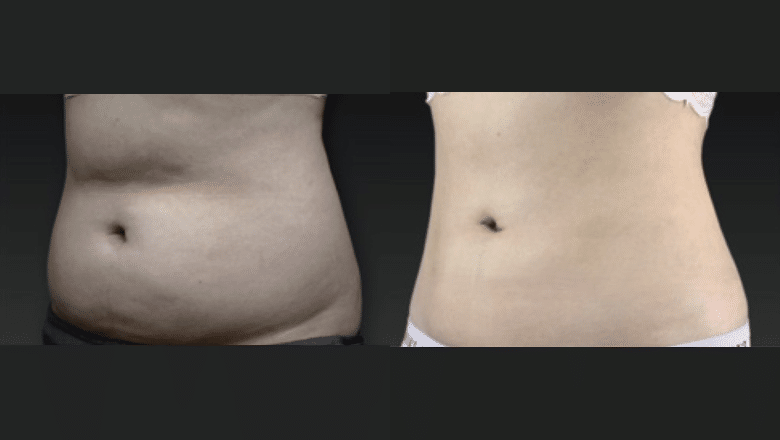
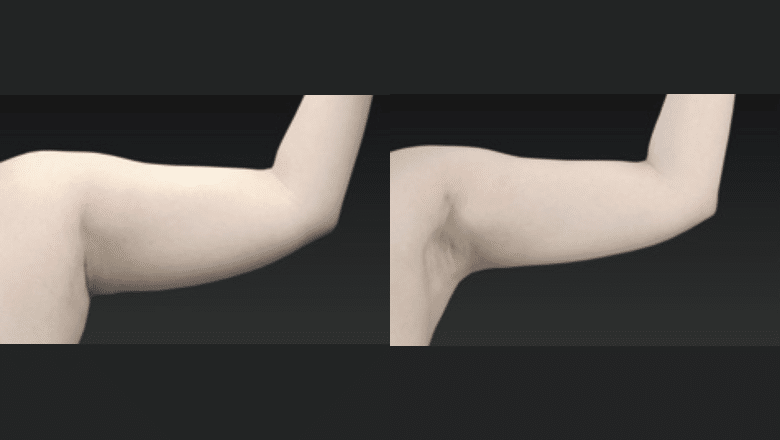
More examples are in our liposuction before and after photos gallery.
Who Is Suitable for VASER or Liposuction?
Both techniques suit people who are at a stable weight, close to a healthy level, with localised pockets of fat that diet and exercise have not shifted, reasonably elastic skin and realistic expectations. You must be 18 or over, and you will need to stop smoking for four weeks before and after surgery. A BMI above 30 may mean liposuction is not suitable. Wait at least six months after giving birth, and longer after a caesarean section. Our am I suitable for liposuction guide goes through the criteria.
Neither technique is a weight-loss treatment. Up to five litres of fat can be removed in one session at Centre for Surgery, typically one to four litres, and we do not perform large-volume liposuction above that. Results are long term because removed fat cells do not grow back, but remaining fat cells can enlarge if you gain weight; see is liposuction permanent.
What Happens at a VASER or PAL Consultation?
Your consultation is with the GMC-registered surgeon who will operate, at our CQC-regulated hospital on Baker Street. They examine the areas you want treated, assess fat thickness and skin quality, discuss which technique or combination fits and explain the risks. You receive a written plan and price after the consultation, and a recommended two-week cooling-off period applies before surgery. Treatment is a day case, and your surgeon gives you a direct number for the first 24 hours. Finance options are available, subject to status.
Frequently Asked Questions
Is VASER better than traditional liposuction?
Sometimes. A randomised trial found less blood loss and greater skin retraction with VASER, but no difference in pain, swelling or appearance at six months. VASER helps most with dense, fibrous fat and detailed sculpting. For softer fat, power-assisted liposuction performs very well, and the surgeon’s experience matters more than the device.
What is the difference between VASER lipo and liposuction?
VASER lipo uses ultrasound to emulsify fat before suction, while traditional liposuction breaks fat up mechanically with the cannula. Power-assisted liposuction adds a motorised vibration to the cannula. All three remove fat through small incisions and all three leave you with a compression garment afterwards.
Does VASER lipo work?
Yes, for the right person. It permanently removes stubborn fat that diet and exercise have not shifted, and it is particularly useful in dense fat and for definition work. It is not weight loss, and it will not remove significant loose skin.
Does VASER lipo have more side effects than liposuction?
Most risks are the same: bruising, swelling, numbness, seroma and contour irregularity. VASER adds a small risk of heat injury to the skin if the energy is misused, which is why technique and training matter. Ask any surgeon how often they perform it.
Is VASER lipo painful?
You are asleep under TIVA, or numb under local anaesthetic, so you do not feel the operation. Afterwards the areas feel sore, tight and bruised for a few days, and paracetamol is usually enough. Most people are comfortable by the end of the first week. Our guide asks does liposuction hurt.
How long does VASER lipo last?
The fat cells removed do not grow back, so the change is long term. Remaining fat cells can still enlarge if you gain weight, and ageing and pregnancy continue to change your shape. A few kilograms either way is unlikely to alter the result much.
What happens 10 years after liposuction?
If your weight stays stable, the result largely holds, because the treated areas contain fewer fat cells. Weight gain tends to show in untreated areas, and skin changes with age as it would anyway. Read more on whether fat can come back after liposuction.
Why do I look bigger after liposuction?
Swelling, bruising and retained fluid can make you look larger for several weeks, sometimes lumpy or uneven. Most swelling settles by the six-week review, and the final contour shows at three to six months. Keep your compression garment on as instructed.
VASER and Liposuction in London
If you would like to talk through which technique suits your body, a consultation with a surgeon will establish the right approach for your fat and skin. Find out more about body contouring at Centre for Surgery.
Phone: 020 7993 4849 | Address: 95-97 Baker Street, Marylebone, London W1U 6RN
Contact us to arrange a consultation
References
- Nagy MW, Vanek PF. A multicenter, prospective, randomized, single-blind, controlled clinical trial comparing VASER-assisted lipoplasty and suction-assisted lipoplasty. Plastic and Reconstructive Surgery 2012;129(4):681e-689e. doi:10.1097/PRS.0b013e3182442274 ↗
- Atieh B, Baajour J, El Merkabaoui H, Makkawi K. Literature review and evidence-based comparative analysis of traditional suction-assisted lipectomy (SAL) vs. ultrasound-assisted liposuction (UAL) reported outcomes. Aesthetic Plastic Surgery 2025;49(16):4648-4655. doi:10.1007/s00266-025-04872-2 ↗
- Tran BNN, Didzbalis CJ, Chen T, Shulzhenko NO, Asaadi M. Safety and efficacy of third-generation ultrasound-assisted liposuction: a series of 261 cases. Aesthetic Plastic Surgery 2022;46(5):2310-2318. doi:10.1007/s00266-022-02992-7 ↗
- Stein MJ, Sasson DC, Harrast J, Alderman A, Matarasso A, Gosain AK. A 16-year review of clinical practice patterns in liposuction based on continuous certification by the American Board of Plastic Surgery. Plastic and Reconstructive Surgery 2023;152(3):523-531. doi:10.1097/PRS.0000000000010254 ↗
- Scuderi N, Tenna S, Spalvieri C, De Gado F. Power-assisted lipoplasty versus traditional suction-assisted lipoplasty: comparative evaluation and analysis of output. Aesthetic Plastic Surgery 2005;29(1):49-52. doi:10.1007/s00266-004-0003-y ↗
- Kaoutzanis C, Gupta V, Winocour J, Layliev J, Ramirez R, Grotting JC, Higdon K. Cosmetic liposuction: preoperative risk factors, major complication rates, and safety of combined procedures. Aesthetic Surgery Journal 2017;37(6):680-694. doi:10.1093/asj/sjw243 ↗
- Cala Uribe LC, Perez Pachon ME, Zannin Ferrero A. Cold versus warm tumescent solution in arm liposculpture: a double-blind randomized clinical study. Plastic and Reconstructive Surgery 2026;158(3S):30S-37S. doi:10.1097/PRS.0000000000012595 ↗
- Pereira N, Venegas J, López A, Oñate V, Ruiz-Tagle J. Selective combined liposuction (SCL) for lipedema treatment: outcomes in symptoms improvement and aesthetic self-perception. Journal of Plastic, Reconstructive & Aesthetic Surgery 2025;107:196-204. doi:10.1016/j.bjps.2025.06.031 ↗







