


In this guide16 sections
- Key Points
- How Soon After Pregnancy Can You Have Plastic Surgery?
- Why Should You Wait Before Having Surgery After a Baby?
- Can You Have Plastic Surgery While Breastfeeding?
- Breast Lift, Implants or Breast Reduction After Pregnancy: When Is the Right Time?
- How Long After Having a Baby Can You Have a Tummy Tuck?
- How Soon After Pregnancy Can You Have Liposuction?
- Labiaplasty After Childbirth: How Long Should You Wait?
- Which Surgery Treats Which Post-Pregnancy Change?
- What Is a Mummy Makeover and When Can You Have One?
- Should You Wait Until You Have Finished Having Children?
- Is Plastic Surgery After Pregnancy Safe?
- What Happens at a Post-Pregnancy Surgery Consultation?
- Frequently Asked Questions
- Plastic Surgery After Pregnancy in London
- References
Key Points
- How soon after pregnancy can you have plastic surgery? For a tummy tuck, liposuction or labiaplasty, at least six months after the birth. For breast surgery, at least three months after you stop breastfeeding, ideally around six. Your surgeon confirms your own date at consultation.
- Breastfeeding sets the timing for breast surgery. A breast lift, breast implants or a breast reduction should wait until your milk has dried up and your breasts have settled into a stable size and shape.
- Your weight needs to be stable first. Around six months of steady weight is the usual benchmark, and a BMI of 30 or below is needed for the tummy tuck part of a mummy makeover.
- A C-section adds waiting time. For liposuction we advise six to twelve months after a caesarean, because the abdominal wall needs longer to recover.
- Waiting often helps. In a 2016 Norwegian study of 300 first-time mothers, muscle separation (diastasis recti) was found in 60% of women at six weeks but 33% at 12 months, so part of the change corrects itself[1].
- Finish your family first. Another pregnancy stretches repaired muscles, tightened skin and lifted breasts all over again.
After a baby, many women ask the same question: when can I have plastic surgery after pregnancy? The short answer is that there is no single date. Each operation has its own earliest sensible timing, set by how long the abdominal wall, breasts and weight take to settle after birth and breastfeeding. This guide sets out the timing for every common procedure, in the order most mothers search for them, and what to expect from surgery with a young family at home.
If you want to understand the combined operation first, our guide to mummy makeover surgery explains how it is planned, and our article on a mummy makeover after pregnancy answers how soon you can have one. This page covers the earlier question of timing for each individual procedure, from tummy tuck and breast lift surgery to liposuction and labiaplasty.
How Soon After Pregnancy Can You Have Plastic Surgery?
Most surgeons, including ours, ask you to wait at least six months after your baby is born. The exact point depends on the operation:
- Tummy tuck: at least six months after the birth, with your weight stable for six months.
- Liposuction: at least six months after the birth, or six to twelve months after a caesarean.
- Labiaplasty: at least six months after the birth and once you have finished breastfeeding.
- Breast lift, breast implants or breast reduction: at least three months after you stop breastfeeding, ideally around six.
- Mummy makeover: at least six months after your last delivery, plus the breastfeeding gap above.
These are minimum waits, not targets. Surgery is also only for adults aged 18 and over, and you need to be in good general health and a non-smoker, or able to stop smoking for four weeks before and four weeks after your operation. After your consultation there is a two-week cooling-off period before you confirm, so nobody is rushed into a decision.
Why Should You Wait Before Having Surgery After a Baby?
Pregnancy changes the body in ways that keep shifting for months. Operating too early means planning surgery around a body that has not finished changing, and that usually leads to a less predictable result.
Does your tummy go back to normal on its own?
Partly. In a 2016 Norwegian prospective cohort study in the British Journal of Sports Medicine ↗, researchers followed 300 first-time mothers and found separation of the tummy muscles in 60% of women six weeks after birth, 45% at six months and 33% at 12 months[1]. Many mothers therefore improve without any treatment, which is a good reason not to rush. A population ultrasound study of 1,840 Finnish women found that each childbirth was associated with about 0.42 cm of extra muscle separation, and that mothers had a wider gap on average than women who had never had a baby[2]. The gap that remains after a year or two is the one that surgery can close. Our guides to diastasis recti, the mum tum and loose skin after pregnancy explain which changes respond to exercise and which do not.
Weight and hormones keep changing
Your weight, fluid balance and hormones continue to change while you recover from birth and for as long as you breastfeed. Surgery planned on a changing body can mean a skin excess that is measured wrongly, a breast size that has not settled or fat that shifts afterwards. Six months of stable weight gives your surgeon a reliable starting point. If you are working on your weight first, our guide on how to lose weight before cosmetic surgery may help.
Recovery is harder with a newborn
Surgery means help at home. After a tummy tuck or mummy makeover you cannot lift your children for around three weeks, you need someone to drive you and you will be tired. Planning that around a newborn is far harder than around a toddler at nursery, so many mothers find the timing works better a little later than the minimum.
Can You Have Plastic Surgery While Breastfeeding?
Breast surgery should wait until you have finished breastfeeding, and we advise waiting for all elective cosmetic surgery. A breast augmentation, breast lift or breast reduction changes tissue that is still producing milk and still changing in size, and the result cannot be judged until it has settled. Our Brazilian butt lift is not performed while you are pregnant or breastfeeding either.
Does breastfeeding make your breasts sag?
Many women worry that feeding is what changes their breasts, but the evidence points elsewhere. In a 2008 chart review in the Aesthetic Surgery Journal ↗ of 93 women who had been pregnant and sought breast surgery, the independent risk factors for sagging were older age, a higher BMI, a larger pre-pregnancy bra size, more pregnancies and smoking. Breastfeeding was not an independent risk factor[3]. The same team found in 132 patients that 85% of those who had at least one pregnancy reported an adverse change in breast shape afterwards, and again breastfeeding history made no significant difference[4]. Both studies looked at women already seeking surgery, so they cannot say how common sagging is in all mothers. Our guides to breasts after breastfeeding and breast changes in pregnancy cover what is normal.
Is anaesthetic safe when you are breastfeeding?
This is a separate question from timing. Drugs given during an anaesthetic reach breast milk in small amounts, and a 2018 review of medicines in breastfeeding mothers noted that mothers can generally start breastfeeding again after anaesthesia as soon as they are awake enough to latch the baby[5]. That applies to necessary surgery. Cosmetic surgery is elective, so we advise finishing breastfeeding first for the reasons above, and always tell your anaesthetist if you are still feeding. Our operations are performed under TIVA (total intravenous anaesthesia) or local anaesthetic with sedation, depending on the procedure; see our guides to TIVA and anaesthesia for cosmetic surgery.
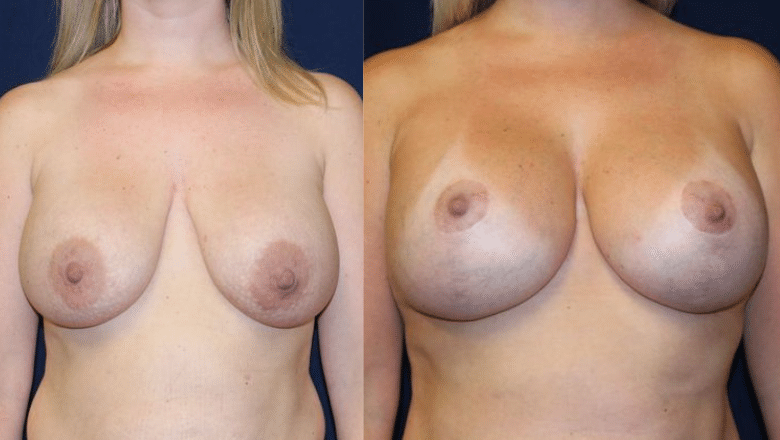
Breast Lift, Implants or Breast Reduction After Pregnancy: When Is the Right Time?
Wait until at least three months after you stop breastfeeding, and ideally around six, so that your milk supply has gone and your breasts have settled. The operation then depends on what has changed:
- Breasts that have dropped (nipple at or below the crease under the breast) need a breast lift, which raises the breast and nipple but does not add volume.
- Breasts that have lost volume but still sit well suit breast implants or fat transfer.
- Both sagging and lost volume usually need a lift combined with implants. Implants alone do not lift a breast.
- Breasts that are heavy or larger may suit a breast reduction.
Our article on how soon after pregnancy you can consider a breast lift goes into the timing in more detail. If you plan another baby, ask about breastfeeding before you book: many women can breastfeed after breast surgery, but it cannot be guaranteed, and our guide to breast implants, pregnancy and breastfeeding explains what to expect.
How Long After Having a Baby Can You Have a Tummy Tuck?
At least six months after the birth, and once your weight has been stable for six months. A tummy tuck removes loose skin and fat, repairs separated muscles and, where your surgeon recommends it, shapes the waist with liposuction. It suits you if you have finished having children, have a BMI of 30 or below, do not smoke and your weight has settled. Our guide to tummy tuck with muscle repair explains the muscle part of the operation.
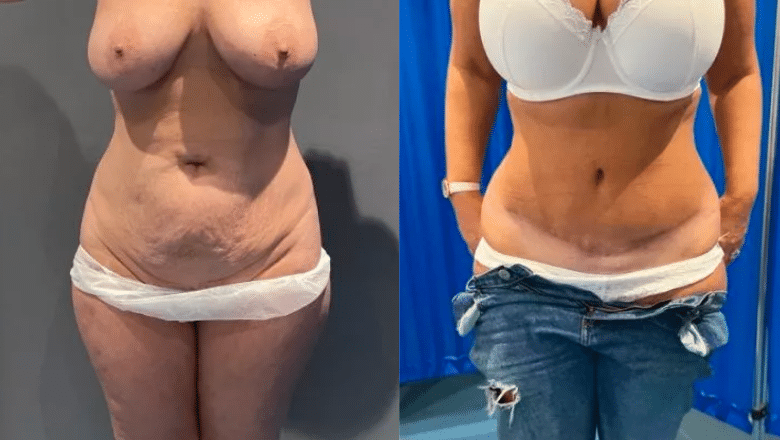
How long after a C-section can you have a tummy tuck?
Allow at least six months, and often a little longer. A caesarean cuts through the layers of the abdominal wall, and the scar tissue needs time to mature before a surgeon can operate safely in the same area. Research suggests the abdominal muscles are affected too: a 2026 study of 2,603 postpartum women found muscle separation in 12.8% of mothers after a caesarean against 7.4% after a vaginal birth[6]. Many women also notice a roll of skin above the scar, and our guides to the C-section pouch, belly overhang after a C-section and a tummy tuck after a C-section explain how it is treated.
Can a tummy tuck fix muscle separation and its symptoms?
Exercise cannot close a wide muscle gap, but a full tummy tuck stitches the muscles back together. In a 2024 prospective study of 51 women who had abdominoplasty with muscle repair after pregnancy, 39 had stress urinary incontinence beforehand, and their symptom scores improved significantly at one year[7]. Results vary, and a physiotherapist is the right first step for mild separation. After surgery, our tummy tuck recovery guide sets out each week.
How Soon After Pregnancy Can You Have Liposuction?
Wait at least six months after giving birth, and six to twelve months after a caesarean. Your weight and the way you store fat keep changing while you breastfeed and for some months afterwards, and the abdominal wall needs time to recover. Liposuction removes stubborn fat that diet and exercise have not shifted, and we advise that your weight has been stable for at least three months first. It does not tighten loose skin or repair separated muscles, so if those are your main concern a tummy tuck may suit you better. Our guide to liposuction recovery explains what follows, and our liposuction before and after photos show real results.

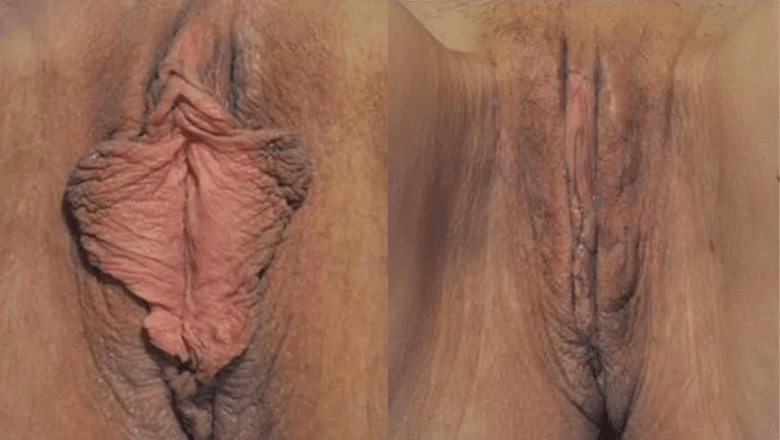
Labiaplasty After Childbirth: How Long Should You Wait?
Wait at least six months after the birth and until you have finished breastfeeding. Childbirth can stretch or change the labia, and some women find they cause discomfort in exercise, clothing or sex afterwards. Labiaplasty does not affect fertility or your ability to deliver vaginally, but a later vaginal birth can stretch the remaining tissue and change the result, which is why some women prefer to wait until their family is complete. Our article on whether to have labiaplasty before or after pregnancy explores that choice, and our guide to vaginal rejuvenation after pregnancy and vaginoplasty cover internal changes. You can also read whether you can have a tummy tuck and labiaplasty at the same time.
Which Surgery Treats Which Post-Pregnancy Change?
Pregnancy rarely changes just one thing, so the right operation depends on which changes bother you most. Loose skin responds to a tummy tuck, separated muscles to muscle repair as part of it, deflated or sagging breasts to a lift or implants, and pockets of fat to liposuction.

Are there non-surgical options after pregnancy?
For mild changes, yes. If your skin has lost some firmness but there is no overhanging fold and no muscle gap, energy-based treatments such as BodyTite and TightSculpting can tighten skin and reduce small pockets of fat. They cannot remove a skin apron, close separated muscles or lift a breast. Our guide to stretch mark treatment after pregnancy covers marks on the skin.
What Is a Mummy Makeover and When Can You Have One?
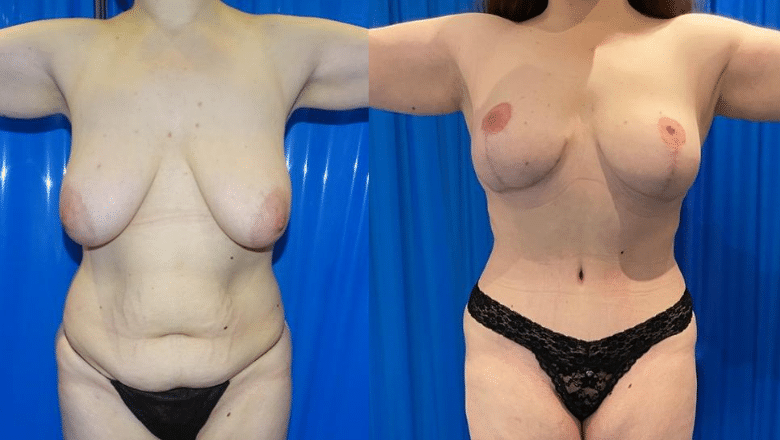
A mummy makeover combines surgery on the breasts and the tummy in one operation, planned around what pregnancy and breastfeeding changed. It usually pairs a tummy tuck with breast augmentation, a breast lift or a breast reduction. Liposuction, a mons lift or labiaplasty can be added where your surgeon recommends it. You need to have finished having children, be at least six months from your last delivery, be at least three months (ideally around six) from the end of breastfeeding and have a stable weight for six months. The combined operation usually takes five to six hours under TIVA, and most women go home the same day. Our guide to combining cosmetic surgery procedures explains how surgeons decide what is safe to do together, and whether a mummy makeover includes a BBL is answered separately. Costs depend on the procedures you choose and are confirmed in writing after consultation; our mummy makeover cost guide explains what affects them.

What is recovery like with young children at home?
Most women return to desk work after about two weeks and avoid driving for two weeks. You cannot lift young children for at least three weeks, you wear compression garments for around six weeks and core exercise waits about three months. Plan help at home before you book. Our mummy makeover recovery guide sets out each stage, and our mummy makeover before and after photos show real patient results.
Should You Wait Until You Have Finished Having Children?
Yes, in most cases. A later pregnancy stretches the skin and muscles again, which can undo much of a tummy tuck and change lifted or enlarged breasts. A tummy tuck does not stop you getting pregnant, but a pregnancy after one can mean a second operation, so surgeons recommend finishing your family first. If you are undecided, our guide on whether you can have a mummy makeover if you plan to have more children and the article on timing your cosmetic surgery around pregnancy help you weigh it up. The same applies to buttock shaping, as explained in BBL and pregnancy.
Is Plastic Surgery After Pregnancy Safe?
For a healthy adult at the right time, yes, but every operation carries risk and a longer one carries more. A 2015 US insurance database study in Plastic and Reconstructive Surgery ↗ of 25,478 tummy tucks found major complications in 3.1% of women having a tummy tuck alone and 4.3% when breast surgery was added. Factors that raised the risk included a BMI of 30 or more and having several procedures at once[8]. Haematoma, infection and blood clots were among the complications recorded. Common problems after surgery include fluid collections (seroma) and slow wound healing, especially in smokers. Our guide on how safe a mummy makeover is sets out the risks and how we reduce them.
What Happens at a Post-Pregnancy Surgery Consultation?
Your surgeon asks when you last gave birth, whether you are breastfeeding, whether you plan more children and how long your weight has been stable. They examine your tummy, breasts and skin, explain which procedures suit you and which do not, and give you a written plan. Every operation at Centre for Surgery is performed by a GMC-registered surgeon at our CQC-regulated hospital on Baker Street, and the surgeon who assesses you is the surgeon who operates. Finance is available through our finance options, subject to status, and costs are confirmed in writing at consultation. You are welcome to look around our Baker Street hospital, and our about us page explains who we are. For wider questions, see our cosmetic surgery FAQs.
Frequently Asked Questions
How long do you have to wait to have plastic surgery after having a baby?
At least six months for a tummy tuck, liposuction or labiaplasty, and at least three months (ideally around six) after you stop breastfeeding for breast surgery. A caesarean can add time for liposuction, and your weight should be stable for about six months. Your surgeon confirms the right date at consultation.
Can I get plastic surgery while breastfeeding?
We advise finishing breastfeeding first. Breast surgery changes tissue that is still making milk and still changing size, so the result cannot be judged until it settles. Other cosmetic procedures are elective and can wait. If you do need any surgery while feeding, tell your anaesthetist.
Does breastfeeding make your breasts sag?
Research suggests not on its own. In a 2008 chart review, age, BMI, bra size, number of pregnancies and smoking raised the risk of sagging, while breastfeeding did not. Pregnancy itself, and your age, weight and smoking history, appear to matter more.
How long after a C-section can you have a tummy tuck?
At least six months, and often longer if your scar is still maturing or your weight is changing. For liposuction we advise six to twelve months after a caesarean. Your surgeon examines the scar and abdominal wall before deciding.
Is it safe to get pregnant after a tummy tuck?
It is possible, but a pregnancy after a tummy tuck stretches the repaired muscles and tightened skin again and can undo much of the result, sometimes needing a further operation. That is why surgeons recommend finishing your family before surgery. If you may want more children, talk it through at consultation.
What disqualifies you from a tummy tuck?
A BMI above 30, a weight that is still changing, plans for more pregnancies or being unable to stop smoking and vaping for four weeks before and after surgery usually rule it out. Medical conditions that raise surgical risk can too. A tummy tuck is not a weight-loss operation.
Will breast augmentation affect breastfeeding?
Most women can still breastfeed with implants, particularly when the incision is made under the breast fold rather than around the nipple, but it cannot be guaranteed. If breastfeeding another child matters to you, tell your surgeon and consider waiting until your family is complete.
Which is harder, a C-section or a tummy tuck?
They are different operations, so it is hard to compare. A tummy tuck removes skin and tightens muscle, and you should expect tightness for the first week, about two weeks before desk work and around six weeks before full activity. The difference is that you can plan help and childcare in advance.
Plastic Surgery After Pregnancy in London
If you are thinking about surgery after having a baby, a consultation with one of our surgeons will establish which changes can be treated, the earliest sensible date for each procedure and whether it is better to wait. Find out more about body contouring at Centre for Surgery.
Phone: 020 7993 4849 | Address: 95–97 Baker Street, Marylebone, London W1U 6RN
Contact us to schedule a consultation
References
- Sperstad JB, Tennfjord MK, Hilde G, Ellström-Engh M, Bø K. Diastasis recti abdominis during pregnancy and 12 months after childbirth: prevalence, risk factors and report of lumbopelvic pain. British Journal of Sports Medicine 2016;50(17):1092–1096. doi:10.1136/bjsports-2016-096065 ↗
- Marttila A, Kilpivaara K, Kinnunen J, et al. Population-based ultrasound reference values for inter-rectus distance: threshold prevalence, percentiles, and the limitations of fixed cutoffs. Hernia 2026;30(1). doi:10.1007/s10029-026-03810-8 ↗
- Rinker B, Veneracion M, Walsh CP. The effect of breastfeeding on breast aesthetics. Aesthetic Surgery Journal 2008;28(5):534–537. doi:10.1016/j.asj.2008.07.004 ↗
- Rinker B, Veneracion M, Walsh CP. Breast ptosis: causes and cure. Annals of Plastic Surgery 2010;64(5):579–584. doi:10.1097/SAP.0b013e3181c39377 ↗
- Fischer A, Ortner C, Hartmann T, Jochberger S, Klein KU. Which medications are safe while breastfeeding? A synopsis for the anesthetist, obstetrician and pediatrician. Wiener Medizinische Wochenschrift 2018;169(3–4):45–55. doi:10.1007/s10354-018-0637-z ↗
- Zhu W, Ye Q, Wang Y, Chang S, Shi H, Wang L. Association between delivery mode and diastasis recti abdominis in postpartum women. Nigerian Journal of Clinical Practice 2026;29(9):1057–1062. doi:10.4103/njcp.njcp_635_25 ↗
- Toto V, Faiola A, Pazzaglia M, de Donato F, Persichetti P. Could abdominoplasty with diastasis recti abdominis correction improve stress urinary symptoms? A 1-year follow-up prospective study. Aesthetic Plastic Surgery 2024;48(19):3929–3935. doi:10.1007/s00266-024-04247-z ↗
- Winocour J, Gupta V, Ramirez JR, Shack RB, Grotting JC, Higdon KK. Abdominoplasty: risk factors, complication rates, and safety of combined procedures. Plastic and Reconstructive Surgery 2015;136(5):597e–606e. doi:10.1097/PRS.0000000000001700 ↗





