


In this guide15 sections
- Key Points
- What Should I Know Before Having a Facelift?
- What Is the Best Age and Time to Have a Facelift?
- Which Type of Facelift Is Right for Me?
- How Long Does Facelift Recovery Take?
- How Long Does Bruising and Swelling Last After a Facelift?
- Is a Facelift Painful? Numbness and Tightness Explained
- How Do I Prepare for a Facelift?
- What Are the Risks and Downsides of a Facelift?
- Do Most People Regret Having a Facelift?
- What Are the Alternatives to a Facelift?
- How Do I Choose a Facelift Surgeon in London?
- Frequently Asked Questions
- Facelift Surgery in London
- References
Key Points
- What should you know before a facelift? Four things matter most: when to have it, how long recovery takes, how much bruising and swelling to expect, and who operates. Understanding all four before your consultation prevents most of the surprises patients describe afterwards.
- When is the right time? There is no fixed age. Most patients are in their 40s to 60s, and the decision rests on jowls, neck laxity, skin quality and health more than on age.
- How long is recovery? Most people return to desk work at 10 to 14 days, start gentle cardio from week 3 and return to full exercise at week 6. The final result takes three to six months to settle.
- How long does bruising last? Swelling peaks around days 3 to 4, most visible bruising has gone by two to three weeks, and subtle swelling can linger for a few months.
- What lowers your risk? No nicotine for four weeks before and after surgery, stopping aspirin and anti-inflammatories two weeks before (if your doctor agrees) and controlled blood pressure all reduce complications.
- What are the main risks? Haematoma (a collection of blood under the skin) is the most common early problem, at around 1% in a large prospective cohort. Temporary nerve weakness, wound-healing problems and scarring are less common.
If you are searching for the things to know before a facelift, the honest answer is that the operation itself is only part of the story. A facelift lifts the deeper tissues of the lower face and neck, and what you experience afterwards depends heavily on timing, preparation and the technique chosen. This guide covers when to have a facelift, how long facelift recovery really takes, what bruising and swelling look like week by week, how to prepare, and the risks worth knowing about.
Every face ages differently, so there is no single right plan. The type of facelift suggested for you, whether a full facelift or a mini facelift, depends on how much laxity there is in the lower face, jawline and neck, and on what you want to change. Our guides on how to prepare for facelift surgery and what to expect from a facelift add detail.
What Should I Know Before Having a Facelift?
A facelift is major surgery, even though it is performed on the face. A full facelift with a neck lift usually takes three to four hours under TIVA (total intravenous anaesthesia), and most patients go home the same day with a responsible adult. Smaller lifts, such as a mini or one-stitch facelift, can often be done under local anaesthetic with or without sedation.
Patients tell us they wish they had known that recovery takes longer than the operation suggests, that bruising often looks worse on day three than on day one, and that the first fortnight is not a guide to the final result. A facelift does not stop ageing or treat skin texture, sun damage or pigmentation, and the surgeon and hospital you choose influence your safety more than any other decision.
Eyelid surgery or a brow lift can be added under the same anaesthetic, and our guide to common facelift myths clears up misunderstandings that make patients anxious.
What Is the Best Age and Time to Have a Facelift?
There is no age at which a facelift becomes right or wrong. What counts is whether the changes in your face are ones a facelift corrects, such as jowls, a softer jawline and loose neck skin, and whether you are healthy enough to heal well.
Is it better to have a facelift earlier?
There are practical arguments for not leaving it too late. Healing is generally smoother in good general health, and changes treated earlier can often be corrected with a less extensive operation, such as a mini facelift. Waiting until sagging is advanced can mean a bigger procedure to reach a natural result. Our guide to the best age for a facelift maps age to technique.
A facelift does not stop ageing. Your face continues to age from its new, lifted starting point, so you still look younger than you would have without surgery. Our guides on how long a facelift lasts and whether you can have a facelift twice explain why timing is a personal decision rather than a race.
Is 60 too late for a facelift?
No. Most facelift patients are between 40 and 70, and many are in their 60s. Beyond 70, general health and healing matter more than age. A surgeon will look at your blood pressure, medical history, skin quality and medicines before recommending surgery. Our guide to which signs of ageing a facelift and neck lift can correct helps you judge whether surgery matches what bothers you.
When should I book a facelift around work, holidays and events?
Plan around recovery rather than the operation date. Most people look presentable and are back at desk work at 10 to 14 days, but subtle swelling and tightness continue for longer. Leave at least four to six weeks between surgery and a wedding, a big photograph or a holiday where you will be in strong sun, and allow at least two weeks before flying. If you work in a physical job or look after small children, build in extra help for the first week. The right time is the one that gives you uninterrupted rest.
Which Type of Facelift Is Right for Me?
The technique should be matched to your face, not to a recovery target. As a rough guide:
- One-stitch (micro) facelift: early mid-face drift, the least invasive option.
- Mini facelift: early jowls and a softening jawline, through shorter incisions around the ear. Our comparison of facelift vs mini facelift explains the trade-offs.
- SMAS facelift: the most common full facelift, lifting the deeper muscle and fibrous layer so the skin is closed without tension.
- Deep plane facelift: works beneath the SMAS layer, and suits heavier faces and more advanced descent. Our guide to deep plane vs SMAS facelift compares them.
- Neck lift: usually combined with a facelift because the face and neck age together. If your main concern is the chin and neck, our guides to how to get rid of a fat neck and tech neck set out what each treatment can do.
More extensive lifts last longer but take longer to settle: a mini or one-stitch lift usually settles in about four to six weeks, a full SMAS or deep plane facelift in around eight to 12 weeks. Our guide to procedures that complement a facelift explains which combinations make sense.
How Long Does Facelift Recovery Take?
Facelift recovery has three stages. The social recovery, when bruising and obvious swelling go, takes about two to three weeks. Getting back to full exercise takes about six weeks. The final result, when the last swelling has settled and the face feels normal again, takes three to six months, and scars keep softening for up to a year. That broadly matches the NHS guidance on facelift recovery ↗, which describes recovery as taking weeks rather than days.
How long do you need off work after a facelift?
Most people return to desk work at around 10 to 14 days, once the bruising can be covered with make-up or a scarf. Some prefer to work from home a little longer. Physical jobs need longer. Sutures usually come out at about a week, and you can wash your hair gently from around 48 hours once any dressing is off. Do not drive for at least 24 hours after an anaesthetic or sedation, and most people drive again at about two weeks, once they can turn their head comfortably and are off drowsy painkillers.
When can I exercise after a facelift?
Walking is encouraged from the first days. Gentle cardio can usually start from week 3, and full exercise from week 6, once your surgeon is happy with your healing, as exercising too early raises blood pressure and the risk of bleeding. Our guide to exercising after cosmetic surgery explains how to build back up.
How should I sleep after a facelift?
Sleep on your back with your head raised on two pillows for the first two weeks, wearing your chin support garment as directed. Elevation reduces swelling, and staying off your side protects the incisions. Our guides to how to sleep better after facelift surgery and sleeping after chin liposuction have practical tips.
How Long Does Bruising and Swelling Last After a Facelift?
Bruising and swelling are expected parts of recovery, not complications, and they are the part patients are most often surprised by. Swelling usually peaks around days 3 to 4 rather than on the day after surgery. Most visible bruising has settled by two to three weeks, and by four weeks most people look natural to others, even though you may still notice mild swelling, firmness and tightness. Subtle swelling, often worse in the morning or along the jawline, can last a few months. The swelling timeline varies with the technique, how much is done at once and how you heal.

What is the worst day after a facelift?
The first three days are usually the hardest, with tightness, pressure and patchy numbness, and swelling peaking around day 3 or 4. Bruising often spreads down the neck and chest in the first week and turns yellow and green as it fades, which looks alarming but is normal. After that, each day feels noticeably better. By the end of the first week many people no longer need regular painkillers.
How can I reduce bruising and swelling after a facelift?
The measures that help are simple and worth following closely:
- Keep your head raised for the first two weeks, including when you rest in the day.
- Wear your chin support garment as directed. Garments are bought separately and confirmed with you in advance.
- Use cold compresses for the first two to three days if your surgeon recommends them, wrapped in a cloth, and take care on numb skin that cannot feel if it is getting too cold.
- Avoid aspirin and anti-inflammatory painkillers such as ibuprofen unless your surgeon says otherwise, as they increase bleeding.
- Avoid heat from hot baths, saunas and strong sun for at least four weeks, and avoid alcohol early on.
- Take your time on exercise. Raising your heart rate and blood pressure too soon worsens swelling.
Some surgeons also use tranexamic acid, a medicine that reduces bleeding, during surgery. A 2024 systematic review in Aesthetic Surgery Journal found that it reduced drain output and minor haematomas after facelift without increasing major complications[5]. Ask your surgeon whether it is part of their routine.
Is hard or lumpy swelling normal after a facelift?
Firmness, lumps and unevenness under the skin are very common in the first weeks as swelling settles, and the area behind the ears and under the chin often swells more and for longer than the cheeks. What is not normal is swelling that is sudden, painful and tense, especially if it is much worse on one side, as that can mean a haematoma. Call your surgeon straight away if that happens.
Is a Facelift Painful? Numbness and Tightness Explained
A facelift is usually less painful than people expect. Most describe tightness, pressure and aching rather than sharp pain, because the skin is closed without tension. Discomfort peaks in the first two to three days and is managed with paracetamol and prescribed pain relief, and most people need nothing stronger after 48 hours. Pain that is getting worse instead of settling, particularly on one side, should be reported straight away.
Numbness of the cheeks and around the ears is common and usually improves over weeks to months, often with itching and tingling as feeling returns. The incisions are placed along the hairline and around the ears so that they heal as fine lines, and our guide to facelift scars explains how they change over the first year. For men, who have beard-bearing skin and heavier tissue, the planning differs slightly, as our male facelift page explains.
How Do I Prepare for a Facelift?
Preparation is the part of the process you control, and it shapes how much you bruise and how well you heal.

- Stop all nicotine, including vaping, for four weeks before and four weeks after surgery. In a 2008 review of nicotine in plastic surgery ↗, smokers had a 13-fold higher risk of skin necrosis after a facelift, and four weeks without smoking reduced smoking-related complications[3].
- Stop aspirin, anti-inflammatories and blood-thinning supplements two weeks before, but only if your doctor agrees. If you take aspirin or a blood thinner for a medical condition, never stop it without medical advice.
- Avoid alcohol for a week before surgery.
- Get your blood pressure checked and controlled. Spikes in blood pressure around surgery are linked to bleeding, which is why your anaesthetist and surgeon watch it closely[4].
- Keep your weight stable. Large weight changes after a facelift can alter the result, and crash dieting beforehand can slow healing.
- Tell your surgeon about fillers and anti-wrinkle injections. If you have had dermal fillers, our guide on whether fillers need to be dissolved before a facelift explains what to expect.
- Organise your home. Extra pillows, front-fastening tops, easy meals and a responsible adult to stay with you for the first 24 hours make the first days far easier.
The key questions to settle before you commit are covered in our guide to key questions before deciding on facelift surgery.
What Are the Risks and Downsides of a Facelift?
Facelift surgery is safe when done by an experienced plastic surgeon in a regulated hospital, but no operation is risk-free. In a 2016 prospective cohort study of 11,300 facelifts ↗ in Aesthetic Surgery Journal, 1.8% of patients had a major complication needing an emergency visit, admission or return to theatre within 30 days. Haematoma (1.1%) and infection (0.3%) were the most common, and men were almost four times more likely to have a haematoma[1].
A 2001 review of 1,078 consecutive London facelifts ↗ found a higher haematoma rate of 4.2%, and linked it to anterior platysmaplasty, higher systolic blood pressure, male sex, aspirin or anti-inflammatory use and smoking[2]. More recently, a 2025 meta-analysis of 31 deep plane facelift studies reported an overall haematoma rate of 2.7%, with major haematomas under 1%[6]. Rates vary with how each study defines a haematoma, but the message is consistent: it is uncommon, it usually appears in the first 24 hours, and it is treated promptly.
Other possible downsides include:
- Temporary nerve weakness, where part of the face moves less for a while. It is uncommon and usually recovers.
- Skin healing problems, which are far more likely in smokers.
- Thickened or widened scars.
- Asymmetry and contour irregularities. Some natural asymmetry is normal, and a small touch-up is occasionally needed.
- Unnatural results from an over-tight or skin-only lift, which is why technique matters. See our guide to a botched facelift and our full guide to facelift complications.
Contact your surgical team at once if you have sudden or one-sided swelling, bleeding that does not stop with gentle pressure, worsening pain, a temperature above 38°C, spreading redness or dark skin near the incisions. For chest pain or difficulty breathing, call 999.
Do Most People Regret Having a Facelift?
Published patient-reported studies point to high satisfaction, although they cannot speak for every individual. In a 2017 FACE-Q study of 200 patients ↗ in Plastic and Reconstructive Surgery, who had a high SMAS facelift between 2005 and 2015, satisfaction was high, and it was higher still when a facelift was combined with other facial rejuvenation procedures such as fat transfer[8]. Only 38% of patients replied, so the figures need cautious reading.
In a 2012 photo-rating study of 60 patients ↗, independent raters estimated patients to be about 8.9 years younger than their real age after face and neck lift surgery, compared with 1.7 years younger before, a change of roughly seven years. The effect was smaller for a face and neck lift alone and larger when eyelid and brow surgery were added[7].
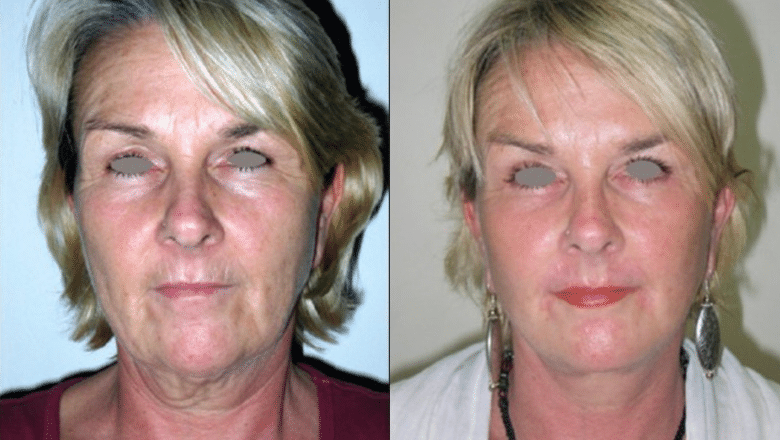
Regret tends to come from unrealistic expectations, a technique that did not match the face, or a rushed decision. Looking at real facelift before and after photos from the surgeon you are considering, and asking what is typical rather than an outlier, is a dependable way to protect yourself.

What Are the Alternatives to a Facelift?
If your changes are early, or you are not ready for surgery, there are lighter options. Dermal fillers restore lost volume, anti-wrinkle injections soften expression lines, and a liquid facelift combines treatments to rebalance the face. They help with volume and lines but do not remove loose skin, and they need repeating. Our guides to dermal fillers vs facelift surgery, non-surgical facelift procedures and facelift alternatives that do not require surgery help you compare them.
Thread lifts are sometimes suggested as a middle route. Centre for Surgery does not offer thread lifts, and in general their effect is short-lived compared with a surgical lift, so they are not a replacement for one. Our comparison of a thread lift vs FaceTite vs facelift sets out the differences honestly.
How Do I Choose a Facelift Surgeon in London?
The surgeon you choose has more influence on your result and your safety than any other decision. Check that your surgeon is on the GMC specialist register for plastic surgery, ask how many facelifts they perform each year, and ask to see before and after photos of their own patients. Make sure the hospital is registered with the Care Quality Commission and that you can be seen quickly if something goes wrong, one reason many patients avoid cosmetic surgery tourism. Our list of questions to ask before getting a facelift is a useful checklist to take to consultation.
At Centre for Surgery, facelift surgery is performed by GMC-registered consultant plastic surgeons at our CQC-regulated Baker Street hospital. The surgeon you meet at consultation is the surgeon who operates, and follow-up appointments continue as you heal. The cost depends mainly on the technique and on whether a neck lift or other procedures are added, and your quote is confirmed at consultation. Our facelift cost guide explains what is included, and finance is available, subject to status. You can read what patients say about their care on our patient reviews page.
Frequently Asked Questions
What is included in a facelift?
A full facelift lifts the cheeks, jowls and jawline by repositioning the deeper SMAS layer through incisions around the ear and into the hairline, and it is usually combined with a neck lift that tightens the platysma muscle through a small cut under the chin. A small drain is placed and removed at your check the next morning.
What are the downsides of a facelift?
The main downsides are the recovery time, swelling and bruising for several weeks, temporary numbness, scars along the hairline and ears, and the small risk of complications such as haematoma or nerve weakness. A facelift also cannot stop further ageing or treat skin texture and pigmentation.
Does skin age faster after a facelift?
No. The face continues to age at the normal rate from its new, lifted starting point, so years later you still look younger than you would have without surgery. Sun protection, a stable weight and not smoking all help the result last.
Do most people regret having a facelift?
Published satisfaction studies are encouraging, but regret does occur, usually where expectations were unrealistic or the technique did not suit the face. A thorough consultation, honest before and after photos and a realistic plan make the biggest difference.
What disqualifies you from a facelift?
Being unable to stop nicotine for four weeks either side of surgery, uncontrolled medical conditions, unstable weight and unrealistic expectations. If your concern is skin quality rather than sagging, a facelift is the wrong treatment.
What should I not say to a plastic surgeon?
Nothing needs to be hidden. Tell the truth about smoking, vaping, medicines, supplements, previous fillers and your medical history, because these affect your safety. Be open about what bothers you, and avoid asking to look like someone else, as a good surgeon will aim for a natural version of you.
Facelift Surgery in London
If you are weighing up timing, recovery and bruising, a consultation is the place to discuss which technique suits your face and a realistic recovery plan. Find out more about facelift surgery at Centre for Surgery.
Phone: 020 7993 4849 | Address: 95–97 Baker Street, Marylebone, London W1U 6RN
Contact us to schedule a consultation
References
- Gupta V, Winocour J, Shi H, Shack RB, Grotting JC, Higdon KK. Preoperative risk factors and complication rates in facelift: analysis of 11,300 patients. Aesthetic Surgery Journal 2016;36(1):1–13. doi:10.1093/asj/sjv162 ↗
- Grover R, Jones BM, Waterhouse N. The prevention of haematoma following rhytidectomy: a review of 1078 consecutive facelifts. British Journal of Plastic Surgery 2001;54(6):481–486. doi:10.1054/bjps.2001.3623 ↗
- Knobloch K, Gohritz A, Reuss E, Vogt PM. Nicotine in plastic surgery: a review. Der Chirurg 2008;79(10):956–962. doi:10.1007/s00104-008-1561-3 ↗
- Abi-Rafeh J, Bassiri-Tehrani B, Arezki A, Schafer C, Baker N, Nahai F. Intraoperative systolic blood pressure as a significant predictor of postoperative hematoma following facelift: single-surgeon experience of 118 consecutive facelifts. Aesthetic Surgery Journal 2025;45(1):11–18. doi:10.1093/asj/sjae181 ↗
- Alenazi AS, Obeid AA, Alderaywsh A, et al. Impact of tranexamic acid on bleeding outcomes and complication rates in facelift: a systematic review and meta-analysis. Aesthetic Surgery Journal 2024;44(11):NP749–NP761. doi:10.1093/asj/sjae156 ↗
- Azzi JL, Hadian A, Zabihi-Pour D, et al. Prevention of hematoma in patients undergoing facelift (rhytidectomy): a systematic review and meta-analysis. Facial Plastic Surgery & Aesthetic Medicine 2025;28(3):260–266. doi:10.1177/26893614251393166 ↗
- Chauhan N, Warner JP, Adamson PA. Perceived age change after aesthetic facial surgical procedures: quantifying outcomes of aging face surgery. Archives of Facial Plastic Surgery 2012;14(4):258–262. doi:10.1001/archfacial.2011.1561 ↗
- Kappos EA, Temp M, Schaefer DJ, Haug M, Kalbermatten DF, Toth BA. Validating facial aesthetic surgery results with the FACE-Q. Plastic and Reconstructive Surgery 2017;139(4):839–845. doi:10.1097/PRS.0000000000003164 ↗







