

In this guide14 sections
- Key Points
- Can You Get Gynecomastia Surgery on the NHS?
- Why the NHS Rarely Funds Gyno Surgery
- What Criteria Do NHS Areas Use for Gynaecomastia Surgery?
- How to Get Gyno Surgery on the NHS: Step by Step
- What the NHS Does Offer for Gynaecomastia
- Teenagers, Medicines and Steroids: Special Cases
- Gynaecomastia Surgery in Scotland, Wales and Northern Ireland
- Is It OK to Live With Gyno?
- Which cosmetic surgery for men is right for you?
- Going Private: Gynaecomastia Surgery at Centre for Surgery
- Gynecomastia NHS FAQs
- Gynaecomastia Surgery in London
- References
Key Points
- Surgery is rarely funded: the NHS website says male breast reduction is “not usually available on the NHS”, and most local NHS bodies treat gynaecomastia surgery as a low-priority procedure.
- It depends on where you live: a review of 211 NHS commissioning areas in England found that only 28% funded surgery when set criteria were met, while 10% did not fund it at all.
- The usual criteria are strict: aged 18 or over, causes ruled out, no steroids or causative drugs for about a year, a BMI of about 25 to 27 or lower for 12 months, a non-smoker, and large, mostly glandular breast tissue.
- Your GP is the starting point: a GP check is worthwhile whatever you decide, and important if you notice a lump, pain that does not go away, skin changes or nipple discharge.
- Distress alone is rarely enough: most policies do not fund surgery because of how the chest looks or feels to you, unless your case is shown to be clinically exceptional.
- Private surgery is the main alternative: at Centre for Surgery we treat adults with every grade of gynaecomastia, including revision cases, at our Baker Street clinic.
Gynaecomastia (spelled gynecomastia in the US, and often shortened to “gyno”) is the growth of glandular breast tissue in men. It is very common: depending on age and how it is measured, between a third and two thirds of men have some degree of it[1]. For many men it is more than a cosmetic worry. It can mean avoiding swimming, the gym or fitted clothes, and some live with it for years before asking for help.
One of the first things most men want to know is whether gynecomastia surgery is available on the NHS. The honest answer is: sometimes, but rarely, and it depends a great deal on where you live. This guide explains how NHS funding for gyno surgery works, the criteria local NHS bodies usually set, how to ask your GP, what the NHS does offer, and your options if you do not qualify. If you are not yet sure whether you have true gynaecomastia or extra fat, start with our guide to gynaecomastia vs chest fat. For an overview of treatment, see our gynaecomastia surgery page.
Can You Get Gynecomastia Surgery on the NHS?
Gynaecomastia surgery on the NHS is possible, but it is not routinely offered. The NHS website states that male breast reduction surgery “is not usually available on the NHS” ↗, and that whether you can have it depends on criteria set where you live. Its main gynaecomastia page ↗ says surgery “may not be available on the NHS” and is an option when other treatments have not worked.
In England, decisions about which planned treatments the NHS pays for are made locally by integrated care boards (ICBs), which replaced clinical commissioning groups (CCGs) in 2022. Most ICBs list gynaecomastia surgery among procedures of low clinical priority or limited clinical value, which they fund only in set circumstances or not at all. Recent policies show how widely the rules differ:
- Central East ICB ↗ (2026) says surgical correction of gynaecomastia is “NOT NORMALLY FUNDED” and calls it “a low clinical priority intervention”. The only route is an individual funding request.
- Bristol, North Somerset and South Gloucestershire ICB ↗ says breast surgery for males “is not routinely commissioned” and that “where symptoms are mild or moderate it is likely that the risks outweigh the benefits”.
- Leicester, Leicestershire and Rutland ICB ↗ considers surgery with prior approval when a strict list of criteria is met, including grade 3 gynaecomastia and medical photographs.
- Humber and North Yorkshire ICB ↗ funds surgery when gynaecomastia is caused by a medical condition or drug treatment, such as treatment for prostate cancer, and its other criteria are met.
So, does the NHS cover gynecomastia surgery? For a minority of men who meet tight criteria, yes. For most men, it does not.
Why the NHS Rarely Funds Gyno Surgery
There are three main reasons NHS bodies are cautious about funding gynaecomastia removal.
It is usually harmless and often settles. European clinical guidelines describe gynaecomastia as a benign condition that should not be considered a precursor to cancer. Gynaecomastia in puberty affects around half of boys at some stage and settles on its own within two years in more than 90% of cases[1]. NHS bodies are reluctant to fund an operation for a condition that may resolve without one.
It competes with other treatments for limited funds. Local NHS budgets are fixed, so procedures seen as improving appearance rather than health are among the first to be restricted. A study that observed three NHS individual funding request panels found that decisions about breast surgery depended heavily on how each case was framed, including whether it was seen as “cosmetic”, and concluded that differences between areas were likely to persist[2].
All surgery carries risk. For mild or moderate gynaecomastia, some NHS bodies judge that the risks of an operation outweigh its benefits, as the Bristol policy above states.
The gynaecomastia “postcode lottery”
Each area writes its own rules, so two men with the same chest can get different answers depending on their postcode. A 2015 study in the International Journal of Surgery ↗ reviewed the gynaecomastia policies of all 211 CCGs in England and grouped them by how they funded surgery[3]:
| Funding approach | Share of areas |
|---|---|
| Funded if the criteria are met | 28.0% |
| Funded only with prior approval for each patient | 41.2% |
| No criteria: individual funding request only | 20.9% |
| Not funded at all | 10.0% |
The criteria themselves varied too. Only 3.4% of the areas that funded surgery used all six criteria set out in Action on Plastic Surgery, a national guide for commissioners, and 80.8% added criteria of their own. About 70% of the areas with criteria required patients to be past puberty, to have a BMI of 25 or less, and to have hormonal and drug causes ruled out[3]. The authors concluded that there was a “postcode lottery” for gynaecomastia surgery in England. CCGs have since been replaced by ICBs, but the policies above show that the same spread remains.
What Criteria Do NHS Areas Use for Gynaecomastia Surgery?
Each area sets its own policy, but most draw on a similar set of conditions. The table below shows the criteria that come up most often, with examples from current policies.
| Criterion | What policies usually ask for | Examples |
|---|---|---|
| Age | Aged 18 or over and past puberty | 19 or over in Humber and North Yorkshire; men aged 25 or under may be asked to wait one to two years first |
| Causes checked | Hormonal and drug-related causes screened before referral, and any correctable cause treated first | Leicester, Leicestershire and Rutland; NHS Scotland |
| Drugs and medicines | If a drug is the cause, including anabolic steroids or recreational drugs, a gap of about a year since it was last used | At least a year since last use in Humber and North Yorkshire |
| BMI | About 25 to 27 or lower, held for at least 12 months | 18 to 25 in Leicester, Leicestershire and Rutland; 27 or lower in Humber and North Yorkshire; 20 to 27 in Scotland |
| Smoking | A confirmed non-smoker | Leicester, Leicestershire and Rutland |
| Severity | Large, mostly glandular breast tissue rather than fat | Grade 3 in Leicester, Leicestershire and Rutland; more than 100g of gland and duct tissue in Humber and North Yorkshire |
| Other treatment tried | Non-surgical treatment tried without success | Leicester, Leicestershire and Rutland |
| Evidence | Medical photographs and a formal application from your GP | Leicester, Leicestershire and Rutland |

Psychological distress is a difficult area. Action on Plastic Surgery listed it as a criterion, but only 13.7% of the areas with criteria in the 2015 study required it[3], and the Humber and North Yorkshire policy states that surgery “is highly unlikely to alleviate disproportionate psychological distress”, which should be managed in its own right. In practice, how much gynaecomastia upsets you is rarely enough on its own to secure NHS funding.
Gynaecomastia grades and why they matter
Some NHS policies, such as Leicester, Leicestershire and Rutland’s, use the Simon classification, first published in 1973, which grades gynaecomastia by size and by whether there is extra skin[4]:
- Grade 1: small enlargement, with no extra skin.
- Grade 2a: moderate enlargement, with no extra skin.
- Grade 2b: moderate enlargement, with some extra skin.
- Grade 3: marked enlargement, with clear extra skin, like a female breast.
Where NHS funding is available at all, it is usually reserved for the most severe grade. Mild puffiness around the nipple, often described as puffy nipples, rarely qualifies. Neither does pseudogynecomastia, where the chest is enlarged by fat rather than gland, because policies expect weight loss first. Our guide to the different grades of gynaecomastia explains each grade in more detail, and our article on BMI and cosmetic surgery eligibility explains why BMI limits exist.
How to Get Gyno Surgery on the NHS: Step by Step
If you want to explore NHS treatment, the route almost always starts with your GP. This is what usually happens:
- Book a GP appointment. Explain how long you have noticed the swelling, whether it is on one or both sides, whether it is tender, and how it affects your daily life.
- Examination and tests. Your GP will examine your chest, ask about medicines, supplements, steroids and recreational drugs, and may arrange blood tests to check hormone levels and liver, kidney and thyroid function. European guidelines also recommend examining the testicles, because a testicular problem can occasionally cause gynaecomastia[1].
- Treating the cause. If a medicine, drug or health condition is likely to be responsible, it is dealt with first. You may be referred to an endocrinologist (a hormone specialist).
- Watchful waiting. Most policies expect a period of monitoring, often a year, to see whether the tissue settles. If you are overweight, you will be asked to lose weight and keep it off.
- Checking your local policy. Your GP can tell you which policy applies where you live and whether you are likely to meet it. Many ICBs publish their policies online.
- The funding application. If you meet the criteria, your GP or a hospital specialist applies for prior approval. If you do not, the only option is usually an individual funding request.
- Referral and waiting list. If funding is approved, you are referred to a plastic surgery or breast service for assessment. Approval for assessment is not a guarantee of surgery.
What is an individual funding request?
An individual funding request (IFR), called an exceptional funding request in some areas, is an application by your GP or specialist to a panel at your ICB, asking it to fund a treatment that its policies would not normally cover. Panels look for clinical exceptionality: evidence that your situation is significantly different from that of other patients with the same condition. A strong application sets out the clinical facts clearly, including test results, how long the gynaecomastia has been present and what has already been tried. Approval is never guaranteed, so it is sensible to have a plan B.
How long is the NHS wait for gynaecomastia surgery?
Waiting times depend on your local hospital. Even after funding is approved you join the waiting list for a specialist assessment and then for surgery. In Scotland, the national referral protocol states that these patients are not subject to the 18-week referral-to-treatment standard.
What the NHS Does Offer for Gynaecomastia
Even if surgery is unlikely to be funded, the NHS has an important role. Your GP can:
- Find the cause. Proper investigation finds an underlying cause in around 45–50% of adult cases[1]. Our guide to the causes of gynaecomastia covers the most common ones.
- Review your medicines. Some prescribed medicines, including finasteride and some antidepressants, are linked to gynaecomastia. Never stop a prescribed medicine without talking to your doctor first.
- Treat a hormone problem. For example, testosterone treatment for men with a proven deficiency[1].
- Discuss medication. The NHS says a GP may suggest medicines that change hormone levels. European guidelines do not recommend these routinely for gynaecomastia[1]. Our article on non-surgical treatments for gynaecomastia looks at the evidence.
- Rule out anything serious. Breast cancer in men is rare, and gynaecomastia does not turn into cancer[1], but a lump should always be checked.
When to see a GP about breast swelling
The NHS advises seeing a GP if you have breast or nipple pain that does not go away, a lump, skin changes, or discharge or bleeding from a nipple. A hard lump that is not centred behind the nipple, a nipple that has turned inwards, or swelling on one side only are all reasons to book an appointment rather than wait. Our guides to one-sided gynaecomastia and gynaecomastia and breast cancer risk explain more.
Teenagers, Medicines and Steroids: Special Cases
Gynaecomastia in teenagers
Pubertal gynaecomastia settles on its own in most boys within two years[1], so the NHS very rarely operates on teenagers. Some policies ask men aged 25 or under to wait for up to two years before surgery is considered. Our articles on whether gynaecomastia goes away on its own and the right age for gynaecomastia surgery cover this in more detail. Centre for Surgery treats adults aged 18 and over only.
Gynaecomastia caused by medical treatment
Some medical treatments, particularly hormone treatment for prostate cancer, can cause breast growth. A few NHS areas, such as Humber and North Yorkshire, specifically fund surgery in this situation, while others, such as Central East, place it outside their gynaecomastia policy. If your gynaecomastia started after medical treatment, ask your specialist team first.
Steroids, cannabis and bodybuilder gyno
Anabolic steroids are a well-known cause of gynaecomastia, often called bodybuilder gyno. NHS policies generally will not fund surgery while steroids or other causative drugs are still being used, and some ask for at least a year since they were stopped. The same applies to recreational drugs, and there is some evidence that cannabis can cause gynaecomastia. Our guide to steroids and gynaecomastia explains prevention and treatment.
Gynaecomastia Surgery in Scotland, Wales and Northern Ireland
NHS Scotland uses a national referral protocol rather than local policies. According to the NHS Scotland referral protocol for gynaecomastia ↗, treatment “is not routinely offered” and can only be considered when all criteria are met:
- a BMI of 20 to 27
- screening for an underlying cause before referral, with correctable causes addressed first
- clinically significant breast prominence or significant asymmetry, or significant psychological distress together with one of these
All approved referrals are seen by a specialist clinical psychologist, and these patients are not covered by the 18-week referral-to-treatment standard. In Wales and Northern Ireland, health boards and health and social care trusts set their own rules, so ask your GP what applies where you live.
Is It OK to Live With Gyno?
Medically, yes, in most cases. Once a GP has checked for an underlying cause, gynaecomastia is a benign condition that does not need treatment for health reasons[1]. Many men choose to live with mild gynaecomastia, especially if it is not tender and does not bother them.
For others, the impact is real. A review of the research found that gynaecomastia persists in about 10% of cases and has been linked with depression, anxiety, body dissatisfaction, disordered eating and lower self-esteem[5]. If it is affecting your mood or how you live, tell your GP; support for that is worth having whatever you decide about surgery.
Surgery can make a meaningful difference for the right person. A 2022 study in Plastic and Reconstructive Surgery ↗ followed 145 adolescents and young men after gynaecomastia surgery. Those who completed the surveys reported significant improvements in self-esteem and in seven areas of quality of life, including social functioning and mental health. At least one complication was recorded in 36% of treated breasts, most commonly some residual tissue, contour irregularities or a haematoma, but these did not appear to limit the quality-of-life gains[6]. Our article on whether gynaecomastia surgery is worth it looks at the decision in more depth.
Which cosmetic surgery for men is right for you?
A few short questions, including a simple pinch test if stomach fat is your concern. You will get a suggested procedure, realistic recovery times, and an honest answer if surgery is not what you need.
Going Private: Gynaecomastia Surgery at Centre for Surgery
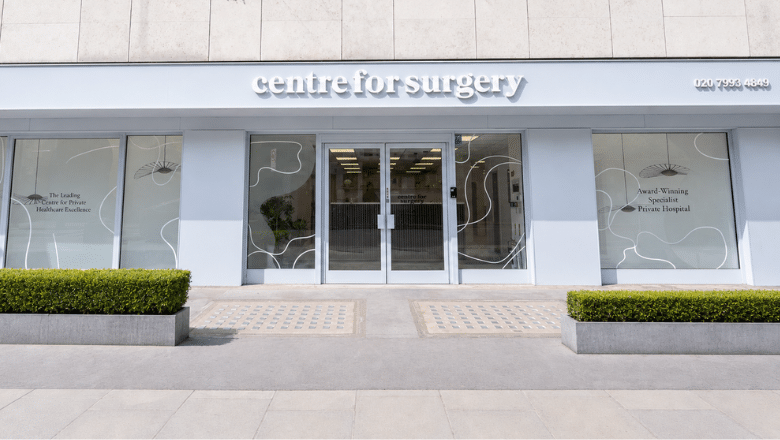
If you do not meet your area’s criteria, your funding request is turned down, or you would rather not wait, private surgery is the main alternative. Centre for Surgery is a private clinic and does not treat NHS-funded patients at Baker Street, so all treatment with us is self-funded. We treat adults aged 18 and over with every grade of gynaecomastia, from mild puffiness to severe enlargement with extra skin, as well as revision surgery after a previous operation.
Your consultation
Your consultation is with a GMC-registered consultant surgeon, who will examine your chest, work out how much of the enlargement is gland, fat and skin, and explain whether surgery is likely to help. The consultant who assesses you is the surgeon who performs your operation. Further consultations are free, and we recommend a two-week cooling-off period before you commit to surgery.
How gynaecomastia surgery is done
Most operations combine two techniques. Liposuction removes fatty tissue and shapes the chest; we offer both power-assisted liposuction and VASER liposuction. Firm glandular tissue does not respond to liposuction, so it is removed through a small incision at the lower edge of the areola. Where there is a lot of loose skin, for example after significant weight loss, some skin may also need to be removed. Surgery is carried out under TIVA (total intravenous anaesthesia); our guides to TIVA and anaesthesia for gynaecomastia surgery explain what this means.


You can see more results in our gynaecomastia before and after photos.
Recovery
The NHS says it takes about 6 weeks to return fully to normal activities after male breast reduction, and that it can take up to 6 months to see the full results. To lower the risk of wound problems, we ask you to stop smoking and using nicotine for 4 weeks before and 4 weeks after surgery. Our gynaecomastia recovery guide covers each stage, and we also answer whether gynaecomastia surgery is painful and whether gynaecomastia can come back after surgery.
Safety and cost
The NHS advises anyone considering private surgery to check that the clinic is registered with the Care Quality Commission (CQC) and that the surgeon is registered with the General Medical Council (GMC). Centre for Surgery is registered with the CQC and rated Good overall; our article on what a CQC Good rating means explains what is inspected. Our gynaecomastia surgery cost guide explains our pricing, and finance is available, subject to status.
Gynecomastia NHS FAQs
Does the NHS cover gynecomastia surgery?
Not usually. Most NHS areas fund gynaecomastia surgery only when strict criteria are met, after prior approval, or through an individual funding request, and some do not fund it at all. Your GP can tell you the policy where you live.
How do I get gyno surgery on the NHS?
Start with your GP, who will look for a cause, treat anything that can be treated and monitor the tissue. If you meet your area’s criteria, your GP or a specialist applies for funding. If you do not, an individual funding request is usually the only route, and you would need to show that your case is clinically exceptional.
How do you tell if you have gynecomastia?
True gynaecomastia feels like a firm, rubbery disc of tissue directly behind the nipple, sometimes tender, on one or both sides. Fat feels softer and is spread more evenly across the chest. A doctor can tell the difference by examining you, and imaging is only needed if the examination is unclear[1].
What is the pinch test for gyno?
The pinch test is a simple self-check: you gently pinch the tissue directly under the nipple between your finger and thumb. A firm or rubbery lump suggests glandular tissue, while soft tissue that feels the same as the rest of the chest suggests fat. It is a useful guide but not a diagnosis, and any hard or one-sided lump should be checked by a GP. Our article on man boobs explains the difference further.
What is mistaken for gynecomastia?
The most common mix-up is pseudogynecomastia, where the chest is enlarged by fat rather than gland. Less often, a fatty lump (lipoma), a cyst or, rarely, breast cancer can look like gynaecomastia, which is why a GP check matters.
At what age is gynecomastia most common?
Gynaecomastia is most common in newborn babies, in boys going through puberty, and in older men, as it becomes more common with age[1]. In newborns and teenagers it usually settles on its own.
Can gynecomastia go away on its own?
Often, yes, especially in puberty, when more than 90% of cases settle within two years[1]. Gynaecomastia caused by a medicine or drug may improve once it is stopped. Tissue that has been present for a long time is less likely to go away, and surgery is the usual treatment for long-standing gynaecomastia that has not settled[1].
How do you get rid of gyno without surgery?
Treating the cause is the most effective non-surgical step: stopping a causative drug, changing a medicine with your doctor’s help, or treating a hormone problem. Losing weight reduces fat on the chest but does not remove glandular tissue. Exercise, creams and supplements cannot remove gland.
Can I get gyno surgery on the NHS if it was caused by steroids?
It is unlikely. Most policies will not fund surgery while steroids are being used, and many ask for at least a year since you stopped.
Will the NHS fund surgery for gyno on one side only?
Sometimes. NHS Scotland’s protocol includes significant breast asymmetry as a criterion; in England it depends on your local policy. A one-sided lump should always be checked by a GP first to rule out other causes.
Can I have private surgery if my NHS application is turned down?
Yes. A private consultation does not depend on an NHS decision, and any tests your GP has already arranged are still useful to bring with you. At Centre for Surgery we see adults aged 18 and over.
Gynaecomastia Surgery in London
If you have been told that gynaecomastia surgery is not available on the NHS where you live, or you would rather not wait, a consultation at our Baker Street clinic will tell you whether surgery is likely to help, which technique suits your chest, and what recovery involves. Prices are set out in our gynaecomastia surgery cost guide.
Phone: 020 7993 4849 | Address: 95–97 Baker Street, Marylebone, London W1U 6RN
Contact us to schedule a consultation
References
- Kanakis GA, Nordkap L, Bang AK, et al. EAA clinical practice guidelines – gynecomastia evaluation and management. Andrology 2019;7(6):778–793. doi:10.1111/andr.12636
- Russell J, Swinglehurst D, Greenhalgh T. ‘Cosmetic boob jobs’ or evidence-based breast surgery: an interpretive policy analysis of the rationing of ‘low value’ treatments in the English National Health Service. BMC Health Services Research 2014;14:413. doi:10.1186/1472-6963-14-413
- Stevens RJG, Stevens SG, Rusby JE. The “postcode lottery” for the surgical correction of gynaecomastia in NHS England. International Journal of Surgery 2015;22:22–27. doi:10.1016/j.ijsu.2015.07.688
- Simon BE, Hoffman S, Kahn S. Classification and surgical correction of gynecomastia. Plastic and Reconstructive Surgery 1973;51(1):48–52. doi:10.1097/00006534-197301000-00009
- Ordaz DL, Thompson JK. Gynecomastia and psychological functioning: a review of the literature. Body Image 2015;15:141–148. doi:10.1016/j.bodyim.2015.08.004
- McNamara CT, Nuzzi LC, Firriolo JM, et al. Complications and quality of life following gynecomastia correction in adolescents and young men. Plastic and Reconstructive Surgery 2022;149(6):1062e–1070e. doi:10.1097/PRS.0000000000009089