

In this guide16 sections
- Key Points
- What Is Mounjaro Face?
- Does Mounjaro Cause Ozempic Face? Mounjaro Face vs Ozempic Face
- Mounjaro Face Before and After: What Changes
- Mounjaro Face Before and After 1 Month: How Soon Does It Show?
- Mounjaro Face Aging: Why Do People on Mounjaro Look Older?
- Mounjaro Face Side Effects: Spots, Rash and Dry Skin
- Can Mounjaro Face Be Reversed? Does Mounjaro Face Go Away?
- How to Avoid Mounjaro Face
- How to Treat Mounjaro Face
- Mounjaro Face Pictures: Treatment Before and After
- Mounjaro Surgery: Can You Have Surgery on Mounjaro?
- Mounjaro Face in Men
- Frequently Asked Questions
- Mounjaro Face Treatment in London
- References
Key Points
- Mounjaro face is not a drug reaction. It is the hollow, older-looking face that can follow fast, substantial weight loss on tirzepatide. It is the same process as Ozempic face: the face loses fat faster than the skin can adapt.
- It can be more noticeable than on Ozempic or Wegovy. In the only head-to-head trial, people lost an average of 20.2% of their body weight on tirzepatide and 13.7% on semaglutide over 72 weeks. More weight lost means more facial volume lost.
- About a quarter of the weight lost is lean tissue. Body scans from the main tirzepatide trial found roughly 75% of the weight lost was fat and 25% lean mass, the same split seen with weight lost by diet alone.
- The facial change is measurable. Imaging research shows the midface loses about 7% of its volume for every 10 kg of body weight lost.
- It does not reverse by itself. People who stopped tirzepatide after 36 weeks regained 14% of their body weight over the next year, but regained fat does not reliably return to the cheeks and temples, and loosened skin does not tighten again.
- Treatment depends on the problem. Lost volume responds to filler or fat transfer; jowls and a loose neck need a facelift or neck lift. Wait until your weight is stable, and tell your surgeon you are taking Mounjaro.
“Mounjaro face” is the newest name for a change plastic surgeons have seen for decades after major weight loss: a face that has become slimmer, but also older, more tired and more hollow than the rest of the body suggests. Tirzepatide, sold as Mounjaro, is now one of the most widely prescribed weight-loss medicines in the UK, and it takes weight off further and faster than most people have ever managed before. The face often shows that speed first, with sunken cheeks and hollow temples, and later jowls and a loose neck.
Mounjaro face is the same process as Ozempic face, which we cover in a separate guide. This article focuses on what is different about tirzepatide: why the change is often more marked, what the trial scans show about fat and muscle loss, how soon the face changes, and what can be done about saggy cheeks, a loose neck or loose skin elsewhere on the body. The options run from cheek filler and fat transfer to the face to a facelift, and the right choice depends on how much of the change is lost volume and how much is loose skin. The same mix of fat, muscle and skin changes is behind Mounjaro bum, the flatter, saggier bottom some people notice on weight-loss injections.
What Is Mounjaro Face?
Mounjaro face is an informal, non-medical term for the gaunt, deflated and older-looking face that can develop when someone loses a lot of weight quickly on Mounjaro. It is not a side effect in the usual sense, and the drug does not damage the skin. It is what happens when the fat that shapes the face shrinks faster than the skin over it can contract.
Does Mounjaro affect your face? Only through weight loss. Mounjaro contains tirzepatide, a once-weekly injection that acts on two gut hormone receptors, GIP and GLP-1. Together they reduce appetite and slow the emptying of the stomach, so people eat less. It is licensed in the UK for type 2 diabetes and for weight management. Treatment starts at 2.5 mg a week and is increased in steps, at least four weeks apart, up to a maximum of 15 mg. As the body loses fat, so does the face.
Ozempic, a semaglutide, became famous first, so “Ozempic face” was the name coined for this change. As Mounjaro became the more commonly prescribed weight-loss injection in the UK, people started searching under their own drug’s name. The anatomy is identical, and the same change after any of these medicines is also searched as weight loss injection face. What differs is how much weight Mounjaro tends to take off.
Does Mounjaro Cause Ozempic Face? Mounjaro Face vs Ozempic Face

Tirzepatide usually produces more weight loss than semaglutide, and Mounjaro face weight loss follows body weight loss: the more weight you lose, the more the face changes.
The clearest evidence comes from SURMOUNT-5, the first head-to-head trial of the two drugs. It randomly assigned 751 adults with obesity, but without diabetes, to the highest dose of either drug they could tolerate for 72 weeks. Average weight loss was 20.2% on tirzepatide and 13.7% on semaglutide, and waist measurement fell by 18.4 cm compared with 13.0 cm (Aronne et al 2025). In the earlier SURMOUNT-1 trial, people on the 15 mg dose lost an average of 20.9% of their body weight over the same period (Jastreboff et al 2022).
For someone who starts at 100 kg, the gap between those averages is around 6 to 7 kg. If the relationship found in the facial imaging research described below holds, that is roughly another 4 to 5% of midface volume. So does Mounjaro cause Ozempic face? Yes, and on average it causes more of it.
Averages hide a wide range, though. Some people lose relatively little on Mounjaro, and some lose a great deal on semaglutide. For your face, what matters is how much weight you lose and how quickly, not which pen you use.
Mounjaro Face Before and After: What Changes

What is Mounjaro face before and after? A face that was full and smooth becomes flatter, hollower and looser. Mounjaro face before and after pictures tend to show the same pattern, because the facial fat pads empty in a fairly predictable order. The Mounjaro face changes below are the ones people most often describe, and the ones we assess at consultation.
Mounjaro Eyes and Hollow Temples
The temples narrow early, and the area around the eyes follows. The tear trough deepens, the upper eyelid can look hollow and the eyes start to look tired or sunken. That is usually what people mean by “Mounjaro eyes”. It is a change in appearance only. If you notice any change in your eyesight while taking Mounjaro, such as blurring or loss of part of your vision, contact your prescriber promptly, because that is a separate matter.
Sunken Cheeks on Mounjaro
The cheeks lose their curve, the hollow under the cheekbone deepens and the face can look drawn, even in someone who is still well above a healthy weight. This gaunt midface is the heart of Mounjaro face, and it is where the imaging research has measured the change.
Mounjaro Face Wrinkles and Deeper Folds
With less volume in the cheek, the skin above the mouth folds more deeply, so nasolabial folds and marionette lines become more obvious. Fine lines across the cheeks and around the eyes also show more, because there is less volume beneath the skin to keep it smooth. Mounjaro does not create wrinkles; it removes the padding that was hiding them.
Mounjaro Chin, Jowls and the Jawline
Fat under the chin is one of the first places people notice loss, and at first the jawline can look sharper. As the weight keeps coming off, the skin that fat was filling out starts to hang: a soft fold of skin forms under the chin, and jowls gather along the jaw, breaking the clean line from chin to ear. This is what most people mean by “Mounjaro chin”.
Mounjaro Loose Skin: Neck and Body
The neck often changes as much as the face. As fat goes, the skin loosens into folds, the angle under the chin softens, and in many people a turkey neck develops. Vertical platysmal bands that were hidden by fat become visible, and horizontal neck lines deepen.
Mounjaro loose skin and Mounjaro sagging skin are not confined to the face and neck. The breasts, upper arms, abdomen and thighs often loosen too. Our guides to sagging breasts after weight loss and excess skin removal surgery cover the body.
Mounjaro Face Before and After 1 Month: How Soon Does It Show?
Rarely at one month. Mounjaro starts at a low dose and is increased gradually, so weight loss in the first month or two is usually modest. In the main trial, weight continued to fall steadily for most of the 72 weeks rather than all at once (Jastreboff et al 2022). In our experience, people tend to notice Mounjaro weight loss face changes after several months, often once they have lost around a tenth of their starting weight or more.
One-month before and after photos showing dramatic facial change deserve a sceptical eye. Early weight loss includes water, and lighting, camera distance and the angle of the head can make any face look fuller or more hollow. The same caution applies to Mounjaro face pictures and Mounjaro face images posted online. Mounjaro face before and after female transformation posts are rarely taken under the same conditions twice, and Mounjaro face celebrities before and after comparisons add make-up, styling and professional lighting, and sometimes treatments nobody mentions. The most reliable Mounjaro face pictures before and after are clinical photographs taken with the same camera, distance and lighting each time.
The change tends to appear sooner and look more marked in people who:
- are over 40, when the deep facial fat and skin elasticity are already declining
- had a relatively slim face before starting, so there is less volume to lose
- lose weight quickly, or lose a large proportion of their body weight
- have a history of sun damage or smoking
Mounjaro Face Aging: Why Do People on Mounjaro Look Older?
Mounjaro face aging happens because weight loss exaggerates the same changes that come with age. Four things combine.
The face stores fat in compartments. Facial fat is not a single layer. It is divided into distinct superficial and deep compartments, each shaping a particular part of the face (Rohrich & Pessa 2007). When they are full, the face has high, soft contours. When they shrink, the skin over them settles lower.
Weight loss empties the superficial compartments first. A 2025 study at Vanderbilt University measured midface volume on CT and MRI scans before and after patients started these medications. In 20 patients (median age 54) who lost an average of 11 kg, total midface volume fell by a median of 9%, and the superficial fat fell by 11%, tracking closely with the weight lost. Overall, patients lost about 7% of their midface volume for every 10 kg of body weight (Sharma et al 2025). The study is small, but it is the first to put a number on the change.
Speed leaves the skin behind. Skin can contract as the tissues beneath it shrink, but slowly, and less completely as collagen and elastic fibres decline with age. When a large amount of weight goes in months rather than years, the skin is left larger than what it covers.
Age sets the baseline. Someone in their fifties who loses weight quickly is adding drug-driven loss on top of age-related loss. Does Mounjaro age your face? It can make it look several years older, most noticeably in people over 40, although Mounjaro aging of this kind is about appearance: nothing about the underlying ageing of the skin has been sped up.
Does Mounjaro Cause Muscle Loss?
Some, yes, but Mounjaro muscle loss is no more than you would expect from losing the same weight any other way. In a body-composition substudy of 160 participants in the main tirzepatide trial, DXA scans at 72 weeks showed that those on tirzepatide had lost 21.3% of their body weight, 33.9% of their fat mass and 10.9% of their lean mass. About 75% of the weight lost was fat and 25% was lean tissue, and that proportion was the same in the placebo group, who lost weight through diet and lifestyle changes alone (Look et al 2025).
The facial change is explained mainly by fat loss, not muscle loss, and there is no evidence that the facial muscles waste. Protecting lean tissue still matters for how the body looks and functions, which is why protein and resistance exercise are part of the advice below.
At What Age Does Your Face Age the Most?
There is no single age, but the changes that weight loss exaggerates, including shrinking deep fat, remodelling of the bone around the eye sockets and jaw, and declining skin elasticity, generally become more noticeable from the forties and fifties onwards. That is why the same weight loss can look very different at 35 and at 55. Our article on the signs of ageing in the face over time maps the usual sequence, and lifestyle factors that affect facial ageing covers what speeds it up.
Mounjaro Face Side Effects: Spots, Rash and Dry Skin
Most searches for Mounjaro face side effects are about volume loss, covered above. A smaller number are about Mounjaro skin changes: spots, redness, rash, dryness or Mounjaro skin sensitivity on the face. These are different issues and need a different response.
A 2026 review of tirzepatide and the skin found that hypersensitivity reactions, injection-site reactions and, rarely, severe skin reactions have been documented. Across the diabetes trials, injection-site reactions were slightly more frequent with tirzepatide, at a rate comparable to other drugs in the same class (El-Amawy 2026).
Can Mounjaro Cause Spots on Face?
Mounjaro spots on face and chin are a common worry. Acne-type spots are not among the effects commonly reported in the trials, and diet, sleep, hormones and skincare often change at the same time as someone starts treatment, so a link is hard to establish. If a Mounjaro face rash or a new crop of spots appears after starting treatment or after a dose increase, tell your prescriber or pharmacist.
Does Mounjaro Cause Dry Skin on Face?
Eating and drinking less, and the nausea or diarrhoea some people have while the dose is increased, can leave you mildly dehydrated, and skin can feel drier and tighter as a result. Regular fluids and a simple moisturiser usually help. Persistent or severe dryness, flaking or itching is worth mentioning to your prescriber.
Mounjaro Face Rash: When to Get Urgent Help
Sudden swelling of the face, lips, tongue or throat, or a widespread rash with difficulty breathing, can be signs of an allergic reaction. Call 999 or go to A&E. You can report any suspected side effect to the MHRA through the Yellow Card scheme.
Can Mounjaro Face Be Reversed? Does Mounjaro Face Go Away?
Not by itself. It helps to separate the two parts of the problem.
If you stay on Mounjaro and keep the weight off, the facial fat pads stay smaller. The volume does not come back while you remain lighter.
If you stop, most people regain a large share of the weight. In the SURMOUNT-4 trial, 670 adults who had lost an average of 20.9% of their body weight after 36 weeks on tirzepatide were randomly assigned either to continue or to switch to placebo. Over the following year, those who switched regained 14.0% of their body weight, while those who continued lost a further 5.5% (Aronne et al 2024). Some fullness returns to the face with regained weight, but there is no guarantee it goes back to the cheeks and temples in the same proportions, and skin that has stretched and then deflated does not fully tighten again.
So is Mounjaro face reversible? The lost volume can be replaced and loose skin can be lifted, but it does not reverse on its own. Do not stop your medication to try to fix your face: that decision belongs with your prescriber, because it affects far more than your appearance. It does affect treatment planning, though. If you are likely to stop and regain weight, volume added to the face now may look overfilled later, so we always ask about your plans.
How to Avoid Mounjaro Face
You cannot fully prevent facial change if you lose a lot of weight, but you can reduce how much it shows. How to prevent Mounjaro face, and how to stop Mounjaro face getting worse once it has started, come down to the same few steps.
Follow the dose steps you are prescribed. Mounjaro is increased gradually for good reason. Faster weight loss gives the skin less time to adapt, so do not push for quicker increases, and do not change your dose without your prescriber’s advice.
Protect lean tissue. Eat enough protein at every meal and include resistance exercise two or three times a week. The trial scans show that about a quarter of the weight lost is lean tissue, and exercise helps limit that.
Look after the skin you have. Daily sun protection and not smoking make a measurable difference to how skin ages. Skin-quality treatments such as skin boosters and polynucleotides can be started while the weight is still coming off, because they improve hydration and texture without adding volume. One small, industry-funded study of 25 people taking these medications found that a topical skincare regimen combined with a single focused ultrasound treatment improved skin laxity scores over 12 weeks compared with placebo (Moradi et al 2026). It is early evidence, but it supports starting skin care early.
Hold off on large-volume filler until your weight settles. Filling a face that is still losing volume means chasing a moving target, and it can look heavy once the weight loss finishes.
How to Treat Mounjaro Face
Every face with this problem has two components in different proportions: lost volume and loose skin. Volume can be replaced; loose skin has to be lifted and removed. A 2025 review of treatments for facial changes after these medications described options ranging from ultrasound and radiofrequency skin tightening, through fillers and collagen-stimulating injectables, to facelifts and fat grafting, and noted that systematic studies in this group are still lacking (Seidel & Bode 2025). In practice, most people need a combination chosen for their own mix of changes. Using a volume treatment for a laxity problem produces a face that is fuller but still sagging, a trade-off we explain in dermal fillers versus facelift surgery.
Fillers for Mounjaro Face
Hyaluronic acid dermal filler is the quickest way to restore lost volume, with little downtime. The usual targets are the temples with temple filler, the midface with cheek filler, the under-eye hollows with tear trough filler, and a softened jawline with jawline filler. Filler can be dissolved if the result is not right or your weight changes.
Tell your injector you are taking Mounjaro. A few case reports have described lumps in filler in people taking tirzepatide, although a 2026 letter pointed out that infection and biofilm had not been properly ruled out as the cause, so a link with the drug is unproven (Pitak-Arnnop 2026). The bigger limitation is simpler: filler cannot lift skin that has descended, and a deflated face often needs more of it than people expect.
Skin Tightening After Mounjaro
For mild laxity and poor skin quality, radiofrequency microneedling with Morpheus8 heats the deeper layers of the skin to stimulate collagen, producing modest tightening over a course of treatments. Our overview of facial skin tightening treatments compares the options. They suit people in their thirties and early forties with early changes, but will not correct established jowls or a loose neck.
Fat Transfer After Mounjaro
Fat transfer to the face replaces lost facial fat with your own fat, taken by gentle liposuction from the abdomen or thighs and injected in small amounts into the hollow areas. Once it establishes a blood supply it behaves like the fat around it, so results are long-lasting, as we explain in whether facial fat transfer is permanent.
There is an open question for people still taking Mounjaro. A 2026 review led by a plastic surgeon at Imperial College Healthcare NHS Trust found laboratory evidence that these medications increase fat breakdown and change the behaviour of the stem cells within fat, which could in theory reduce how much transferred fat survives. No study has yet looked at fat graft results in patients taking them, and the authors stress that their suggestions are hypotheses rather than guidance (Chalhoub & Yang Ng 2026). We discuss timing individually. After major weight loss there may also be less spare fat to harvest, and a second session is sometimes needed. Our comparison of facial fat transfer and fillers sets out when each is the better choice.
Facelift After Mounjaro Weight Loss
When jowls have formed and the lower face has loosened, a facelift is the only treatment that reliably corrects it. A deep plane facelift releases the ligaments that tether the cheek, so the descended midface can be lifted back onto the cheekbone, which suits the pattern seen after rapid weight loss particularly well. Our comparison of deep plane and SMAS facelifts explains the difference, and fat transfer is often added at the same operation to replace volume.
Where the change is concentrated in one area, a more targeted operation may be enough: a mid facelift for descended cheeks, a lower facelift for jowls, or a mini facelift for early laxity along the jawline. There is no minimum age for a facelift after weight loss, as we explain in the best age for a facelift. If you have had filler, see whether fillers need to be dissolved before a facelift.
Neck Lift for Mounjaro Neck
A neck lift tightens the neck muscle, corrects visible bands and removes loose skin, restoring the angle under the chin. It is usually combined with a lower facelift so the jawline and neck are treated together, as described in face and neck lift surgery after weight loss. For mild neck laxity, non-surgical neck tightening can help, but it will not remove loose skin. The neck lift recovery guide explains the first few weeks.
Eyelid Surgery for Mounjaro Eyes
Traditional blepharoplasty removes fat, which can make the eyes look more hollow in a face that has already lost volume. After weight loss, lower eyelid surgery more often repositions the existing fat into the hollow beneath it, sometimes with fat transfer, and upper eyelid surgery removes skin while preserving volume.
Mounjaro Face Pictures: Treatment Before and After
The aim is not to recreate the face you had at your heaviest. It is to replace the support that was lost, so your face matches the weight you are now: slimmer, but not hollow or tired.
When you look at Mounjaro before and after face results from any clinic, ask to see the surgeon’s own patients, photographed under the same conditions before and after. Our facelift before and after photos and neck lift before and after photos are all Centre for Surgery patients. The results below are facelift and neck lift patients, shown to illustrate what lifting the lower face and tightening the neck can achieve; they are not specifically patients who lost weight on Mounjaro.


Realistically, filler gives an immediate improvement in volume but needs repeating; fat transfer gives a longer-lasting improvement, with some settling over the first few months; and a facelift, with or without fat transfer, gives the most complete correction when loose skin is part of the picture. The facelift recovery guide sets out the timeline.
Mounjaro Surgery: Can You Have Surgery on Mounjaro?
For surgery, the most important factor is weight stability. Operating on a face that is still losing weight means the result can loosen again within months, so we generally advise waiting until your weight has been stable for several months at a level you expect to keep. It also helps to know whether you plan to stay on Mounjaro long term. Skin-quality treatments can start earlier; volume treatments are best planned once the weight loss has largely finished.
You can usually have surgery while taking Mounjaro, but you must tell us. Tirzepatide slows the emptying of the stomach, so food and fluid can stay in it for longer than usual, which raises the risk of stomach contents entering the lungs under sedation or anaesthesia. The current UK guidance, a 2025 consensus statement from the Association of Anaesthetists and partner organisations that specifically covers dual GIP and GLP-1 medicines such as tirzepatide, is that these medications should generally be continued before planned surgery, with a full risk assessment and an anaesthetic plan designed to reduce aspiration risk, agreed through shared decision-making (El-Boghdadly et al 2025).
People often search for Mounjaro and general anaesthetic, but the guidance covers every form of anaesthesia and sedation. At Centre for Surgery, facial surgery is carried out under local anaesthetic with sedation or under TIVA (total intravenous anaesthesia). If you take Mounjaro, your surgeon and anaesthetist will assess you and give you individual instructions, including how long to fast. Please do not stop or change your dose on your own before an operation. Our guide on how to prepare for facelift surgery covers the rest.
Mounjaro Face in Men
Men develop Mounjaro face too, and often notice it later because a beard hides the jawline. The temples and cheeks hollow in the same way, and in men over 50 the lower face and neck tend to loosen into jowls and a turkey neck. A male facelift places incisions to preserve the sideburns and beard, and a male neck lift restores a defined angle under the jaw. Our article on the differences between male and female facelifts explains why the technique differs.
Frequently Asked Questions
What is Mounjaro face?
Mounjaro face is an informal term for the hollow, sagging and older-looking appearance that can follow rapid weight loss on Mounjaro (tirzepatide). It is caused mainly by shrinking of the fat pads that support the face, and by skin that cannot contract quickly enough to keep up.
Does Mounjaro affect your face?
Only through weight loss. The drug does not damage the skin, but as the body loses fat, the face loses fat too, particularly in the cheeks, temples and under the eyes.
Is Mounjaro face worse than Ozempic face?
On average it can be more noticeable, because tirzepatide usually produces more weight loss. In a head-to-head trial, average weight loss at 72 weeks was 20.2% on tirzepatide and 13.7% on semaglutide. Individual results vary widely.
Does Mounjaro cause Ozempic face?
Yes. Ozempic face and Mounjaro face are the same change; the name simply follows the medication.
Why do people on Mounjaro look older?
Losing facial fat quickly exaggerates the changes of ageing: hollow temples, sunken eyes, flatter cheeks, deeper folds around the mouth and jowls. The effect is most noticeable in people over 40, whose skin is less able to contract.
How soon does Mounjaro face start?
Usually after several months rather than weeks, because the dose is increased gradually. Most people notice facial change once they have lost around a tenth of their starting weight or more.
Can Mounjaro face be reversed?
Not on its own. The lost volume can be replaced with filler or fat transfer, and loose skin can be lifted with a facelift or neck lift.
Does Mounjaro face go away if you stop taking it?
Not reliably. In a trial, people who stopped after 36 weeks regained 14% of their body weight over the next year, but regained fat does not necessarily return to the face in the same places, and loose skin does not tighten again.
How do you avoid Mounjaro face?
Follow the dose steps you are prescribed rather than pushing for faster weight loss, eat enough protein, do resistance exercise, protect your skin from the sun and do not smoke. Skin-quality treatments can be started early.
Does Mounjaro cause spots on face or a rash?
Skin reactions to tirzepatide are documented but uncommon, and acne-type spots are not among the effects commonly reported in trials. Tell your prescriber about any new rash. Sudden facial swelling or difficulty breathing needs emergency help.
Does Mounjaro cause loose skin?
Not directly, but rapid weight loss often leaves loose skin on the face, neck, breasts, arms and abdomen, because skin cannot contract as quickly as the fat beneath it shrinks.
What are Mounjaro eyes?
Mounjaro eyes describes the sunken, tired look around the eyes that develops as the fat around the eye socket thins. Tear trough filler, fat transfer or fat-preserving eyelid surgery can help. Any change in your vision should be reported to your prescriber.
Can you tighten face skin after weight loss?
Mild laxity can be improved with radiofrequency skin tightening such as Morpheus8. Established loose skin, jowls and a loose neck need surgery, usually a facelift and neck lift.
Can I have a facelift while taking Mounjaro?
Usually yes. Current UK anaesthetic guidance is generally to continue the medication before planned surgery with a tailored anaesthetic plan. Tell your surgeon at consultation and wait until your weight has been stable for several months.
What is the best treatment for Mounjaro face?
It depends on whether the main problem is lost volume or loose skin. Volume responds to filler or fat transfer; jowls and neck laxity need a facelift or neck lift. Many people benefit from a combination.
Mounjaro Face Treatment in London
If weight loss on Mounjaro has changed your face and you want a straight answer on whether treatment would help, a consultation will establish how much of the change is volume and how much is loose skin, whether the timing is right, and which treatments are worth considering. Sometimes the honest answer is to wait until your weight has settled.
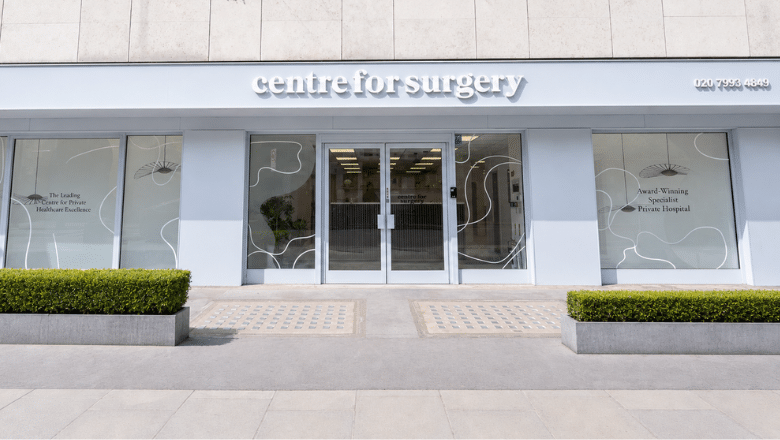
Consultations are with GMC-registered plastic surgeons at our CQC-regulated private hospital at 95–97 Baker Street, Marylebone, rated Good overall, and the surgeon who assesses you is the surgeon who performs your operation. The £100 consultation fee is redeemable against treatment, we treat adults aged 18 and over only, and we recommend a two-week cooling-off period after any consent. Finance is available through our partner Chrysalis Finance; see our Finance Options page for the current terms.
Phone: 020 7993 4849 | Email: contact@centreforsurgery.com | Address: 95–97 Baker Street, Marylebone, London W1U 6RN
Contact us to schedule a consultation
References
- Jastreboff AM, Aronne LJ, Ahmad NN, et al. Tirzepatide once weekly for the treatment of obesity. New England Journal of Medicine 2022;387(3):205–216. doi:10.1056/NEJMoa2206038
- Aronne LJ, Horn DB, le Roux CW, et al. Tirzepatide as compared with semaglutide for the treatment of obesity. New England Journal of Medicine 2025;393(1):26–36. doi:10.1056/NEJMoa2416394
- Look M, Dunn JP, Kushner RF, et al. Body composition changes during weight reduction with tirzepatide in the SURMOUNT-1 study of adults with obesity or overweight. Diabetes, Obesity and Metabolism 2025;27(5):2720–2729. doi:10.1111/dom.16275
- Aronne LJ, Sattar N, Horn DB, et al. Continued treatment with tirzepatide for maintenance of weight reduction in adults with obesity: the SURMOUNT-4 randomized clinical trial. JAMA 2024;331(1):38–48. doi:10.1001/jama.2023.24945
- Sharma RK, Vittetoe KL, Barna AJ, et al. Radiographic midfacial volume changes in patients on GLP-1 agonists. Otolaryngology–Head and Neck Surgery 2025;173(2):360–366. doi:10.1002/ohn.1209
- Rohrich RJ, Pessa JE. The fat compartments of the face: anatomy and clinical implications for cosmetic surgery. Plastic and Reconstructive Surgery 2007;119(7):2219–2227. doi:10.1097/01.prs.0000265403.66886.54
- El-Amawy HS. Tirzepatide in dermatology: cutaneous adverse events, emerging therapeutic roles, and cosmetic implications – a comprehensive review. Anais Brasileiros de Dermatologia 2026;101(1):501255. doi:10.1016/j.abd.2025.501255
- Seidel DU, Bode S. Rapid weight loss through GLP-1 receptor agonists as lifestyle phenomenon and implications for plastic esthetic medicine [in German]. HNO 2025;73(11):765–770. doi:10.1007/s00106-025-01653-w
- Chalhoub X, Yang Ng Z. Do GLP-1 receptor agonists sabotage fat grafts? A scoping review of GLP-1 receptor agonist effects on adipocyte biology and implications for autologous fat transfer. Aesthetic Surgery Journal 2026. doi:10.1093/asj/sjag108
- Pitak-Arnnop P. Insufficient exclusion of infectious and biofilm-related complications in reported tirzepatide-associated filler nodules. JAAD Case Reports 2026;75:216. doi:10.1016/j.jdcr.2026.06.027
- Moradi A, Kim JH, Kim JM, Choudhary HN, Brieva PM. Clinical efficacy of a Flavo-Proxylane topical regimen pre- and post-ultrasound procedure for subjects undergoing glucagon-like peptide 1 (GLP-1) receptor agonist therapy. Dermatology and Therapy 2026;16(4):2075–2089. doi:10.1007/s13555-026-01699-w
- El-Boghdadly K, Dhesi J, Fabb P, et al. Elective peri-operative management of adults taking glucagon-like peptide-1 receptor agonists, glucose-dependent insulinotropic peptide agonists and sodium-glucose cotransporter-2 inhibitors: a multidisciplinary consensus statement. Anaesthesia 2025;80(4):412–424. doi:10.1111/anae.16541
Related Articles
- Ozempic Face: What It Is, Why It Happens and How to Treat It
- Face and Neck Lift Surgery After Weight Loss
- Sunken Cheeks: Causes and Treatments
- Facial Fat Transfer vs Fillers
- How the Face and Neck Are Affected by Dramatic Weight Loss
- Loose Skin After Weight Loss