


In this guide13 sections
- Key Points
- What Is the Most Common Facial Plastic Surgery?
- What Are the Different Types of Facial Plastic Surgery?
- Is Rhinoplasty the Most Popular Facial Plastic Surgery?
- What Does Eyelid Surgery (Blepharoplasty) Involve?
- What is the Most Effective Way to Achieve a Younger-Looking Face?
- What About Brow Lift, Ear Surgery and Chin Surgery?
- Are Non-Surgical Facial Treatments an Alternative to Surgery?
- How Long Does It Take To Recover After Facial Plastic Surgery?
- How Do I Choose a Facial Plastic Surgery Procedure?
- Are You Considering Facial Plastic Surgery in London?
- Frequently Asked Questions: Facial Plastic Surgery
- References
Key Points
- What is the most common facial plastic surgery? There is no single answer, because rankings depend on the country, the year and who is counting. In large published procedure counts, eyelid surgery, facelift and rhinoplasty are consistently among the most frequently performed facial operations[2].
- Facial plastic surgery has two branches. Aesthetic surgery changes how the face looks, while reconstructive surgery restores form and function after injury, cancer treatment or a congenital condition.
- Non-surgical treatments are very widely requested, but they do different jobs. Anti-wrinkle injections and fillers soften lines and replace volume, and they do not remove excess skin.
- Revision after rhinoplasty is uncommon but real. A large US cohort of 175,842 septorhinoplasty patients found a revision rate of 3.3% overall[3].
- Recovery is individual. It depends on the procedure, your health, whether you smoke and how closely you follow your surgeon’s advice.
Many people searching for the most common facial plastic surgery want a simple league table. The honest answer is that three operations sit near the top of most published lists: nose reshaping, eyelid surgery and facelift. Which one comes first changes with the data source, so this guide explains what each involves, who tends to choose it and what the evidence says about results and risks[1][2].
If you are weighing up face surgery for the first time, it helps to know how the procedures compare. This article covers rhinoplasty, blepharoplasty, facelift, otoplasty and the non-surgical alternatives, and links to our in-depth guides on each, including the different types of facelift and droopy eyelids.
What Is the Most Common Facial Plastic Surgery?
The answer depends on what you count and where. Published procedure statistics usually come from professional societies and registries, and each uses its own methods. In one analysis, researchers used the American Society of Plastic Surgeons’ 2020 trends report to identify the five most common aesthetic operations on the head and neck for 2019: blepharoplasty, facelift, rhinoplasty, neck lift and cheek implant[2]. That is a US list for a single year, and UK audits and private-hospital caseloads can rank the same procedures differently.
What the data does show is that the same handful of operations keep appearing. Nose reshaping, eyelid surgery and facelift are consistently among the most frequently performed, with neck lift, chin surgery and ear surgery close behind. If you want a quick orientation, this is how they differ:
- Rhinoplasty (nose job): reshapes the nose for appearance, breathing or both.
- Blepharoplasty (eyelid surgery): removes or repositions excess skin and sometimes fat around the eyes.
- Facelift (rhytidectomy): repositions deeper facial tissues and removes surplus skin on the lower face and neck.
- Otoplasty (ear pinning): sets back prominent ears or reshapes them.
- Neck lift and brow lift: treat the neck and forehead, and are often combined with other procedures.
Search interest follows a similar pattern. A study comparing Google Trends with procedure counts for blepharoplasty, cheek implant, neck lift, mentoplasty, rhinoplasty and rhytidectomy found only very weak to moderate correlations between how often people searched for a procedure and how often it was performed. The related searches were about cost, before and after photos and alternative names[1]. In other words, popularity online and popularity in the operating theatre are not the same thing.
What Are the Different Types of Facial Plastic Surgery?
Facial plastic surgery is a broad field. It covers operations on the nose, eyes, brow, cheeks, jawline, chin, ears and neck, and it divides into two branches that share many techniques.
Facial Aesthetic Surgery: Changing Appearance and Contour
Aesthetic procedures are chosen to refine or rejuvenate the face. The most common are rhinoplasty, eyelid surgery, brow lift, facelift, neck lift, otoplasty and chin surgery. Laser skin resurfacing sits alongside them as a skin-quality treatment rather than a structural operation. Patients usually come with a specific concern, such as a hump on the nose, heavy upper eyelids, jowls or ears that stand out.

Facial Reconstructive Surgery: Restoring Form and Function
Reconstructive surgery aims to restore the face after trauma, cancer removal or a congenital difference. Techniques include skin grafts, local flaps and tissue expansion, and microsurgery for more complex defects. The goal is function first, such as breathing, eyelid closure and eating, with appearance close behind. The two branches overlap, which is why a nose operation can be both cosmetic and functional, and why eyelid surgery sometimes improves the field of vision.
Is Rhinoplasty the Most Popular Facial Plastic Surgery?
Rhinoplasty is often described as the signature operation of facial plastic surgery, and it is certainly one of the most requested. The nose sits at the centre of the face, so small changes in projection, width or tip shape alter overall balance. Some patients also need surgery for breathing, and in many cases the two goals are planned together. Our rhinoplasty risks guide and our honest answer on whether rhinoplasty is worth it cover the decision in more depth.
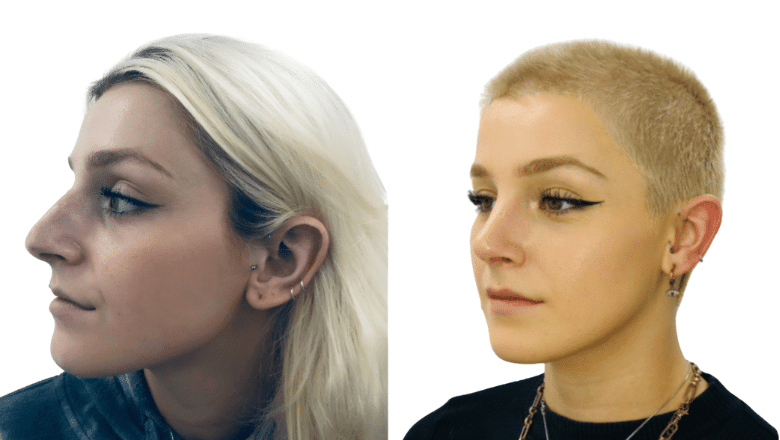
Do People Like the Result of a Nose Job?
A 2026 systematic review of 28 studies in the journal Plastic and Aesthetic Nursing looked at quality of life after rhinoplasty using validated patient-reported measures. Across study designs, it found improvements in nasal function and in aesthetic, satisfaction and psychosocial scores, with no single technique showing clear superiority[5]. The authors also noted that the studies varied in design and that minimal clinically important differences were rarely reported, so the findings are encouraging rather than conclusive.
How Often Is a Second Nose Operation Needed?
It is worth being realistic about this. A 2016 retrospective cohort study in JAMA Facial Plastic Surgery ↗ followed 175,842 septorhinoplasty patients for at least three years. The revision rate was 3.3% overall, 3.1% after a first operation and 11.0% in people who had already had previous nose surgery[3]. Rates in individual surgical practices can be higher. A single-practice review of 369 cosmetic rhinoplasties reported a revision rate of 9.8% and a dissatisfaction rate of 15.4%, and found that failure to address the nasal tip was linked to more dissatisfaction[4]. Planning and expectation-setting matter, which is why a thorough consultation is part of every rhinoplasty pathway. Our guide to rhinoplasty swelling explains why the final shape takes time to appear, and you can read about whether a nose job is available on the NHS if function is your main concern.
What Does Eyelid Surgery (Blepharoplasty) Involve?
Blepharoplasty removes or repositions excess skin, muscle and sometimes fat from the upper or lower eyelids. Upper eyelid surgery addresses heavy, hooded lids, and lower eyelid surgery addresses bags and puffiness. Surgery is performed through fine incisions placed in natural creases where possible, and our guide to what blepharoplasty scars look like shows how they usually heal.
Is Eyelid Surgery Only Cosmetic?
Not always. In a 2024 prospective study in Aesthetic Plastic Surgery ↗, 79 patients having primary upper blepharoplasty completed the FACE-Q questionnaire and a functional questionnaire. They reported significant improvements in how they felt about their upper eyelids and eyes, overall functional improvement, and measurable visual field improvement in the group with the most skin excess. Satisfaction with the cosmetic result did not depend on how severe the skin excess had been before surgery[6]. The study was small and single-centre, so it shows benefit rather than guaranteeing it for any one person.
If your eyelids look heavy, it is also worth knowing the cause. Hooded eyes, a low brow and a true drooping eyelid (ptosis) need different treatment, and a consultation will tell them apart. Our guide to blepharoplasty before and after photos shows typical outcomes, and our article on avoiding blepharoplasty complications sets out what to ask beforehand.
What is the Most Effective Way to Achieve a Younger-Looking Face?
There is no single answer, because ageing affects skin quality, volume and the deeper supporting tissues in different proportions. Surgery tightens and repositions structure. Non-surgical treatments improve surface quality and replace volume. Many people use a combination, in stages.
What Does a Facelift Do?
A facelift (rhytidectomy) lifts sagging tissue in the lower face and neck, softens jowls and removes surplus skin. It does not stop ageing, and it does not treat sun damage or fine lines on its own. Techniques vary, from limited-incision to deep plane approaches, and our guide to the types of facelift compares them. See how long a facelift lasts for what influences durability, and what to expect from a facelift for the patient journey.

How Safe Is a Facelift?
A 2026 systematic review and meta-analysis in Aesthetic Plastic Surgery ↗ pooled 45 studies covering 10,784 patients who had deep plane facelifts. The pooled overall complication rate was 6.6%. Temporary facial nerve injury occurred in an estimated 1.2%, haematoma in 1.8% and skin necrosis in 0.1%, and the authors reported no instances of permanent facial nerve injury. They also noted that the aesthetic comparisons with other techniques relied on subjective assessment and called for more randomised studies and long-term follow-up[7]. These figures describe a pooled group of studies, not a guarantee for any individual patient.
Some patients return for a second facelift years later. A systematic review of 14 articles and 737 patients found that secondary facelifts were technically more demanding because of scarring and altered tissue planes, with reported complication rates ranging from 2.0% to 21.1%, but that overall complication rates appeared comparable to those of primary facelifts[8]. Our article on having a facelift twice explores this further.
Is There an Age to Have a Facelift, and What About Alternatives?
Age is only one factor. What matters is how much laxity you have and what you want to change. Our guide to the right age for a facelift explains how surgeons think about timing. People with milder signs of ageing may be better suited to injectables, laser resurfacing or skin-quality treatments, and our overview of facelift alternatives that do not require surgery sets out the options and their limits.
What About Brow Lift, Ear Surgery and Chin Surgery?
These operations are performed less often than the headline procedures but are often what makes the difference to facial balance.
- Brow lift: raises a low or heavy brow, and is sometimes the real cause of what looks like excess upper eyelid skin.
- Neck lift: addresses loose neck skin and bands, either alone or with a facelift. See our neck lift before and after photos.
- Otoplasty: sets back or reshapes prominent ears. A 2026 review in the Journal of Craniofacial Surgery describes how planning should follow the underlying structural abnormality, not only the surface appearance, and how complications are reduced through hematoma prevention, infection control and preservation of blood supply[10]. See our otoplasty before and after photos.
- Chin augmentation: a 2026 systematic review of 56 studies found that surgical chin augmentation (implants or bone surgery) gave durable improvements and high satisfaction but carried risks such as infection and implant problems, while fillers gave quick contour changes with mostly transient side effects and rare serious vascular complications[12].
Are Non-Surgical Facial Treatments an Alternative to Surgery?
Sometimes, for milder concerns. Anti-wrinkle injections and dermal fillers are quicker, need little or no downtime and are easily repeated. They also do less. Anti-wrinkle injections relax the muscles that cause lines, and they do not lift loose skin. Fillers restore volume and contour, and they cannot remove excess skin.
Evidence supports the short-term effect of anti-wrinkle injections, with limits on how long it lasts. In a 36-week phase 2 randomised trial of abobotulinumtoxinA for moderate to severe frown lines, 65.0% to 67.9% of participants still showed at least a one-grade improvement at week 24, falling to 33.8% to 44.4% at week 36[13]. A 2026 systematic review of aesthetic treatments in men found that response rates to botulinum toxin for upper facial lines ranged from 65% to 100%, with adverse events described as minor and transient[11]. Results fade, so repeat treatment is needed to maintain them.
Chemical peels and laser treatments work on a different layer again, improving texture, tone and fine lines by removing damaged outer skin and stimulating repair. Our comparison of Fotona 4D and traditional laser resurfacing explains how newer approaches differ, and our guide asks whether laser skin resurfacing is painful.
How Long Does It Take To Recover After Facial Plastic Surgery?
Recovery depends on which operation you have, how extensive it is and how your body heals. Swelling and bruising are expected after almost all facial surgery, and they settle gradually. Procedures that change the nose or the whole face usually have a longer tail of subtle swelling than a procedure on a single area. Your surgeon will give specific guidance on time off work, driving, exercise and when to expect your result to look settled.
Facelift vs Laser Skin Resurfacing: How Do Recovery Times Compare?
It can seem counterintuitive, but a more invasive operation does not always mean a longer visible recovery. After a facelift, swelling and bruising are the main features, and our facelift recovery guide sets out the stages in detail. Healing after laser skin resurfacing follows a different course: redness, peeling and sensitivity as the skin renews itself, with the length depending on how deep the treatment goes.
What Affects How Quickly You Heal?
Overall health, age, medication, how well you follow aftercare instructions and whether you smoke all play a part. Smoking is the factor with the clearest evidence. A review of nicotine in plastic surgery reported that in face-lift operations, smokers had around a 13-fold risk of skin necrosis[9]. For that reason, surgeons usually ask patients to stop nicotine well before and after surgery. Other helpful steps include attending every follow-up appointment, avoiding strenuous activity until you are cleared and telling your team early if something feels wrong. Our guide to maintaining your facelift results covers the long-term habits that help.
How Do I Choose a Facial Plastic Surgery Procedure?
Start with the concern, not the operation. Heavy eyelids may need blepharoplasty, a brow lift or both. Jowls and a loose neck may need a facelift and neck lift together. A wide or crooked nose may need rhinoplasty, but the plan changes if you also have a breathing problem. A good consultation will:
- identify the cause of the concern, which is not always the area you point to;
- explain more than one option, including non-surgical choices and doing nothing;
- set out the risks, the recovery and what the operation cannot change;
- give you time to think, with no pressure to book on the day.
Bring photographs of yourself at younger ages rather than celebrity pictures, and ask what is realistic for your own bone structure and skin. Looking at real before and after photographs of patients who had the same operation is a sensible way to judge likely results.
Are You Considering Facial Plastic Surgery in London?
At Centre for Surgery in London, we offer facial surgery including rhinoplasty, eyelid surgery, facelift, otoplasty and laser skin resurfacing. A consultation is the place to ask which option, if any, suits you, and to understand the risks and recovery before you decide. Our facelift before and after photos show real examples of facial surgery outcomes.
Frequently Asked Questions: Facial Plastic Surgery
What is the most popular facial plastic surgery?
It depends on the data source. In US society figures for 2019, the most common head and neck aesthetic operations were blepharoplasty, facelift, rhinoplasty, neck lift and cheek implant[2]. UK rankings can differ, and non-surgical treatments such as injectables are also very widely requested.
What is the most common cosmetic surgery on the face?
Eyelid surgery, facelift and rhinoplasty are consistently among the most frequently performed. Which is first varies by country, year and the way procedures are counted, so be cautious about any single claim of a number one.
What is the most common cosmetic procedure for men?
Research on men suggests that neuromodulators (anti-wrinkle injections) and fillers are the most commonly chosen treatments. A 2026 systematic review found men often needed higher doses of product, with minor and transient side effects reported[11]. Men also have facelifts, eyelid surgery and rhinoplasty.
What is the difference between facial plastic surgery and cosmetic surgery?
Facial plastic surgery refers to operations on the face and neck, both aesthetic and reconstructive. Cosmetic surgery is the wider term for operations done to change appearance anywhere on the body. Facial plastic surgery therefore includes cosmetic procedures and also reconstructive work after injury or illness.
How long does recovery take after facial plastic surgery?
It varies by operation and by person. Swelling and bruising usually improve over the first weeks, with subtler swelling taking longer to settle, especially around the nose. Your surgeon will give you a timeline for your own procedure, and following aftercare advice makes a difference.
Is facial plastic surgery safe?
All surgery carries risk. A meta-analysis of deep plane facelifts reported a pooled overall complication rate of 6.6%, with no permanent facial nerve injury recorded across the studies[7]. Smoking increases the risk of skin necrosis in facelift patients[9]. Your surgeon should discuss the risks specific to your procedure and health.
What is the right age for facial plastic surgery?
There is no ideal age. Timing depends on your anatomy and what you want to change, not your birthday. Younger patients often have rhinoplasty, otoplasty or eyelid surgery, while facelifts are usually considered once there is laxity in the lower face and neck. See our guide to the right age for a facelift.
Do the results of facial plastic surgery last?
Changes to structure, such as nose shape or ear position, tend to last longer, but your face continues to age after any operation. Non-surgical results fade over months, as the frown line trial shows[13]. Sun protection and not smoking help protect skin quality.
References
- McGuigan KC, Trinh LN. Do Google Trends correlate with the number of facial plastic surgery procedures performed in the United States? Facial Plastic Surgery 2022;39(2):160–163. doi:10.1055/s-0042-1757474 ↗
- Herzog I, Park J, Didzbalis CJ, Weisberger J, Tran BN, Lee ES. Assessing the impact of COVID-19 on facial aesthetic surgery search interest. Annals of Plastic Surgery 2023;90(6S Suppl 5):S630–S633. doi:10.1097/SAP.0000000000003499 ↗
- Spataro E, Piccirillo JF, Kallogjeri D, Branham GH, Desai SC. Revision rates and risk factors of 175,842 patients undergoing septorhinoplasty. JAMA Facial Plastic Surgery 2016;18(3):212–219. doi:10.1001/jamafacial.2015.2194 ↗
- Neaman KC, Boettcher AK, Do VH, et al. Cosmetic rhinoplasty: revision rates revisited. Aesthetic Surgery Journal 2013;33(1):31–37. doi:10.1177/1090820X12469221 ↗
- Murtiani et al. Comprehensive evaluation of quality of life in patients after rhinoplasty using patient-reported outcome measures (PROMs): a systematic review. Plastic and Aesthetic Nursing 2026;46(4):204–218. doi:10.1097/PSN.0000000000000704 ↗
- Marangi et al. Is the severity of preoperative eyelid dermatochalasis directly correlated with patient satisfaction after upper blepharoplasty? A prospective study based on PROMs. Aesthetic Plastic Surgery 2024;48(20):4114–4120. doi:10.1007/s00266-024-04214-8 ↗
- Koroma et al. Deep plane facelifts: a systematic review and meta-analysis of outcomes. Aesthetic Plastic Surgery 2026;50(17):6874–6896. doi:10.1007/s00266-026-06138-x ↗
- Saad et al. Challenges and complications in secondary rhytidectomies, a systematic review. JPRAS Open 2025;51:82–91. doi:10.1016/j.jpra.2025.11.007 ↗
- Nicotine in plastic surgery: a review. Der Chirurg 2008. doi:10.1007/s00104-008-1561-3 ↗
- Gonzales et al. Otoplasty: principles, techniques, and outcomes in aesthetic and reconstructive surgery of the external ear. Journal of Craniofacial Surgery 2026. doi:10.1097/SCS.0000000000012871 ↗
- García Dinnbier A, Silva Diaz E, Ibáñez García F. Minimally invasive aesthetic treatments in men: a systematic review and meta-analysis. Dermatologic Surgery 2026;52(10):e117–e120. doi:10.1097/DSS.0000000000005295 ↗
- Alwathnani YK, Alkhwildi LA, Almathami AA, et al. Surgical vs non-surgical chin augmentation: a systematic review of techniques, satisfaction, and complications. Aesthetic Plastic Surgery 2026;50(11):4292–4314. doi:10.1007/s00266-026-05611-x ↗
- Dayan S, Joseph J, Moradi A, et al. Subject satisfaction and psychological well-being with escalating abobotulinumtoxinA injection dose for the treatment of moderate to severe glabellar lines. Journal of Cosmetic Dermatology 2022;21(6):2407–2416. doi:10.1111/jocd.14906 ↗







