


In this guide12 sections
- Key Points
- How Painful Is Rhinoplasty?
- Does Rhinoplasty Hurt During Surgery?
- Rhinoplasty Pain Day by Day: What to Expect
- Is Rhinoplasty More Painful Than Other Surgeries?
- How to Manage Pain After Rhinoplasty
- Headache After Rhinoplasty: Why It Happens
- Is Revision Rhinoplasty More Painful?
- When Is Pain After Rhinoplasty Not Normal?
- Frequently Asked Questions: Rhinoplasty Pain
- Rhinoplasty at Centre for Surgery
- References
Key Points
- Is rhinoplasty painful? Most people describe mild to moderate discomfort, with a blocked nose and facial pressure often bothering them more than sharp pain. Pain scores in published studies sit mostly in the low-to-middle range of a 0 to 10 scale, and individual experience varies.
- Does rhinoplasty hurt during the operation? No. You are under anaesthetic, so you should not feel the surgery itself.
- When is the pain at its worst? Usually the first two to three days, when swelling peaks, easing steadily through the first week.
- How is pain controlled? With a planned combination of painkillers, local anaesthetic, head elevation and rest. Your surgeon decides what is suitable for you.
- Which part tends to be the worst? Congestion and mouth-breathing, rather than pain, are what most people find hardest.
- When should I call the clinic? If pain is getting worse rather than better after the first few days, or comes with fever, heavy bleeding or a sudden one-sided swelling.
So, is rhinoplasty painful? For most people it is less painful than they expect, but it is not pain-free. A nose job involves reshaping bone and cartilage, so some soreness, pressure and a heavy, blocked feeling are normal for the first few days. What you feel depends on the technique, how much structural work is needed, your own pain sensitivity and how well your pain relief is planned.
This guide answers the questions people actually search for: how painful rhinoplasty is, whether you feel anything during the operation, how pain changes day by day, how it compares with other surgery, what helps, why headaches happen and whether revision surgery hurts more. It draws on published trials and reviews rather than on opinion, and it is honest about where the evidence is thin. For the full healing timeline, see our guide to rhinoplasty recovery, and for how your anaesthetic is chosen, our guide to anaesthesia for cosmetic surgery.
How Painful Is Rhinoplasty?
Pain is personal, so no single number applies to everyone, but the research gives a useful picture. In a 2021 randomised trial of 70 outpatient rhinoplasty patients in Plastic and Reconstructive Surgery ↗, average pain scores on a 0 to 10 scale were around 2 to 3 on the day of surgery and the day after, whichever painkiller was used, and about 3 by day seven[1]. That is mild to moderate pain, and about three-quarters of the people given opioid tablets took fewer than eight of them.
Other studies report somewhat higher figures. In a small 2026 cohort of open septorhinoplasty patients, average first-week scores were 5.9 out of 10 with a traditional opioid regimen and 3.8 with a structured, multi-drug recovery pathway[2]. In a 2026 randomised trial of 33 people, scores on day one ranged from about 4 to 5.5 depending on whether ice packs were used during surgery[3]. So the realistic range runs from mild to moderate, and well-planned pain relief is what separates the lower numbers from the higher ones.
What people describe is often not pain at all. The commonest complaints after a rhinoplasty are:
- Pressure and fullness across the nose, cheeks and sometimes the forehead.
- A blocked nose, like a heavy cold, so you breathe through your mouth. Our guide to a blocked nose after rhinoplasty explains why this happens and when it improves.
- A dull ache or tenderness, especially if the nose is touched.
- Numbness of the tip and sometimes the upper lip, which usually improves over the following weeks. Our article on whether rhinoplasty can affect your sense of smell or taste covers related changes.
- A dry mouth and sore throat from mouth-breathing, and in some people from a breathing tube used during anaesthesia.
Most of these sensations are uncomfortable rather than painful, which is why many people say that rhinoplasty was easier than they feared. Anyone with a low pain threshold, or who is anxious, may rate the same experience higher, and that is worth telling your surgical team at consultation so your pain plan can be tailored.
Does Rhinoplasty Hurt During Surgery?
No. You should not feel pain during the operation, because rhinoplasty is carried out under anaesthetic. The NHS guidance on nose reshaping ↗ explains that the operation is done under anaesthetic, so you do not feel it. At Centre for Surgery, most rhinoplasty is a day case, usually under total intravenous anaesthesia (TIVA), although the anaesthetic for your operation is decided by your surgeon and anaesthetist after assessing you. Some surgeons use a lighter option, local anaesthetic with sedation, for smaller procedures, and they will explain what is planned for you.
Your surgeon may also inject local anaesthetic into the nose during the operation. This numbs the area and can reduce discomfort in the hours afterwards. In a 2026 randomised trial of 220 rhinoplasty patients in Aesthetic Plastic Surgery ↗, bupivacaine, a long-acting local anaesthetic, was given as an injection, as a soaked mesh in the nostrils, or both, and the combination was associated with lower painkiller use and less nausea; patients who had the mesh reported lower pain scores up to 72 hours[4]. Practice differs between surgeons, so ask what your own team plans.
Waking up is usually described as groggy, with a tight, blocked nose, a dry mouth and sometimes a sore throat. You spend time in recovery under the care of nurses, who can give pain relief as soon as you need it, before going home the same day once you are comfortable, eating and drinking.
Rhinoplasty Pain Day by Day: What to Expect
Everyone heals at their own pace, and the timings below are typical rather than guaranteed. Always follow your own surgeon’s instructions, and see our week-by-week rhinoplasty recovery timeline for everything beyond pain.
Day of surgery
You wake with a splint over the nose and a feeling of tightness and pressure. Pain relief is usually already on board from the operation, and you are given a plan for tablets at home. Many surgeons advise taking the first doses on schedule rather than waiting for pain to build, so ask your team about timing before you leave.
Days 1 to 3
This is usually the most uncomfortable stretch. Swelling tends to peak in the first few days, and in a three-dimensional imaging study of 40 people after open rhinoplasty, about two-thirds of the swelling had settled by one month[5], so you are at the steepest part of the curve. Expect a blocked nose, a headache or pressure, tenderness around the eyes and cheeks, and some bruising. Keeping your head raised, including in bed, helps; our guide to sleeping after rhinoplasty covers positions and pillows.
Days 4 to 7
Pain usually eases and many people stop regular painkillers around this point, though the stuffiness continues. At about one week you attend a review where the splint is removed. Many people expect this to hurt. Most describe it as strange, pulling or slightly tender rather than sore, and you can ask your team to talk you through each step.
Weeks 2 to 4
Day-to-day discomfort is usually minimal. The nose can still feel tender if pressed or knocked, the tip may be numb, and swelling gradually reduces. Occasional aches and twinges are common as the tissues settle.
Months 2 to 12
Pain is unusual by now. Tenderness, tingling, or a tight feeling around the tip can come and go for several months as nerves recover and swelling resolves. If you have new or worsening pain at any stage, tell your surgical team rather than waiting.
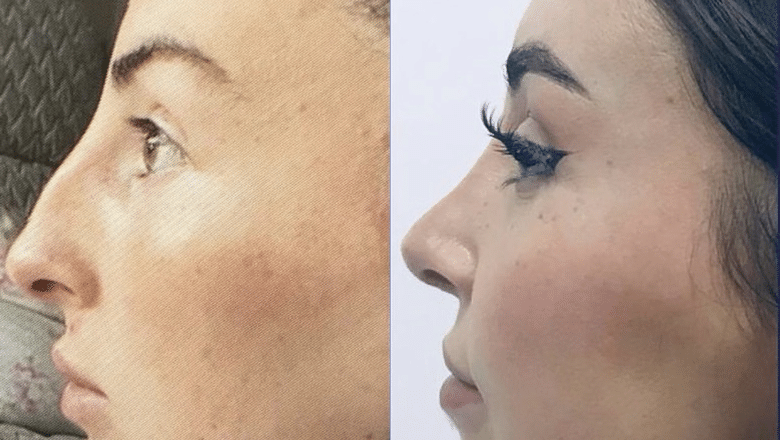
More results from our own patients are in our rhinoplasty before and after photos.
Is Rhinoplasty More Painful Than Other Surgeries?
Direct comparisons are limited, because studies use different pain scales, different patients and different painkillers, so any ranking should be treated with caution. What can be said is that rhinoplasty works on bone and cartilage rather than on large muscles, so many people find the pain gentler than they expected and the congestion the harder part. Operations that involve cutting or tightening large muscle groups, such as abdominal surgery, tend to bring a different kind of pain, with soreness on moving, coughing or standing up straight.
Technique also matters. A closed approach avoids the incision across the skin between the nostrils, while the open approach gives a clearer view for more complex work; our guide to open vs closed rhinoplasty explains the choice. Newer ways of working on the bone may be gentler: a 2022 systematic review and meta-analysis in Plastic and Reconstructive Surgery Global Open ↗ of ten studies found that piezoelectric instruments were associated with less swelling, bruising and early pain than conventional chisels, although the authors rated the evidence as low quality[6]. That is the principle behind ultrasonic rhinoplasty, and preservation rhinoplasty also aims to disturb less of the nose’s natural structure. Whether either suits you is a surgical decision, not a pain-control shortcut.
If you are weighing up whether the recovery is worth it, our honest piece on whether rhinoplasty is worth it sets pain alongside the other trade-offs, and our overview of the different types of rhinoplasty shows how much work each involves.
How to Manage Pain After Rhinoplasty
The aim is steady, planned pain control rather than coping until it becomes unbearable. Modern pain plans combine several measures, known as multimodal analgesia, so that each drug can be used at a lower dose.
Painkillers
Research is moving away from heavy reliance on opioids. In the 2021 trial mentioned above, ibuprofen was found to be non-inferior to a hydrocodone and paracetamol combination in the first days, with slightly lower pain scores on day one[1]. A 2025 systematic review and meta-analysis in The Laryngoscope ↗ pooled six studies of 470 rhinoplasty patients and found that those given perioperative anti-inflammatory painkillers (NSAIDs) had lower pain scores, used less opioid and were less likely to feel sick, with no significant difference in bleeding, although the number of studies was small[7]. Trials of a single dose of paracetamol, ibuprofen or ketorolac given before surgery also found lower early pain scores than a saline dummy, though these were short studies of the first hours[8],[9].
None of this is a prescription for you. NSAIDs are not suitable for everyone, and your surgeon will choose medicines that fit your health and any other tablets you take. Take them as directed, and never double up on products that contain the same ingredient, such as paracetamol.
Practical comfort measures
- Keep your head raised above heart level, including when you sleep, to help swelling and pressure drain.
- Use cold compresses on the cheeks and around the eyes, not on the nose itself, if your surgeon agrees. Evidence for home cold therapy is limited; the ice-pack trial above looked only at cooling during surgery.
- Breathe moist air. A humidifier, sips of water and lip balm can ease the dryness of mouth-breathing.
- Avoid blowing your nose or bending and lifting in the first weeks, because raising the pressure in your head can worsen swelling and tenderness.
- Wear front-fastening clothes so nothing is pulled over your nose.
- Rest and distract yourself. Films, audiobooks and short walks help more than lying and monitoring the nose.
- Do not smoke or drink alcohol during early healing, as both can slow recovery and alcohol does not mix with some painkillers.
Plan the practicalities before surgery: a responsible adult to take you home, prescriptions collected in advance, plenty of pillows and soft food. If you are anxious about pain, say so at your consultation; a clear plan is itself reassuring.
Headache After Rhinoplasty: Why It Happens
Headaches and a feeling of pressure across the forehead and between the eyes are common in the first days. Likely contributors include swelling inside and around the nose, a splint or internal supports, disturbed sleep and dehydration, and the stress of surgery. If you are used to migraines or tension headaches, they may flare, so mention this to your team.
If your operation also involves the septum, packing or internal splints can add to the discomfort. A 2021 systematic review and meta-analysis of 47 randomised studies in Rhinology ↗ found that nasal packing after septoplasty caused more pain, sleep disturbance and breathing difficulty than other techniques, with no advantage in preventing bleeding, and recommended against routine packing[10]. A separate 2017 meta-analysis of 19 randomised trials found less pain and headache with trans-septal sutures than with packing[11]. These studies looked at septoplasty rather than cosmetic rhinoplasty alone, so treat them as a guide to combined septorhinoplasty, which our septorhinoplasty page explains. Ask your surgeon whether packing is planned at all.
Simple measures help most headaches: your prescribed painkillers, fluids, rest and a raised head. Seek advice promptly if a headache is severe or sudden, or comes with fever, vomiting, a stiff neck, or clear watery fluid running from the nose.
Is Revision Rhinoplasty More Painful?
This is a question many people ask before a second operation. There is little good research comparing pain after first and revision surgery, so the honest answer is that it depends. Revision surgery can involve more scar tissue and more complex reshaping, and may need extra cartilage. When that cartilage is taken from a rib, the donor site can be the sorest area. In a small 2026 study of 40 women in Aesthetic Plastic Surgery ↗, rib cartilage donor-site pain averaged about 4 to 5 out of 10 on day one, fell to around 1 to 1.5 by day seven and was close to zero by day 30[12]. Cartilage from the ear or the septum is different, and your surgeon will explain which source is planned.
Revision recovery often runs longer for swelling than for pain, and our guide to whether revision rhinoplasty is more painful compares the experience in more detail. Our revision rhinoplasty page explains who it suits, and the article on why revision rhinoplasty costs differently covers the planning side.
When Is Pain After Rhinoplasty Not Normal?
Expected pain eases day by day. Contact your surgical team without delay if you have:
- pain that is getting worse rather than better after the first three days
- heavy bleeding that does not settle when you sit upright and rest
- a temperature, or increasing redness, heat or discharge around the nose
- a sudden, painful swelling inside the nose or on one side of it
- a painful, swollen calf or breathlessness (call 999 for chest pain or difficulty breathing)
Serious problems are uncommon. In a prospective study of 4,978 people having rhinoplasty, 0.7% had a major complication needing an emergency visit, admission or return to theatre within 30 days, most often a haematoma or infection[13]. Our guide to rhinoplasty risks explains what is expected, uncommon and rare. For the first 24 hours, call the direct number on your discharge summary; after that, call the clinic, use NHS 111 out of hours, or call 999 in an emergency.
Frequently Asked Questions: Rhinoplasty Pain
Does removing the rhinoplasty splint hurt?
For most people the splint removal at about one week is uncomfortable rather than painful, with a pulling or tight feeling as the tape and splint are lifted. Your team can soften it with care and patience, so tell them if you feel sore. Any non-absorbable stitches are usually taken out at the same visit.
What is the hardest part of rhinoplasty recovery?
For most people it is the blocked nose and mouth-breathing in the first week, along with the wait for swelling to settle rather than pain. The tip can look swollen for months, which tests patience more than comfort.
How long does pain last after a nose job?
Discomfort is usually at its worst over the first two to three days and eases steadily through the first week. Many people stop regular painkillers within about a week, though tenderness when the nose is touched, and tip numbness or tingling, can linger for weeks to months.
Is severe pain after rhinoplasty normal?
Severe pain is not typical, and pain that is getting worse after the first few days needs checking. Contact your surgical team the same day, particularly if there is fever, heavy bleeding, one-sided swelling or discharge.
Is it normal for my nose to hurt three months after rhinoplasty?
Mild tenderness, tingling or occasional aches can continue for some months while nerves recover and the tissues settle. Constant or increasing pain, redness, or a change in shape is different and should be reviewed by your surgeon.
Can I smile three weeks after rhinoplasty?
Yes, normal gentle expressions are generally fine by this stage, though the upper lip and nasal tip may feel tight or numb. Very broad smiling or laughing can pull on a healing nose in the early weeks, so follow your surgeon’s advice.
What happens if I sneeze after rhinoplasty?
An accidental sneeze is very unlikely to harm the result. It can cause a brief jolt of pain and a little bleeding. Try to sneeze with your mouth open, and contact your team if bleeding continues or the nose looks changed.
How risky is a nose job?
Most people have no serious problems, but all surgery carries risk. In a prospective study of 4,978 patients, 0.7% had a major complication within 30 days[13]. Your own risk depends on your health, the operation and your surgeon, which is why a full consultation matters.
Does non-surgical rhinoplasty hurt?
Non-surgical rhinoplasty with injectable filler is a different procedure, usually brief, and people typically report a pinching or pressure sensation rather than the recovery described here. We have not covered it in this article, and a practitioner can explain what numbing options exist for you.
Rhinoplasty at Centre for Surgery
If pain is the thing holding you back, the most useful step is a conversation about your own operation, anaesthetic and pain plan. Rhinoplasty at Centre for Surgery is carried out at our CQC-regulated hospital in central London, usually as a day case, with nursing care in recovery and follow-up reviews as you heal. Browse our rhinoplasty and nose reshaping service page, or read about choosing a nose job surgeon in London.
Phone: 020 7993 4849 | Address: 95–97 Baker Street, Marylebone, London W1U 6RN
Contact us to schedule a consultation
References
- Frants A, Garber D, Lafer MP, et al. Prospective randomized trial comparing opioids versus nonsteroidal antiinflammatory drugs for postoperative analgesia in outpatient rhinoplasty. Plastic and Reconstructive Surgery 2021. doi:10.1097/PRS.0000000000007427 ↗
- Brownlee B, Johnson A, Park S, et al. Effect of an enhanced recovery after surgery protocol in postoperative pain and opioid consumption after rhinoplasty. Facial Plastic Surgery & Aesthetic Medicine 2026. doi:10.1177/26893614261443629 ↗
- Uz U, Günhan K, Eskiizmir G, et al. Effect of intraoperative ice pack application on postoperative pain, edema, and ecchymosis in rhinoplasty: a randomized controlled trial. Facial Plastic Surgery & Aesthetic Medicine 2026. doi:10.1177/26893614261490686 ↗
- Kaboodkhani R, Babaei T, Kazemi T, et al. Assessing the effectiveness of bupivacaine for managing pain post-rhinoplasty: a triple-blinded controlled clinical trial. Aesthetic Plastic Surgery 2026. doi:10.1007/s00266-026-06349-2 ↗
- Pavri S, Zhu VZ, Steinbacher DM. Postoperative edema resolution following rhinoplasty: a three-dimensional morphometric assessment. Plastic and Reconstructive Surgery 2016;138(6):973e–979e. doi:10.1097/PRS.0000000000002760 ↗
- Khajuria A, Krzak AM, Reddy RK, et al. Piezoelectric osteotomy versus conventional osteotomy in rhinoplasty: a systematic review and meta-analysis. Plastic and Reconstructive Surgery Global Open 2022;10(11):e4673. doi:10.1097/GOX.0000000000004673 ↗
- Deckard E, Jain-Poster K, Rivero A, et al. The safety and efficacy of perioperative NSAIDs in rhinoplasty: a systematic review and meta-analysis. The Laryngoscope 2025. doi:10.1002/lary.32413 ↗
- Alshehri AA. Comparative evaluation of postoperative pain scores and opioid consumption in septorhinoplasty after administration of single-dose preemptive paracetamol and ibuprofen: a randomized controlled trial. International Archives of Otorhinolaryngology 2023. doi:10.1055/s-0042-1749386 ↗
- Dehghanpisheh L, Jamshidi F, Khademi S, et al. Effect of a single preventive intravenous dose of ketorolac and paracetamol on reducing postoperative pain in septorhinoplasty patients: double-blind randomized clinical trial. Iranian Journal of Medical Sciences 2025. doi:10.30476/ijms.2024.102131.3488 ↗
- Titirungruang C, Charakorn N, Chaitusaney B, Hirunwiwatkul P. Is postoperative nasal packing after septoplasty safe? A systematic review and meta-analysis of randomized controlled studies. Rhinology 2021;59(4):340–351. doi:10.4193/Rhin21.057 ↗
- Wang WW, Dong BC. Comparison on effectiveness of trans-septal suturing versus nasal packing after septoplasty: a systematic review and meta-analysis. European Archives of Oto-Rhino-Laryngology 2017;274(11):3915–3925. doi:10.1007/s00405-017-4709-2 ↗
- Gan Y, Liu F, Xi D, et al. A new concept of costal cartilage harvest in the reduction of postoperative pain at donor site. Aesthetic Plastic Surgery 2026. doi:10.1007/s00266-026-05903-2 ↗
- Layliev J, Gupta V, Kaoutzanis C, et al. Incidence and preoperative risk factors for major complications in aesthetic rhinoplasty: analysis of 4978 patients. Aesthetic Surgery Journal 2017;37(7):757–767. doi:10.1093/asj/sjx023 ↗







